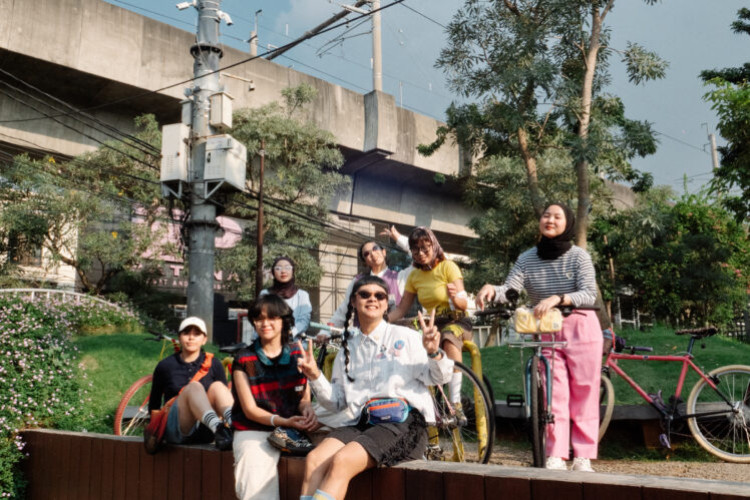
Dalam segmen W_Circle kali ini, kami bertemu dengan komunitas sepeda perempuan di Jakarta Selatan, Sepedahan Centil. Berawal dari Girls Ride, mereka ingin membangun komunitas yang aman bagi perempuan untuk mengekspresikan diri sambil bersepeda.
As you will find out in this Interview, Anitha Silvia loves the East Java's city of Surabaya. An active member of C2O Library & Collabtive, Ayorek!, Indonesia Netlabel, and Sunday Market - her dedication to create a thriving cultural environment in Surabaya is strongly felt. Responsible for many events ranging from educational to entertainment, Silvia shared stories and opinions regarding her work in this Interview. Enjoy.
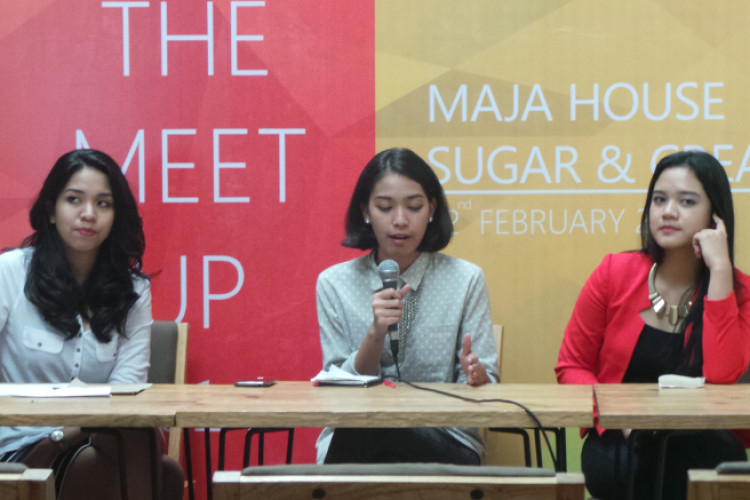
This afternoon, Whiteboard went to the press release for the RightBrain Group’s upcoming event, , that took place at Mojo Kitchen & Bar in Senopati. The RightBrain Group is a new up and coming social space group located in Bandung that aims to support and create a network for the Indonesian creative industry.
The Meet Up 2014 itself is an introductory event that focuses on the developments of the creative industry by creating a space for networking amongst potential partners and buyers that will be held on February 22, 2014 at , Bandung. It consists of many attractions such as a photography exhibition and fashion show by various local fashion brands like PARD, Pot Meets Pop Denim, Bluesville, etc. Not to mention the musical styling’s of local DJs like Hogi Wirjono, Bergas, Egga, and many more.
The RightBrain Group itself has a vision of creating a unique social space and community for Indonesia’s creative industry. The event allows people from the creative industry to meet and build a network together.
The Meet Up 2014 is sponsored by Sampoerna with the target of a minimum of 1,500 people. RightBrain looks to distribute invitations from 2 quarters with 1,500 in the first and 500 in the second, opening a guest list also for the public to join. RightBrains goal is to approach the creative industry one step at a time seeing as how wide the creative industry is. They hope to be able to approach each field little by little.
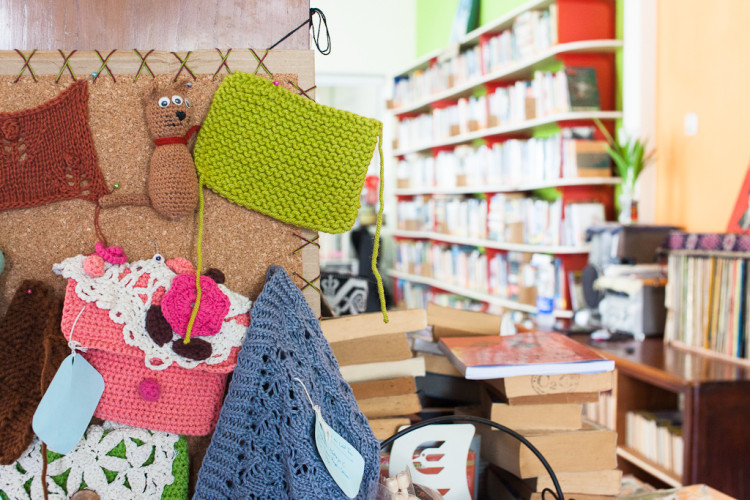
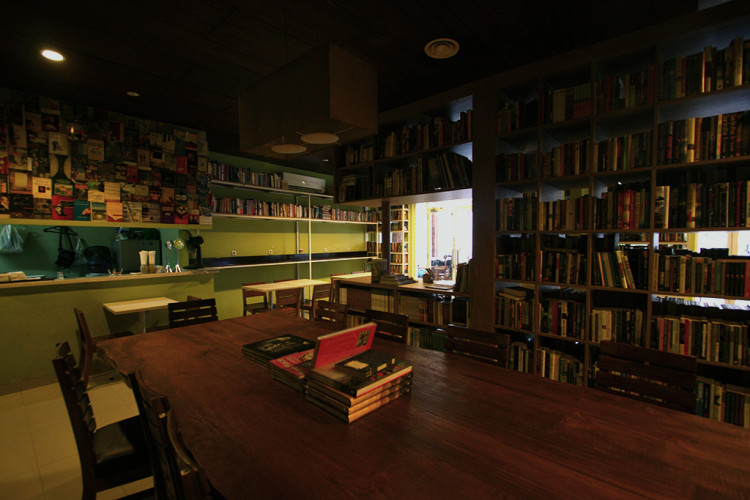
Bookstores and libraries have yet to pop at the impressive rate that cafes and restaurants do in Jakarta. But this does not necessiraly mean that this city's book lovers have nowhere to go. Located in the Kemang area is Reading Room, a cafe/library/bookstore that could quickly become a reader's sanctuary. Established by writer and filmmaker, Richard Oh, the place offers an eclectic book selection.
This short opinionated documentary (Op-Doc) was premiered in 2014 byThe New York Times, directed by Peter Middleton and James Spinney. This Op-Doc talks about the story of writer and theologian John Hull, who went blind in 1983, keeping an audio diary of his experiences going blind. The Op-Doc was shot as a dramatization with real actors and Hull’s real audio diary as narration.
This was an amazingly moving piece, revealing a whole new view on life. Nobody had really thought about what it is like being blind. Hull managed to describe it with such beauty and serenity, revealing his worries and fears to his enlightenment and clarity. He revealed a new perspective in the life of the blind, which had never been described this intensely before.
Countless films have been produced about being in the shoes of a blind person, I was reminded of the movie “At First Sight”, though not a documentary, still a movie that depicts the life of a blind man and how he had to adapt to the situation of being able to see from an eye surgery. Hull’s experience may be the opposite to the movie, but both similar in a way that both men had to adapt to the different situations of their eyes. However, “Notes on Blindness” held a unique element of being a documentary of a first-hand account of a blind man, and not only was it a first-hand account, it opened up a poetic view in how it feels to live in darkness.
Not only did it have a strong back story and narration, the cinematography was incredibly beautiful. They had great images that represented Hull’s dreams and memories, like the images of the surging waves, which came from his own account or the image of Hull cradling his baby, which came from his own photograph.
I really enjoy the way the cinematography showed images depicted from Hull’s diary, which they placed in a subtle matter, rather than an obvious way of making the images look like they had a meaning. This to me really shows their creativity in getting the audience to think and understand the symbols.
The whole atmosphere was well established with the help of good back sound as well, it all came together nicely as one beautifully pieced Op-Doc. This is one short anyone should definitely try out, something that might even put tears in the audience eyes.
D. I. Y. Culture by Michael Kimmelman
“A generation or more ago, aside from what people did in their home or from what’s roughly called folk or outsider art, culture was generally thought of as something handed down from on high, which the public received.
"Today it’s made and distributed in countless different ways, giving not just governments and institutions but nearly everyone with access to the Web the means to choose and shape his or her own culture, identity, tribal fidelities — and then spread this culture, via Youtube or whatever else, among allies (and enemies) everywhere, a democratizing process. The downside of this democratization is how every political niche and fringe group has found a culture via the Web to reinforce its already narrow views, polarizing parts of society despite the widened horizon.”
Kimmelman goes on to conclude that the “myth of an avant-garde serves the same market forces avant-gardism pretends to overthrow.”
Do you agree with Kimmelman’s arguments? Do you think that downsides of the democratization enabled by the D. I. Y. culture can outnumber its advantages?
Do-It-Yourself Education Is the Ideal by Anya Kamenetz
“It [education] must be radically affordable, near-universally accessible, diverse, and endlessly customizable to students' needs. Universities can simply get out of the way of this movement, or they can guide an increasing number of students toward self-direction by certifying and assessing prior learning and multiple paths toward mastery of a subject, and by offering learning resources, mentorship, support, and even physical meeting spaces, all at low cost and on an as-needed basis.”
What are the possible challenges of movements that support “customizable education”? How achievable is it in a society that still holds on to conventional institutional standards?
The Revenge of Print by Eric Obenauf
“I believe that book publishing will re-generate in the near-future into two separate models: the corporate model, which strives to attain the widest possible ‘readership’ in as short of a time-span as possible by use of electronic devices, interaction, and gimmicks; and the print model, sustained by independent, university, and re-branded imprints of large houses, that believe as Eggers, in reading as a ‘beautiful rich tactile experience,’ and who are satisfied with a book selling five thousand copies.”
Apart from the old “corporate vs. indie” and “quality over quantity” argument, what are the other advantages of independent publishing (as well as other productions such as record labels, fashion labels, etc.)?
Making It by Evgeny Morozov
“[Mark] Hatch assumes that online platforms are ruled by equality of opportunity. But they aren’t. Inequality here is not just a matter of who owns and runs the means of physical production but also of who owns and runs the means of intellectual production—the so-called ‘attention economy’ (or what the German writer Hans Magnus Enzensberger, in the early sixties, called the ‘consciousness industry’).”
Morozov suggests that the D. I. Y./Maker movement does not necessarily guarantee freedom and equality. What are your thoughts on that?
Making Good / The Art of Repair by Philip Ball
“Equally detrimental to a culture of mending is the ever more hermetic nature of technology. DIY fixes become impossible either physically (the unit, like your MacBook lead, is sealed) or technically (you wouldn’t know where to start). Either way, the warranty is void the moment you start tinkering. Add that to a climate in which you pay for the service or accessories rather than for the item – inks are pricier than printers, mobile phones are free when you subscribe to a network – and repair lacks feasibility, infrastructure or economic motivation.”
“Some feel this is going to change — whether because of austerity or increasing ecological concerns about waste and consumption. Martin Conreen, a design lecturer at Goldsmiths College in London, believes that TV cookery programmes will soon be replaced by ‘how to’ DIY shows, in which repair would surely feature heavily. The hacker culture is nurturing an underground movement of making and modifying that is merging with the crowdsourcing of fixes and bodges – for example, on websites such as ifixit.com, which offers free service manuals and advice for technical devices such as computers, cameras, vehicles and domestic appliances.”
Ball brings up an important point, in that he sheds light on the importance of re-creating (or fixing) rather than creating (or beginning from scratch). How do the two activities intersect, and how important are both in the D. I. Y. culture?
Tuesday, January 28, 2014
7—9 pm
Kinokuniya Plaza Senayan
(near the language section)
Jl. Asia Afrika 8
Sogo Plaza Senayan Lt. 5
Jakarta 10270
Look out for updates on our Facebook page and Twitter account! If you’d like to share your opinions, or if you have friends who’d like to share theirs, please sign up via e-mail with the subject title “We Discuss” at ! If you have comments or questions, tweet us .
A little bit of funk, a little bit of pop, a little bit of jazz, a little bit of electronic soul, a little bit of everything to keep your listening experience exciting. I hope you enjoy every little bit of bits in this bit called Little Bits from Stereo Strange!
01. Di Melo - Aceito Tudo
02. Animal Collective - Rosie Oh
03. Rufus Wainwright - The Art Teacher
04. Quasimoto - Microphone Mathematics
05. Guem et Zaka - La Girafe
06. Hospitality - Friends of Friends
07. The Makers - Don't Challenge Me
08. Blackstar - Respiration
09. Pedro Iturralde - Las Morillas de Jaen
10. Boredoms - 77777
11. The GZA - Labels
12. Finis Africae - Juana & Rosalia
Direktori: Di Makassar, Melihat Harapan dari Indonesia Timur
Di episode ketiga Direktori, kami berkunjung ke Makassar untuk belajar tentang bagaimana semangat literasi menghidupkan budaya kota juga tentang kebersamaan dalam keberagaman.
Di episode ketiga Direktori, kami berkunjung ke Makassar untuk belajar tentang bagaimana semangat literasi menghidupkan budaya kota juga tentang kebersamaan dalam keberagaman.
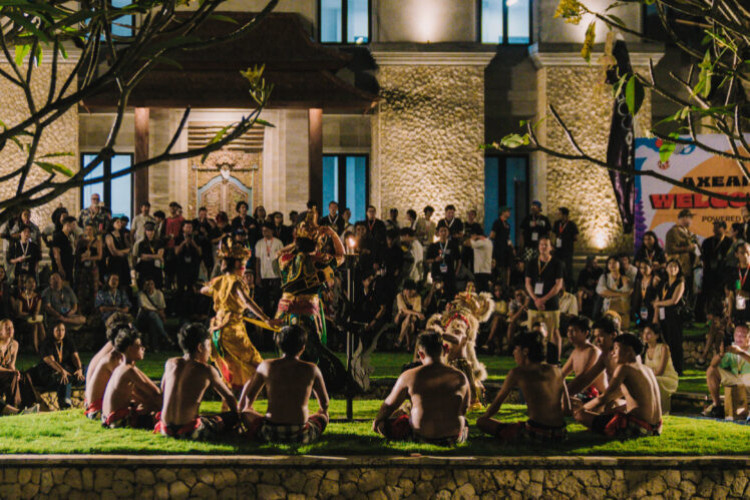
Di episode kedua mini seri Direktori, kami berkunjung ke Bali untuk mencari apa yang tersembunyi di balik deru pariwisata dan melihat bagaimana keberagaman hidup di sana.
Episode pertama untuk mini seri terbaru kami untuk campaign #Direktorikota, kami memulainya dengan pertanyaan besar, apakah semangat kebersamaan masih ada di keseharian kita?