



How The Shift in Horror from Supernatural Fear to Dangerous Men Depicts Misogyny on Screen
Responding to the current growing popularity of films like Hokum (2026), Backrooms (2026), and Obsession (2025), in this Open Column submission, Agnes Giovanni argues that the horror genre’s shift in focus from supernatural fears to dangerous men foreshadows an even darker (and realistic, yet dire and deeply personal) depiction of misogyny in cinema and real life.

Words by Whiteboardjournal
There lies a sick and twisted part of humankind that thrives on fear. Bloodcurdling screams, gore against a rough asphalt, the gaping expression of a petrified protagonist—in a reality that already seems unforgiving, horror films have become a comforting reminder of how there are always worse ways to live.
Though it isn’t inherently wrong to enjoy this genre, horror films have sustained their bone-chilling reputation through the exploitation of female characters. From the sexualization of soon-to-be-dead victims to the explicit suffering of women that somehow feels like punishment more than a well-written plot, the genre has substantial evidence in pushing misogynistic narratives onto the big screen.
But hope is not lost in the dire times of cinema. Recent box-office releases, including Hokum, Backrooms, and Obsession, prove that the genre has not abandoned fear; rather, it has shifted its focus from the paranormal to a more tangible and deeply personal source of terror: dangerous men. It is this very evolution that gives rise to an ethical dilemma within the film industry. If horror invites audiences to confront humanity’s darkest secrets, then filmmakers and viewers alike must be confronted with the same question of morality—how far can horror be considered entertainment when its fear is so often built upon the objectification of women?
Women: Horror’s Beloved Victim
To understand how misogyny is embedded within the genre’s conventions, we must admit that the cinematic gaze, unfortunately, has always been predominantly male. In the essay Visual Pleasure and Narrative Cinema, Laura Mulvey (1975) coined the term ‘male gaze’ which characterizes women as sexual objects built to stroke the incessant male fantasies. The concept, however, can branch out beyond the obscene desires of men and instead, shove female characters into other depictions that ultimately degrade them.
One of women’s earliest portrayals in horror is the Witch archetype. Throughout history, witches have been described as possessing dark powers in tandem with the devil. These misconceptions, as it turns out, were not instigated by religious superstitions but rather by a patriarchal one. In the infamous treatise titled Malleus Maleficarum, Heinrich Kramer and Jacob Sprenger argued in disturbing detail how women’s roles must be constrained as they were prone to the devil’s temptations, whilst men were divine people of God.
“When a woman thinks alone, she thinks evil.”
— Kramer & Sprenger (1487)
Their spiteful rationale indicates that women who dared to challenge patriarchal social norms were demonized as practitioners of witchcraft. A testament that the two dumbest men in the 15th century should not have been allowed ink and parchment to delude themselves into writing such an atrocity.
Furthermore, many witch portrayals in the media are created to demean women of a certain age. From the flesh-eating witch of Hansel and Gretel to Baba Yaga with her mortar-and-pestle broom—these antagonists were women with shriveled skin and exaggerated hooked noses. These beliefs did not remain fictitious but rather a premonition during the active witch hunts in the medieval era, where women were accused, tortured, and executed, appropriating what was supposedly a tragic event of femicide into amusing bedtime stories.
One would think that as the years go by, maturity would somehow ripen the horror genre into something more profound. Human integrity, it seems, lacks just as equally as the creative drive behind most 80s horror movies. Three centuries after the witch hunts ceased, the world apologized to women by introducing slasher films into the box offices.
Friday the 13th, Halloween, A Nightmare on Elm Street, to name a few, would garner such a cult-following audience that would fuel these popular films into even bigger franchises. Despite the subgenre’s growing demands, its plot progression would spiral into utter redundancy and extreme predictability.
There is a pattern, an unsettling one, that follows the apprehensive yet headstrong female character, forced to witness the deadly massacre of her extremely oblivious friends. She is soon marked by death, by a psychotic killer who has set his eyes on her. But she is different, she’s not like other girls, she will survive this tormenting cat-and-mouse game, and she will come out victorious, if not traumatized.
They call her the Final Girl.
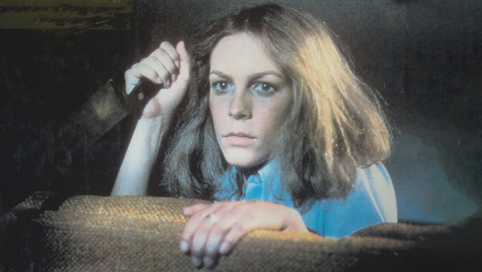
Halloween (1978), Credits: Compass International Pictures
The Final Girl may not seem harmful in retrospect; after all, it is a cinematic breakthrough. Women are finally spotlighted as strong and independent, standing up to a raging slaughterer, rather than the cliché display of intellectual indifference. But the context beyond the trope’s existence has to be established to decide whether a representation is truly productive in celebrating women or entirely null and void.
In Her Body, Himself: Gender in the Slasher Film, film scholar Carol J. Clover delved into the construction behind this trope. Oftentimes, Final Girls are pure and virginal; they don’t have the time nor interest to engage in physical intimacy, and yet, they are far from being feminine. Not only do they take on androgynous names—Stretch, Marti, and Chris—but they quickly adapt using intelligence, awareness, and competence to maneuver mechanical and physical objects to outwit the killers.
The Final Girl is designed to be distinguishable. She is smarter, more boyish than her peers, and is always the first to notice something is amiss—a total antithesis to her other girlfriends, who spend their screen time blissfully ignorant in somebody else’s bed. The Final Girl’s reluctance to sex becomes the plot armor that would reserve her an immediate seat to survival; a destructive motif implying that to survive the horror, one must become the plain Jane, and to avoid violence, one must cover up their chastity.
Additionally, Clover suggested that the death of a male tends to be from a distance, executed in the obscuring dark, where the murder is done swiftly; he will die, unaware of the terror that has struck him. In comparison, scenes involving female deaths take up most of the duration, filmed at a shorter range, overwhelmingly graphic, and always, when she is wearing little to no clothes.
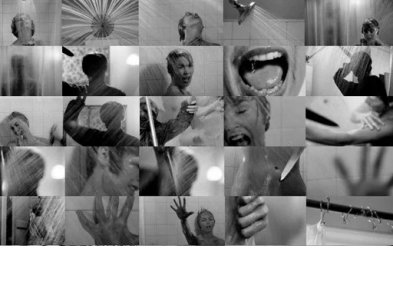
The composition of slasher films encourages people to observe from the perspective of the perpetrator. Not only is a woman’s suffering the source of gratification to the onscreen killer, but also the gratification of the male audience. These gruesome acts, shot in a manner that is sadistically explicit and prolonged, reduce women to nothing but a spectacle of violence and pleasure. (Credits: Universal Pictures)
“I’m convinced it has to do with the growth of the women’s movement… I think that these films are some sort of primordial response by some very sick people, of men saying, “Get back in your place, women.”
— Siskel & Ebert, film critics in Sneak Previews (1980)
The Monster is Man
Amid the growing popularity of Hokum, Backrooms, and Obsession, the genre’s reliance on supernatural tropes—haunted houses, creepy cults, and ghastly ghouls—has slowly shifted to the human psyche. Behind those physical manifestations comes a more eerie phantom, an invisible matter of sorts, embodied through unresolved trauma, psychological turmoil, and self-resentment. These movies do more than just torment their protagonists’ sanity into smithereens; they have shown that the real horror lies between the cracks of a fractured male ego.
Hokum is set in the backdrop of Ireland, where a supposedly haunted hotel resides in the middle of nowhere. Following the storyline of a local witch, the Cailleach, who terrorizes the hotel guests, the movie takes a haunting turn when one of the staff, Fiona, goes missing. Viewers will learn that the supernatural aspect is secondary to the inciting incident when Fiona’s disappearance is revealed—she is killed due to her position as an extramarital lover.
The narrative changes from being fearful of the witch to actually being fearful of the main orchestrator— Mal, the front-desk clerk presumed to be sweet, a married man hiding his illicit tracks, and a violent murderer who will meet his demise by the witch’s chains.
In Backrooms, the inner psychology of a man is further tested. The film opens with Clark sitting face-to-face with the psychiatrist Mary. He shares about his dwindling career, his troubled marriage, and his dependency on drinking. Though he isn’t initially violent, his behavior turns erratic when he willingly suffocates Mary, dragging her deeper into the Backrooms and tying her to a chair.
The two engage in an intense dialogue, exposing Clark as someone who isn’t reasonable enough to face his shortcomings and instead prefers to stay inside the yellow space. His actions imply even darker themes of addiction, consuming rage, and domestic abuse, suggested by how he mutilates the Backrooms imitation that closely resembles his wife. The film fleshes out its characters’ respective traumas in a manner that offers appreciation to Clark’s complexity while still questioning his explosive tendencies.
In Obsession, the subject of consent and bodily autonomy becomes one of the movie’s discussed themes. It tells the story of Bear, who purchases a One Wish Willow and uses it to make his friend, Nikki, reciprocate his romantic feelings. Unbeknownst to him, the gravity of his actions results in Nikki’s obsessive behavior, acting unlike her previous self, and eventually causing the deaths of their friends.
Nikki’s persona is portrayed so derangedly that many fail to notice the transgressor behind this phenomenon —the timid, socially awkward Bear. What seems like an honest mistake becomes a blatant act of misconduct and further implications of sexual abuse, in which he takes advantage of her while she suffers in a bewitched stupor.
The hijacking of women’s autonomy, both bodily and cognitively, is a metaphor of nonconsensual exploitation equivalent to manipulation and sexual assault. So often, however, this depiction falls into an audience’s desensitized ear. Bear (oh, the irony) may not possess the qualities of a villain—ambitious, terrifying, a backbone of steel—but he was a coward who plays along with his mistakes until it’s too late. In a world where principles must be held closely amid society’s systematic injustices, men who proudly claim to be nice tend to be the very entity who choose to ignore and run.
“He’s like ‘I know that I come off as a shy nice guy ‘… I never want to like point the camera at the answer of like, hey, this guy’s bad, you know, but the writing’s on the wall.”
— Curry Barker, director of Obsession
A man silencing his affair, a man refusing accountability, and a man determined to manufacture someone else’s love; these films share one truth: women are more likely to be in danger at the hands of men than in the clutches of a ghost. When a male ego comes push to shove, their ever-so-terrible decisions turn their female counterparts into scapegoats, left with their own devices to survive a maze of unpredictable violence.
Breaking the Cycle
The argument doesn’t necessarily mean all women in horror films are terrible representations, but rather, it is a matter of disciplining ourselves to see horror through a lens free of bias.
There remains a beauty in critical thinking, supported by the historical and social context behind something as simple as watching horror movies. Understanding beyond the hidden intentions and breaking away from the desensitization of female suffering lies in the responsibility of the audience to judge for themselves. Is the film stripping away a woman’s value, or is her suffering an analogy to a more realistic issue at hand?
With the resurgence of patriarchy and incel ideology, it is no coincidence that films have included themes highlighting gender-based violence. Whether women are portrayed as heroes, villains, or devil incarnates— any form of power granted to women will never equate to liberation if it leaves the pride of their male counterparts pristinely untouched, whilst theirs is questioned. As the genre gradually abandons its paranormal roots, its verisimilitude reveals that perhaps, the real horror is the dangerous men we meet along the way.

Agnes Giovinna
Designer on weekdays, writer on weekends, and a human being most of the time (?). I write to solely infuse my unamusing stories with sarcasm, dark humor, and the parallelism between reality and fiction.

Ewan McGregor dan Hayden Christensen Kembali sebagai Obi-Wan Kenobi dan Anakin Skywalker dalam Teaser Trailer “Obi-Wan Kenobi”

Memasuki Semesta Ajo Kawir dan Iteung di Trailer Internasional “Seperti Dendam, Rindu Harus Dibayar Tuntas”
The Photographers
