10.08.19
Backstage Life Bareng Grrrl Gang di Episode Kelima Vindy Ngapain?
Tahun ini Grrrl Gang mendapatkan kesempatan untuk menjadi salah satu line up di We The Fest 2019, dan Vindy diperbolehkan untuk mengikuti aktivitas mereka.

Perhaps it's each of the personnels' strong affinity and bond towards the song that makes Sigmun's music deliver a very deep and beautifully haunting performance. The highly skilled guitar and drum playing plus the impressive high-pitched voice of vocalist Haikal definitely highlights their excellent performance at our very own W_Space. This Bandung-based rock band played three songs in this session: . Consisted of Haikal Azizi (vocal/guitar), Nurachman Andhika (guitar), Mirfak Prabowo (bass) and Risyad Tabattala (drums), the name “Sigmun” itself is derived from the famous neurologist Sigmund Freud due to their fascination upon his defense mechanism theory and unconscious mind. In its interview with The Wknd Sessions, Sigmun mentioned that they are intrigued by the idea that there are elements in our body that we are unaware of; and Sigmun tries to dig up those ideas by creating music. Check their performances and interview out on The Wknd website!



Why are we so obsessed with the pursuit of authenticity? by Steven Poole “Modern mass-media gluttony, or foodism, has its own cluster of presumed ‘authentic’ virtues. The idea of ‘real’ food is sometimes parsed, adorably, as food with no chemicals, though all food is made of chemicals. It is widely assumed that food sold as organic is purer and closer to an assumedly benign Nature, although no food is made from inorganic matter and organic farming standards sanction the use of neurotoxic fertilisers.” Have you ever looked for “original” coffee or restaurants that serve “authentic dishes” from this or that country? The chances are that we all have – at least once. And this preference does not apply to food alone, according to Poole. A Tweetable Feast “Food is inherently social, best consumed with friends or family; even eating with strangers is better than eating alone. It is essential to our social life that we invite people to eat with us, even when we’re separated by space and time.” Keller points out the social values of dining, and why he thinks that the flood of food photos on Instagram and other social media outlets might not be such a bad thing. He continues to say that even though “we laugh at our Instagrammed plates and tweets about lunch,” we realize that “the pixilated dishes on Skype or Google+ might be a viable alternative to the kitchen table.” The Culinary Triangle by Sara Davis “Cultural values and fears might manifest through actual cooking and eating practices, as when we bake our most elaborate pastries for milestones such as birthdays or weddings, or when we refuse to eat food that has fallen on the floor because it has strayed into the zone of the rotten.” This essay is largely based on Claude Levi-Strauss’s three categories of food: raw, cooked, and rotten. Davis emphasizes the different attitudes that different cultures have toward those categories. Star Wars by Tom Vanderbilt “In the days before the Internet, eating at an unknown restaurant meant relying on a clutch of quick and dirty heuristics.” Eating out used to be an adventure, but Vanderbilt notes that nowadays, we are faced with the never-ending supply of reviews and online recommendation. In short, the modern food enthusiast is exposed to many – perhaps even too many – choices. How should we filter out all that information? The Kinfolk Table This recipe book “puts the emphasis back into the relationships that surround eating. Let the people sharing your dinner table be the foreground and superficial details such as fancy recipes and table decorations can fade into the background.” What do you think about the new aesthetics of food? Presentation is now almost, if not more important than “authenticity” itself. Or perhaps presentation is what makes a certain food authentic. Tuesday, December 17, 2013 7—9 pm Kinokuniya Plaza Senayan (near the language section) Jl. Asia Afrika 8 Sogo Plaza Senayan Lt. 5 Jakarta 10270 Look out for updates on our Facebook page and Twitter account! If you’d like to share your opinions, or if you have friends who’d like to share theirs, please sign up via e-mail with the subject title “We Discuss” at ! If you have comments or questions, tweet us .
, the London-based award-winning film maker, designer, and animator invites you to “In Dreams”, the visualization of four people's most vivid dreams that they remember the most as they discuss their dreams with their heads visualized as the representations of the dreams; the teeth, the hair, the tree and the eyes. is my own most vivid dream?”

There are only seven days until the last We Discuss meeting of 2013. This month, we are going to relax and talk about something everyone loves: food. But where, how, and the people with whom we share (or don’t share) our meals also define us. Because food is essential to our survival, we rarely take the time to think about eating as an activity that is loaded with cultural codes and traditions. Let’s use this opportunity to take a step back and look into our eating patterns. - What is your favourite food? Do you think that the combination of flavours, smells, and memories determine what you would consider to be your favourite food? How so? - Instant food vs. fresh produce. Are we willing to sacrifice convenience at the expense of our health? - With regards to “organic food,” are we really becoming more health conscious or are we just participating in a fleeting culinary trend? - How do we decide what is food or what it isn’t? Why do we think that some dishes are “bizarre” while others aren’t? - We associate certain foods with specific cultural or religious celebrations and vice versa. To what extent do the two depend on each other? - The plates and cutlery that we use for our food are also an integral part of our eating habits. Some use chopsticks, while others use spoons or even their bare hands. Do you think the survival of a culture depends on the continued practice of using specific tools? - There is a growing appreciation towards “food” as opposed to food. This increased interest in food is not only limited to cooking shows on television. But there are magazines such as Kinfolk and Cereal – just to name a few – that portray food and the process of making it, as an art form. The question that arises from this: is this sort of “food appreciation” applicable to all cultures? What does it say about social classes? - What are the major differences between eating at home and eating out? - The popular philosopher, Alain de Botton, once tweeted: “Cooks: make the food others too busy to prepare.” But sometimes we eat for reasons other than the food itself. We also consider the ambience of restaurants and cafes. How big or small is the place? How far is one table placed from the other? How is the lighting? - Do the concepts of “take away” food or food carts reflect the pace of our society? Tuesday, December 17, 2013 7—9 pm Kinokuniya Plaza Senayan (near the language section) Jl. Asia Afrika 8 Sogo Plaza Senayan Lt. 5 Jakarta 10270 Please look out for more #WeDiscuss updates on our Facebook page and Twitter account! If you’d like to share your opinions, or if you have friends who’d like to share theirs, sign up via e-mail with the subject title “We Discuss” at ! If you have comments or questions, tweet us .
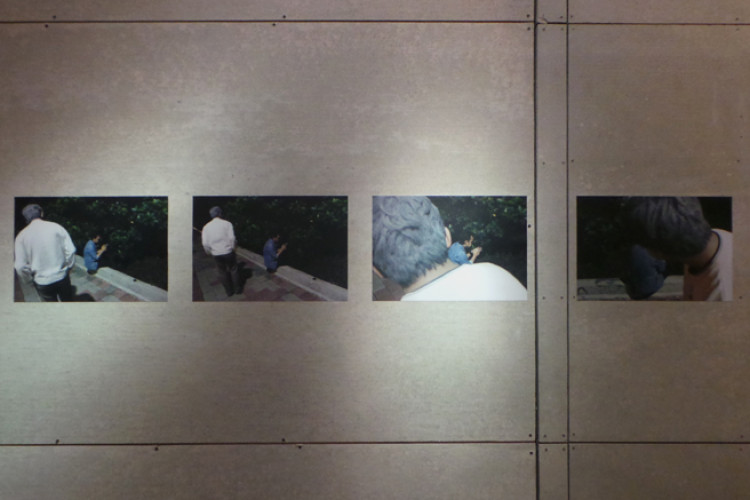
officially started on December 6, 2013 at Dia.Lo.Gue Artspace Kemang. The exhibition kicked off with opening statements by Mitha Budhyarto and FX Harsono, as well as a brief introduction of the eight participating artists. “Our lives are filled with instructions that act as directions, orders, and cues as to how we must behave,” goes a line in Mitha’s introductory text in the guidebook. It is difficult to take a step back and analyze the very instructions that have shaped our behaviour and perspectives. Instructions – both written and unwritten – interlock with the way we lead our lives. This year’s EXI(s)T focuses on the attempt to reevaluate and reinterpret society’s many instructions through artistic means. While some think that instructions are a form of repression, others see them as rules that can be manipulated. The 2013 batch explored the theme using different mediums – from drawings, videos to performances. From the diversity of the methods alone, one can see that despite the seemingly absolute nature of instructions, they are actually quite relative. Below is the list of displayed artworks and their respective creators: by Dhanny Sanjaya by Hendra Permana by Ratu R. Saraswati , , and by Nady Azhry by Sarita Ibnoe by Angga Cipta by Kara Andarini by Bey Shouqi The field of art is expanding in ways that may have not been possible centuries, or even a few decades earlier. Art’s boundaries are becoming more fluid; therefore offering endless opportunities for aspiring and professional artists to experiment. FX Harsono emphasized that as an educational program, EXI(s)T has no templates. It does not aim to produce artists who is like this person or that person, or whose works are like painting or that sculpture. Both FX Harsono and Mitha Budhyarto, as two experienced individuals in Indonesia’s art scene and the official mentors of he program, encourage new types of artists and new types of creations. EXI(s)T #2: Instruksi will be open to public until , so do stop by before it ends! For more information, please visit EXI(s)T’s blog.

It was a forest, a sheet, a chair, a frame and nobody but himself that led the Pennsylvania-based photographer, Christopher Ryan McKenney, to take the first picture of his series of surreal photography, which was taken in the remote woods of his Wilkes-barre neighborhood. His photographs are mostly faceless. The subjects are either covered by cloth over their heads, burned in fire, or just simply headless; a basic concept that is so scary and frightening yet somehow McKenney managed to make the results so beautifully haunting regardless of their scary concept. McKenney does not reveal the identity of the human subject in most of his pictures. He explained that he likes “taking away identity when photographing and to leave people thinking.” In his photograph of a man whose head is covered by a lampshade and with the falling lampshades surrounding him, I interpreted it as a representation of a human's mind that is highly influenced by numerous external factors surrounding it. However, according to the photographer himself, it is actually a depiction of “people having ideas but covering them up in fear of failure or what other people will think." Surreal art works are indeed prone to multi-interpretation. However, that is actually one of its perks that makes people find them interesting. Given this fact, McKenney reacted to it with “I only make the photos I do to express myself and what other people see or think is up to them, as long as I make them feel anything, I’m ok with that” McKenney's works might as well remind us about the works of the famous Belgian surrealist artist Rene Magritte as both of them emphasize the paradoxical idea of unveiling what lies beneath the pictures by concealing it. Magritte, in his“The Son of Man” painting which depicts a man whose face is hidden by a green apple tried to show the viewers that everything we see hides another thing; so did McKenney in his photographs by, for example, hiding the identities of his human objects. Surrealism, as for myself, is the style of art that triggers what is in you; it crosses the boundaries of what normally belongs to social conformity and expresses what actually lies within, enabling the works of it to be distinctive and brutally honest.

Tahun ini Grrrl Gang mendapatkan kesempatan untuk menjadi salah satu line up di We The Fest 2019, dan Vindy diperbolehkan untuk mengikuti aktivitas mereka.