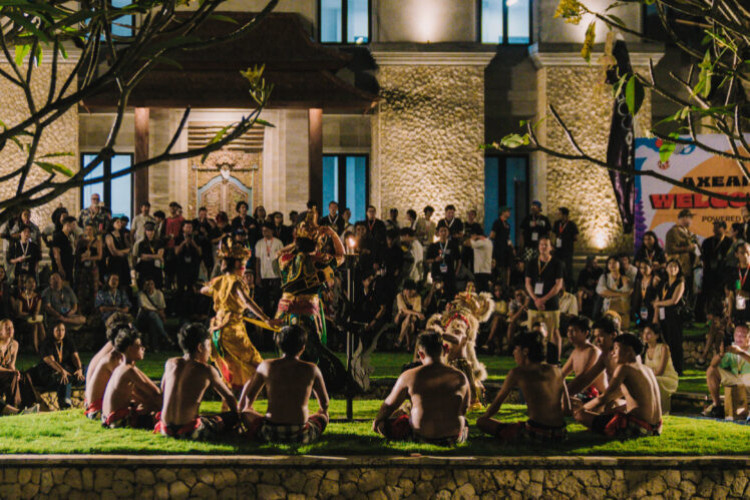
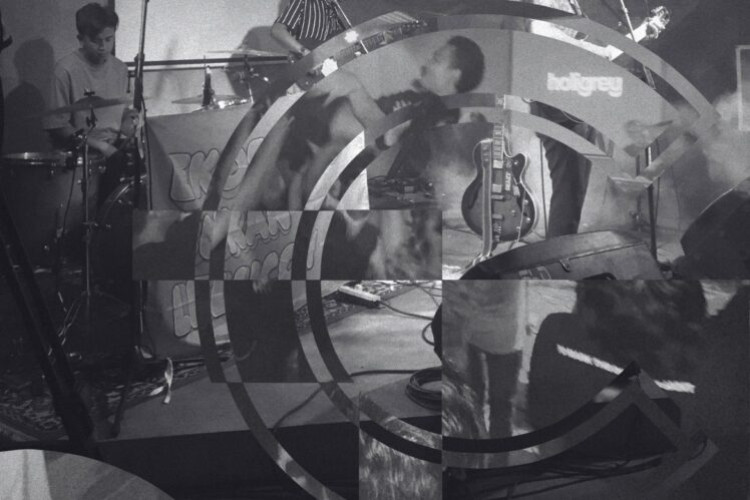
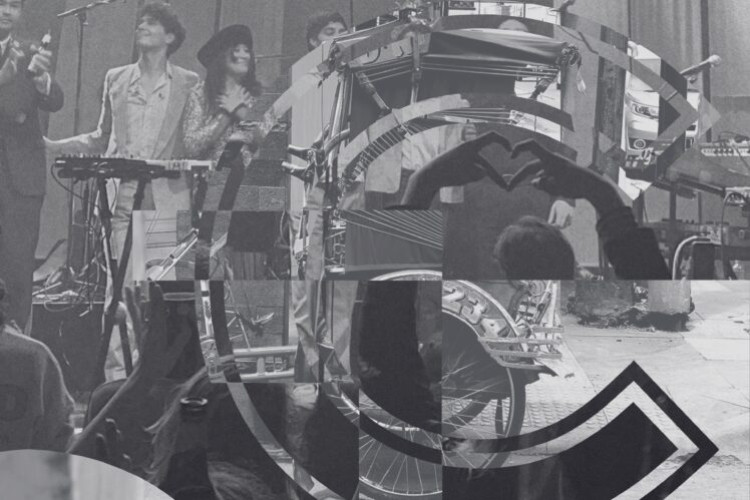
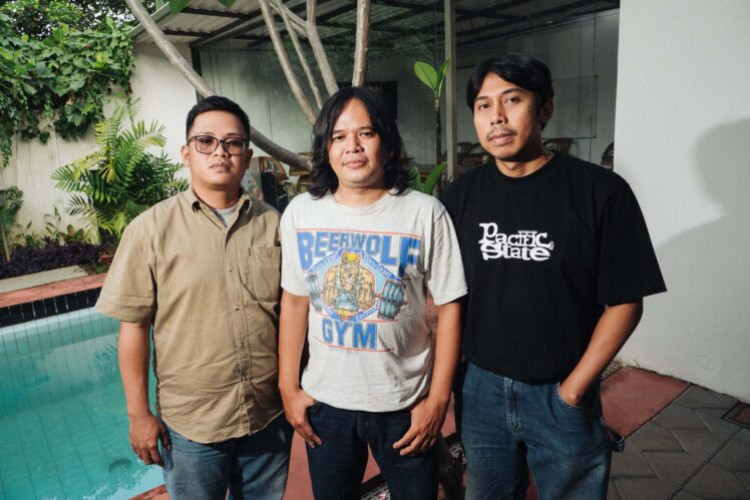
Berbicara tentang AXEAN Festival, kami mengundang beberapa alumninya, Batavia Collective dan The Panturas, untuk mengulik atmosfer di dalam festival musik tersebut yang seperti konsisten melambungkan nama-nama up-and-coming ke berbagai festival musik besar lainnya di mancanegara.
As yours truly has been suffering some sort of wack stomach bug, he had his mate Pohn-G compile this edition of Fat Cat Ffonz. This one is hastily done, comprising mostly of hip hop and some deep house (Moodymann to be specific).
01. Funkadelic - I Wanna Know If It's Good To You
02. Chance The Rapper - Cocoa Butter Kisses (ft. Vic Mensa & Twista)
03. Schoolboy Q - Gangsta In Designer (No Concept)
04. Ab-Soul - Bohemian Grove
05. Theo Parrish - Jb's Edit
06. Moodymann - People
07. Moodymann - How do U Get 2 Detroit
08. Moodymann - Girl
09. Moodymann - Sloppy Cosmic
10. Kanye West - Mercy (feat. Big Sean, Pusha T, 2 Chainz)
11. Theohpilus London - Big Spender (Ft. ASAP Rocky)
12. Pusha T - Numbers On The Boards
13. Run The Jewels - Get It
14. Ab-Soul - Black Lip Bastard [Remix] (Feat. Black Hippy)
Ever since he was a given a copy of Juice battling Supernatural, our author started following hip hop's battle scene. And as last weekend saw one of the most highly anticipated battle happen (Hollow da Don vs Loaded Lux), he couldn't help but write this column to share what he knows of the sport by introducing it to Whiteboard Journal readers. Read on and take a look at what he has to say about it.
Last night, Whiteboard Journal hosted our 7 We Discuss session. This month, we talked about many different aspects of what we have come to know as the “Do-It-Yourself” (DIY) culture. Lots of intriguing ideas were exchanged throughout the discussion, which have been summarized in the following points:
- When you can’t find things that suit your preference and/or needs, you begin to consider making them on your own.
- Economical motivations are also common (i.e. the need to save money).
- “Yourself” is the heart of the widely used acronym, DIY, as it emphasizes the creator’s independence.
- However, the most important part is a person’s involvement in the process, further adding a personal touch to the product.
- But is it possible to purely “independent” in the sense of not relying on other like-minded individuals? There were participants who thought that establishing a network among DIY-ers could threaten the very idea of DIY.
- However, there were also participants who were in favor of a community that would act as a support group to sustain the movement. In this case, independence is achievable on individual and collective levels.
- A question was raised regarding the standards of DIY products. Are standards even necessary? Or does the appeal of the DIY culture lie in its absence of standards?
- A sense of accomplishment is one of the plus points of engaging in DIY activities.
- When speaking of the DIY culture, one must learn how to distinguish between a “DIY product” and an “invention.” DIY products have less to do with the originality of the idea behind them, and more to do with the creator’s initiative to be involved in the process.
- Another point worth highlighting is the necessity of sustaining the availability of resources (i.e. the materials needed to make various products). Without the materials, it would not be possible to make more things.
- With regards to technology, an interesting argument was made about the irrelevance of the “analog vs. digital” argument in discussions on the DIY movement because technology is always evolving. What’s important is how those changing technologies are utilized. It’s about using what is at your disposal at the present moment.
- This is then linked to the time-based nature of DIY goods. There is something is immediate about them.
- From a musician’s perspective, DIY is about being control (e. g. recording one’s own music in one’s own room.) However, although the process itself could be controlled, the consequences of releasing the end product – if it were to be released – cannot be controlled.
- Increased effort = increased support for the cause. In other words, when a lot of effort into a certain product – be it a thing, event, or movement – it is highly possible that others would want to sustain it.
- It is dangerous to stress the “handmade” element of a DIY product because it does not necessarily guarantee the quality of the product.
- DIY products are very subjective. Their value cannot be measured according to monetary standards. They are often segmented, and not designed for the masses.
- A point was raised regarding net labels – independent online distributors of music – that break the barriers of copyright.
- The DIY movement is both a subculture and a counterculture – depending on the motivation of the creators. It depends on whether one simply make something for one’s own purposes, or is there a vision to influence others to do the same.
- Ideally, the DIY movement shouldn’t be tied to commercial interests (especially in terms of profit), as it would defy the purpose of establishing something that is “for the people.” However, in cases where “the profit” is used to finance the needs of the people (be it for the continuity of the makers movement or charity), exceptions are made.
Your feedback would be greatly appreciated, so please feel free to tweet us @wjournal or send us an e-mail to with the subject title “We Discuss #7.”
We would like to thank those who came and contributed to the first We Discuss of 2014. We hope to see you again at future discussions! Look out for announcements and related updates on next discussion. Check our website, Facebook page, as well as our Twitter and Instagram accounts!
As you will find out in this Interview, Anitha Silvia loves the East Java's city of Surabaya. An active member of C2O Library & Collabtive, Ayorek!, Indonesia Netlabel, and Sunday Market - her dedication to create a thriving cultural environment in Surabaya is strongly felt. Responsible for many events ranging from educational to entertainment, Silvia shared stories and opinions regarding her work in this Interview. Enjoy.
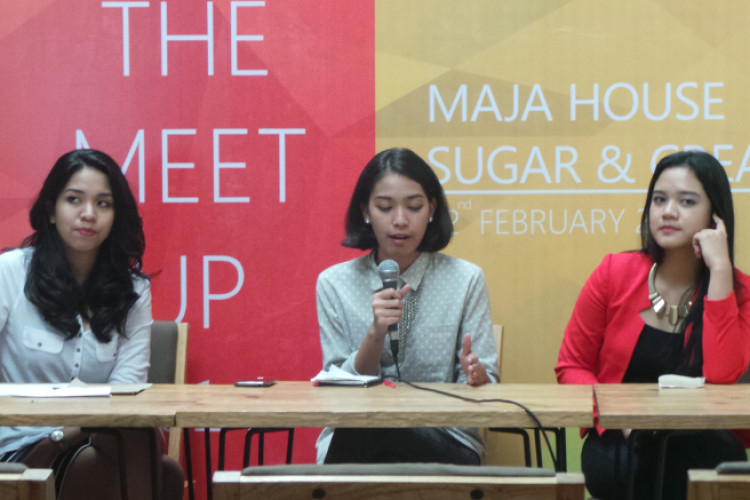
This afternoon, Whiteboard went to the press release for the RightBrain Group’s upcoming event, , that took place at Mojo Kitchen & Bar in Senopati. The RightBrain Group is a new up and coming social space group located in Bandung that aims to support and create a network for the Indonesian creative industry.
The Meet Up 2014 itself is an introductory event that focuses on the developments of the creative industry by creating a space for networking amongst potential partners and buyers that will be held on February 22, 2014 at , Bandung. It consists of many attractions such as a photography exhibition and fashion show by various local fashion brands like PARD, Pot Meets Pop Denim, Bluesville, etc. Not to mention the musical styling’s of local DJs like Hogi Wirjono, Bergas, Egga, and many more.
The RightBrain Group itself has a vision of creating a unique social space and community for Indonesia’s creative industry. The event allows people from the creative industry to meet and build a network together.
The Meet Up 2014 is sponsored by Sampoerna with the target of a minimum of 1,500 people. RightBrain looks to distribute invitations from 2 quarters with 1,500 in the first and 500 in the second, opening a guest list also for the public to join. RightBrains goal is to approach the creative industry one step at a time seeing as how wide the creative industry is. They hope to be able to approach each field little by little.
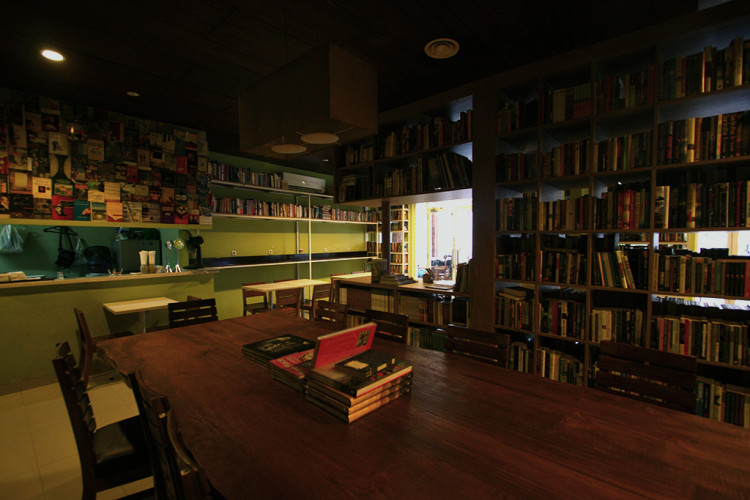
Bookstores and libraries have yet to pop at the impressive rate that cafes and restaurants do in Jakarta. But this does not necessiraly mean that this city's book lovers have nowhere to go. Located in the Kemang area is Reading Room, a cafe/library/bookstore that could quickly become a reader's sanctuary. Established by writer and filmmaker, Richard Oh, the place offers an eclectic book selection.
Direktori: Di Makassar, Melihat Harapan dari Indonesia Timur
Di episode ketiga Direktori, kami berkunjung ke Makassar untuk belajar tentang bagaimana semangat literasi menghidupkan budaya kota juga tentang kebersamaan dalam keberagaman.
Di episode ketiga Direktori, kami berkunjung ke Makassar untuk belajar tentang bagaimana semangat literasi menghidupkan budaya kota juga tentang kebersamaan dalam keberagaman.
Di episode kedua mini seri Direktori, kami berkunjung ke Bali untuk mencari apa yang tersembunyi di balik deru pariwisata dan melihat bagaimana keberagaman hidup di sana.
Episode pertama untuk mini seri terbaru kami untuk campaign #Direktorikota, kami memulainya dengan pertanyaan besar, apakah semangat kebersamaan masih ada di keseharian kita?