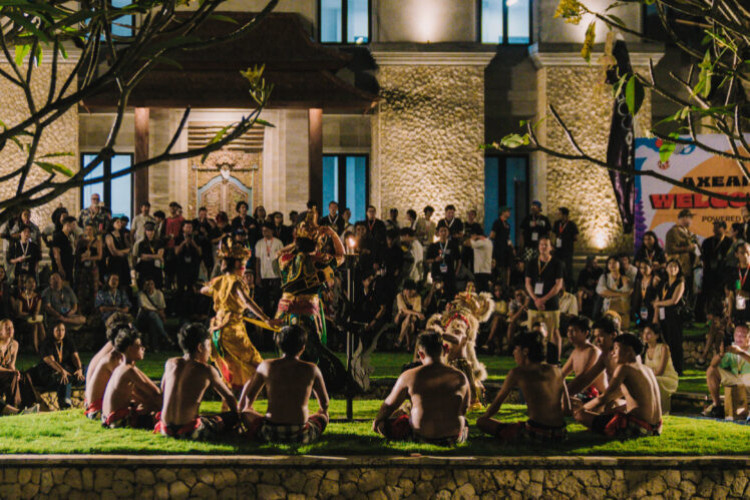
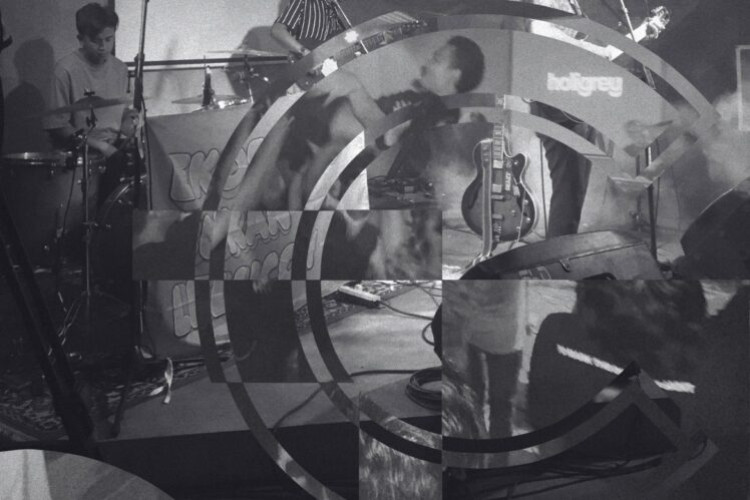
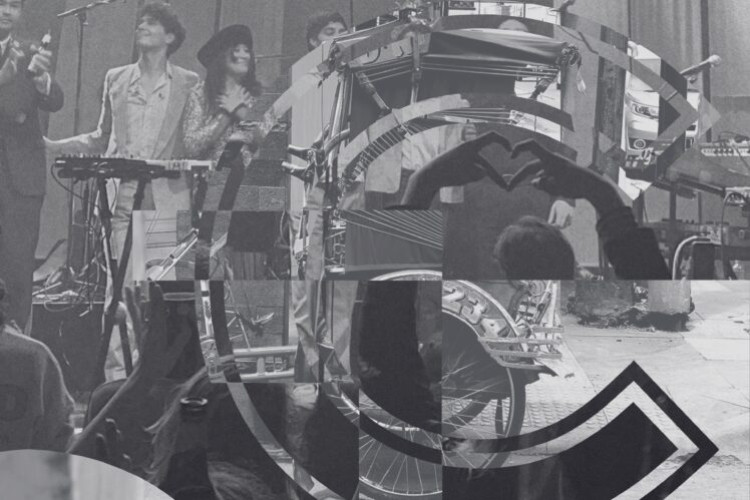
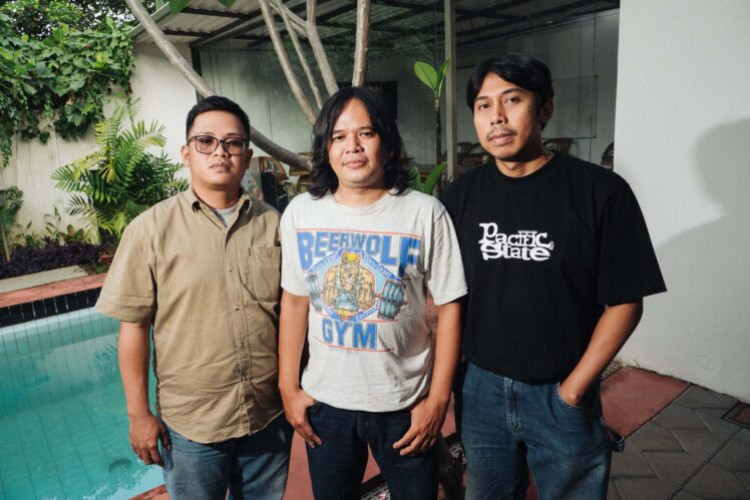
Berbicara tentang AXEAN Festival, kami mengundang beberapa alumninya, Batavia Collective dan The Panturas, untuk mengulik atmosfer di dalam festival musik tersebut yang seperti konsisten melambungkan nama-nama up-and-coming ke berbagai festival musik besar lainnya di mancanegara.
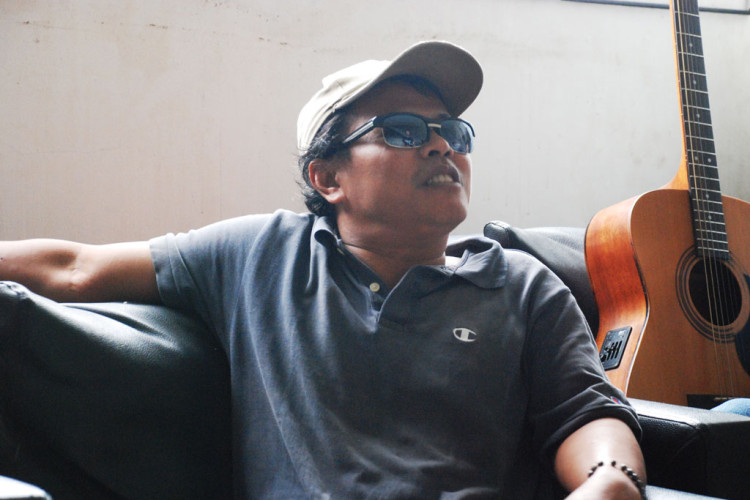
We managed to catch up with the legendary Indonesian humor band, Orkes Moral Pengantar Minum Racun (Music to Drink Poison To) or best known as OM PMR, before a practice session at Homie Studio in Tangerang. In existence since 1979, the band is enjoying a renewed existence and gearing up for a new album. They sat down with Whiteboard Journal and talked about their history, their take on music, and what makes them so special.
This one is a bit of a nostalgic trip for me. As I was compiling this episode of Stereo Strange I put The Bouncing Souls "Say Anything" on and decided to scrap the other songs that were in the mix and build a compilation around the song. In high school (hence the name) I listened to a whole lot of punk, hardcore, & ska, and what you have here are perhaps the most melodic of the bunch. The songs here are basically jams that I listened to relax. Listening to them now, they're quite energetic, arent they? Click play and take a trip down my memory lane with this mix!
01. No Use For A Name - Fatal Flu
02. Descendents - Silly Girl
03. All - Silly Me
04. Skankin Pickle - Gas in My Car
05. Assorted Jelly Beans - Braindead
06. The Bouncing Souls - Say Anything
07. Funeral Oration - Do You Feel It
08. Lagwagon - Kids Don't Like to Share
09. Dance Hall Crashers - Lost Again
10. NOFX - Linoleum
11. Digger - Nightlife
12. Suicide Machines - Our Time
13. Tilt - Libel
14. Bad Religion - Cease
15. Rancid - Ruby Soho
Blogging continues to be one of the most popular venues to distribute information. Whether talking about fashion, technology, food, or simply ranting about random things, blogging is an avenue designed for individuals to freely express their thoughts. Acknowledging the freedom and influence of blogosphere, Zocko empower individuals by creating a monetizing system that is based on the blogger’s individual taste.
A very well received medium in Indonesia, many individuals have become quite popular through the blogosphere. A few examples - Diana Rikasari’s “Chocolate and Mint” has become a destination for young Indonesians to look for everything from fashion to home decor, Jenz Corner offers a visually enticing narrative of its author’s culinary travels. Though perhaps uncommon, international blog superstars such as the Facehunter even gets flown worldwide to cover various fashion events due to his undeniably unique and tasteful approach to fashion photography. A good blog is run by persons/groups whose taste you trust, and their posts inadvertently become recommendations you adapt to your own life.
It’s no surprise that in the blogosphere, the trusted/popular sites are able to make a decent income off it. Whether it is advertisement, product placements, or advertorials, the blogs popularity and influence are undebatable.
As mentioned above, Zocko (a website combining social media, e-commerce, and social influence) offers an alternative avenue to monetize the blogs. By using its concept of influencers and product selection, bloggers can pick and choose products they would like to recommend on their websites, and via a Zocko encoded link, can make money whenever a reader purchases a product.
What does this mean? Bloggers have full control over their content and are able to monetize off it. It is an empowering tool by Zocko, one that offers an easy, innovative means to earn from doing what you love. Recommended for bloggers from all walks of life.
Visit and find out more about Zocko through the following links:
www.Zocko.com
Zocko Twitter
Zocko Facebook
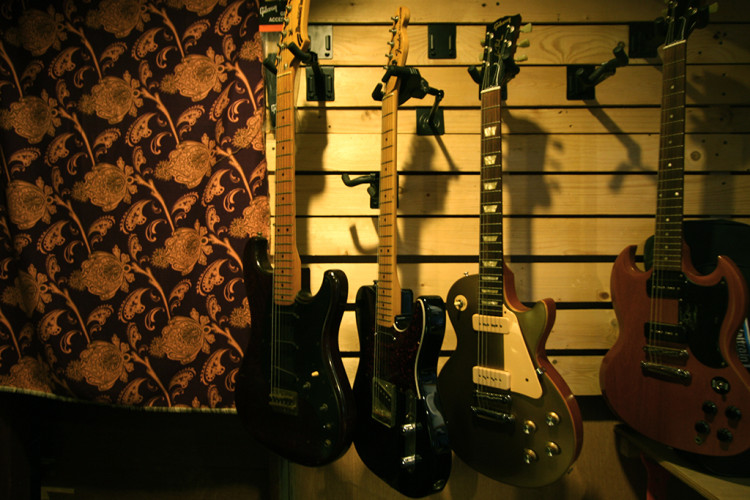
Kemang might be an ideal neighborhood in many ways, but as far as music shops are concerned, it still has a few improvements to make. Nestled among the lively restaurants and bars is Tokove, the sole go-to place for professional musicians and hobbyists alike. Not only does it offer a specialized selection of instruments equipment, but it also beams with a friendly atmosphere.
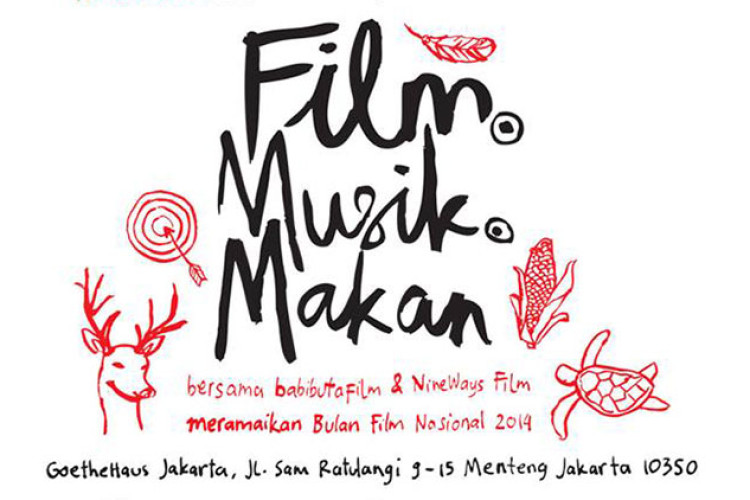
Very exciting news for those who live in Jakarta and its surrounding areas: Rocket Rain is making its official debut! Goethe will host Film, Musik, Makan, a two day event with a plethora of events including Anggun Priambodo's debut film. Not simply a film-screening, Film, Musik, Makan will host performances by White Shoes and the Couples Company and Jirapah, snacks by Rocket Rain actress Rain Chudori, DJ Performances courtesy of Irama Nusantara, film screenings including Edwin's Postcards From the Zoo, Ladya Cheryl's Vulgar, and Fitri by Sidi Saleh - and a whole lot more. Take a look at the schedule below and do make your way to the event!
Musical performances by:
White Shoes and the Couples Company
Jirapah
Coffee, Tea and Snack Break with Rain Chudori
Rocket Rain debut screening
Q&A with Rocket Rain director Anggun Priambodo
Postcards From the Zoo film screening
Q&A with Postcards From the Zoo director Edwin
Coffee, Tea and Snack Break with Ladya Cheryl
Vulgar debut screening by director Ladya Cheryl
Fitri debut screening by director Sidi Saleh
Someone's Wife In the Boat of Someone's Husband (SWITBOSH) film screening by director Edwin
Q&A Session with Ladya Cheryl, Sidi Saleh, & Edwin.
Lab Laba Laba DIY 16 mm Processing Workshop with Edwin
--
Film, Musik, Makan donation IDR 200,000 (for 2 day Goethe Institut events)
go to www.rocketrainmovie.com for more information.
Here's our list of recommended reading material for next week's "Speaking of Tunes" We Discuss session.
Listening and Collecting with Fadli Aat
“For me, vinyl records are very primitive – it’s very analog. It’s like those pianos in cowboy saloons or music boxes, the player read this physical groove on the record. Also, the sound vinyl records produce… compared to CDs they sounds much better and much more honest, in my opinion.
They are both mixed and mastered, but I don’t know, it just is much more honest. The physicality of the groove has a lot to do with it. CDs are digital, so CD players read them without that physicality. The artwork on records has a lot to do with it as well.
There are so many things you get when you buy that one record. The music and the musical quality, then you have the large and beautiful artwork as well.”
Rhythm of the Archipelago with David Tarigan
“It’s difficult to put into words. I grew up in an era before music can be ripped digitally. I started buying CD, cassettes and vinyl back when I was in primary school. The physical format of music has always played a big part for me. I love old music, and I wanted to experience it the way it was first released. It is an artifact, a piece of history. That’s why until this day I have never purchased a single re-issue. No matter how bad the quality of the record is, it is a part of the experience.
You don’t just listen to a song. When you get you hands on the album, you open the sleeve, read it, touch and even smell it. It is sort of a ritual, a way of worshipping your favorite band. Sometimes people buy an album based on its cover, and if the music is as good as the cover, the experience will be even more rewarding.
In the end it really depends on the individual. I always tend to leave some room for the imagination when it comes to my interaction with music. I like to interpret songs and create personal images of the music. The physicality of the record and the ritual of listening is the foundation that allows me to create my personal opinion of the music.”
The Lint of Material by Sven Birkerts
“The shift from vinyl recordings to CDs was significant, psychologically as well as technologically. While the shiny silver disc physically echoed its predecessor in a few obvious ways – was still a flat circular disc with a hole in the center – the differences were many. They were also symbolic. Where the album had two sides, needing to be ‘flipped’ for full hearing, thereby underscoring its temporality and the fact that its contents were arranged, the silver disc compressed its material on a single side. Tracks were no longer demarcated for the eye, so that all one saw was an elegant shimmering surface. And to make it operational – to play it – the listener had to slide it into the player. It disappeared, and the process whereby the information coded onto the disc became sound was (to me) conjectural: something to do with a laser scanning digits. To change cuts – assuming one was listening to standard fare – no longer required moving the tonearm to the wanted place. A quick touch of the button sufficed. If my explanation of how a needle extracted sound from vinyl was rudimentary and approximate, at least it took into account the basic elements and the everyday physics involved. I can’t tell you how a laser translates digital information; indeed, I cannot tell you how information is rendered into digital form, beyond invoking something about binary code – sequences of ones and zeros that are ‘read.’”
Beethoven and the Quality of Courage by Daniel Barenboim
“Music means different things to different people and sometimes even different things to the same person at different moments of his life. It might be poetic, philosophical, sensual, or mathematical, but in any case it must, in my view, have something to do with the soul of the human being. Hence it is metaphysical; but the means of expression is purely and exclusively physical: sound. I believe it is precisely this permanent coexistence of metaphysical message through physical means that is the strength of music. It is also the reason why when we try to describe music with words, all we can do is articulate our reactions to it, and not grasp music itself.”
“The Grain of the Voice” in by Roland Barthes
“The (if the transposition be allowed) covers all the phenomena, all the features which belong to the structure of the language being sung, the rules of the genre, the coded form of the melisma, the composer’s idiolect, the style of the interpretation: in short, everything in the performance which is in the service of communication, representation, expression, everything which it is customary to talk about, which forms the tissue of cultural values (the matter of acknowledged tastes, of fashions, of critical commentaries), which takes its bearing directly on the ideological alibis of a period (‘subjectivity,’ ‘expressivity,’ ‘dramaticism,’ ‘personality’ of the artist). The is the volume of the singing and speaking voice, the space where significations germinate ‘from within language and in its very materiality’; it forms a signifying play having nothing to do with communication, representation (of feelings), expression; it is that apex (or that depth) of production where the melody really works at the language – not at what it says, but the voluptuousness of its sound-signifiers, of its letters – where melody explores how the language works and identifies with that work. It is, in a very simple word but which must be taken seriously, the of the language.”
Tuesday, February 25, 2014
7—9 pm
Kinokuniya Plaza Senayan
(near the language section)
Jl. Asia Afrika 8
Sogo Plaza Senayan Lt. 5
Jakarta 10270
Look out for updates on our Facebook page and Twitter account! If you’d like to share your opinions, or if you have friends who’d like to share theirs, please sign up via e-mail with the subject title “We Discuss” at ! If you have comments or questions, tweet us .
Direktori: Di Makassar, Melihat Harapan dari Indonesia Timur
Di episode ketiga Direktori, kami berkunjung ke Makassar untuk belajar tentang bagaimana semangat literasi menghidupkan budaya kota juga tentang kebersamaan dalam keberagaman.
Di episode ketiga Direktori, kami berkunjung ke Makassar untuk belajar tentang bagaimana semangat literasi menghidupkan budaya kota juga tentang kebersamaan dalam keberagaman.
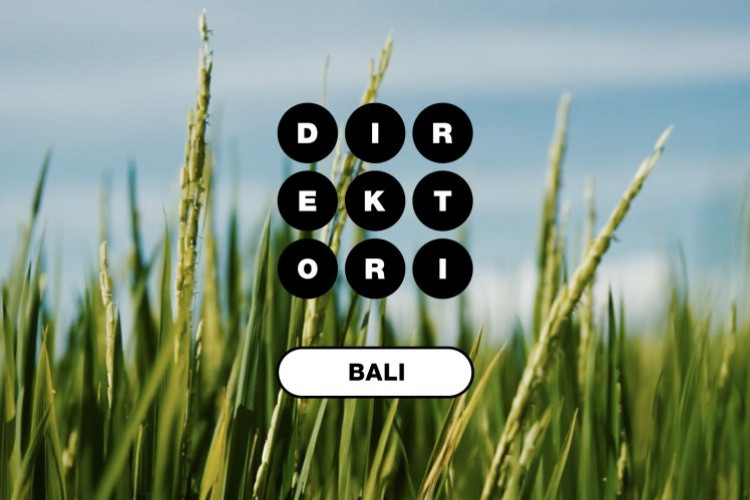
Di episode kedua mini seri Direktori, kami berkunjung ke Bali untuk mencari apa yang tersembunyi di balik deru pariwisata dan melihat bagaimana keberagaman hidup di sana.
Episode pertama untuk mini seri terbaru kami untuk campaign #Direktorikota, kami memulainya dengan pertanyaan besar, apakah semangat kebersamaan masih ada di keseharian kita?