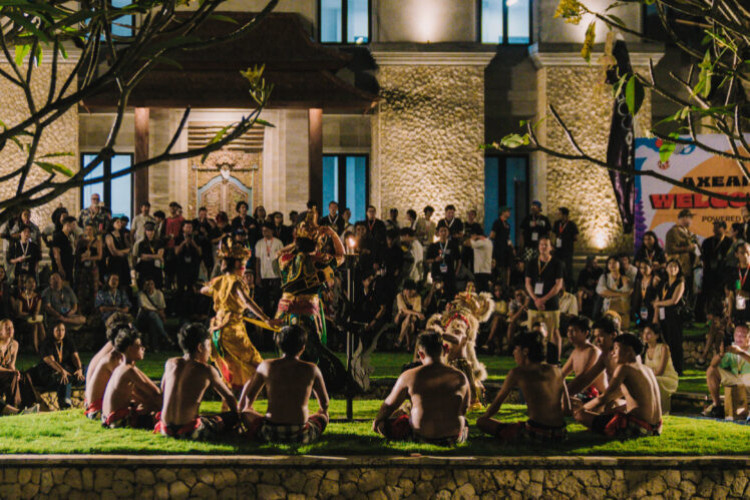
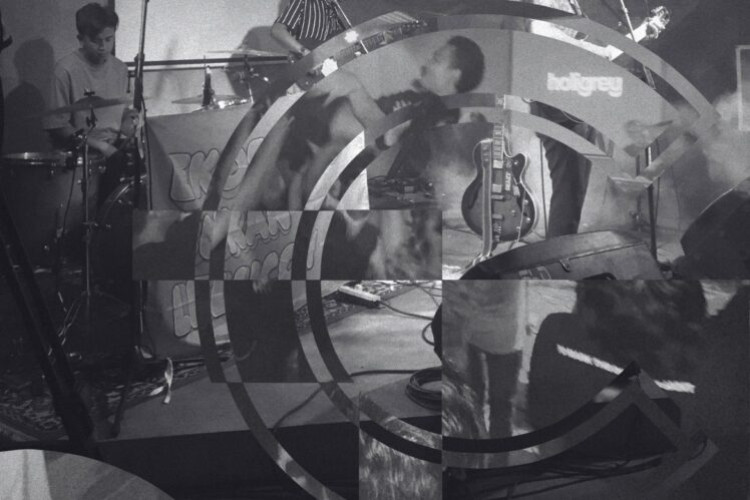
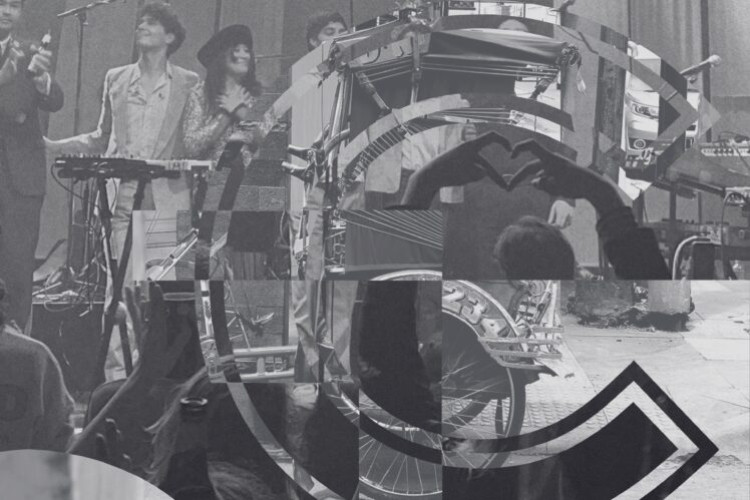
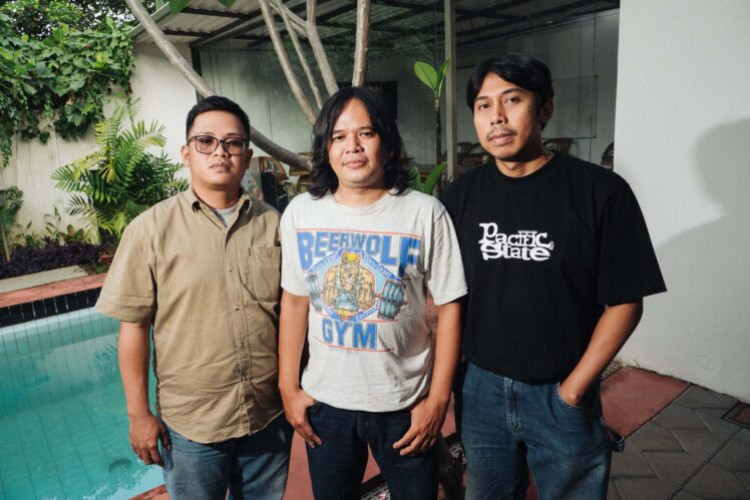
Berbicara tentang AXEAN Festival, kami mengundang beberapa alumninya, Batavia Collective dan The Panturas, untuk mengulik atmosfer di dalam festival musik tersebut yang seperti konsisten melambungkan nama-nama up-and-coming ke berbagai festival musik besar lainnya di mancanegara.
Sound was the preliminary foundation of human communication in poetry. It may indicate an event, a feeling or a message through the combination of its phonetic elements (i.e. rhyme, rhythm and metre). Indonesian poetry started as a verbal form of expression through pantun and syair, thus the sound was a vital foundation. Pantun was found all across our archipelago but the first examples of it were found in the 15th century in the Malay Annals whereas syair possibly came from the Middle East. The term syair itself was derived from the Arabic term of poetry (shi’r) and poet (sha’ir).
These two main forms of classic Indonesian poetry have four words and four lines in each stanza (i.e. quatrain). One of their main differences can be found in their rhyming schemes. Pantuna usually have alternating rhyming schemes, a-b-a-b (i.e. rima silang), while syairs have a-a-a-a patterned rhyming schemes (i.e. rima menerus). Syairs have longer verses, which includes more than one quatrain, whereas a quatrain in itself is enough to be a pantun. The subject in syairs varies from love to historical accounts. For pantun, a quatrain typically consists of two couplets. The first two lines are called sampiran which contains illustration of nature or agrarian culture (e.g. description of a landscape, plants, or fruits) and the second is isi in which the intention of the pantun is revealed. Similar to syair, pantun can be used to express one’s love to another, but it can also be a social tool to communicate proverbs, moral propositions, jokes and farewell messages. In addition, the rhyming sound in a pantun was used as a mnemonic aid for the listener to help him/her to remember the message intended by the speaker. Below is an example from an infamous wisdom pantun:
“Berakit-rakit dahulu
Berenang ketepian
Bersakit-sakit dahulu
Bersenang-senang kemudian”
The highly repetitive rhyming scheme written by Pujangga Lama, who wrote traditional pantun and syairs, has a significant influence on subsequent writing composition and styles of Indonesian poetry. However, the function of rhyme had and is still changing as writers keep on pushing their creative boundaries. In poems written by Pujangga Baru (from 1933), the writers usually have poetic dictions and illustrate beautiful entities or landscapes. Here’s Amir Hamzah’s poem Berdiri Aku:
“Pohon pepaya di dalam semak
Pohon manggis sebasar lengan
Kawan tertawa memang banyak
Kawan menangis diharap jangan
Angin pulang menyejuk bumi
Menepuk teluk mengempas emas
Lari ke gunung memuncak sunyi
Berayun-ayun di atas alas”
A lot of Pujangga Baru poets employed the pantun rhyme scheme, with or without the sampiran and isi, despite of the prominent influence of the western poetry form, particularly the sonnet. In the poem above, the first stanza is a pantun and the second only retains its a-b-a-b rhyme composition. This kind of rhyme was used to create a flowing harmonious melody. Other than that, the rhyme produced by similar sounding vowels also creates a bond between words in each line of a poem. The meanings embedded in those words and how they sound holistically would evoke a feeling manifested in the poem.
It was Chairil Anwar, a poet from Angkatan ’45, who first deviated from the traditional romanticism found in preceding poets, especially the Pujangga Baru writers. In Aku, he had made use of repetitive rhymes from -u, similar to a syair. In his poem, Derai-Derai Cemara and Pantun Kiasan, readers are again presented with the dominating Malay Pantun rhyme composition. Chairil used a pantun rhyme composition to produce a flowing melody and create cohesiveness in his poem similar to other poets before him. However, Chairil refused to romanticize his diction by using bahasa yang mendayu-dayu that was renowned by his predecessors. A striking difference in Chairil’s diction is that it was not bounded by what then were considered as conception of beauty (i.e. nature and bahasa mendayu-dayu).
Agreeing with French linguist Ferdinand de Saussure, I think that language is dependent on its convention, which includes the sound of a word. In Indonesia, the word binatang jalang (i.e. bitch) that Chairil used in his poem is not immediately associated with beauty. In some contexts, it even carries a negative connotation. Moreover, less objectively, I would say that the sound -ng is not as pleasant as a mendayu sound from words that often ends with a vowel. In ‘Aku’ he used words such as seorang, binatang jalang, terbuang, meradang, menerjang. Those words indicate his resistance to use melancholic diction that is often found in poems preceding his. In these lines “Aku ini binatang jalang/Dari kumpulannya terbuang”, the poet demonstrates that the beauty of a poem does not have to depend on sacred and pretty words. Indeed, Aku is the most well known poem in Indonesia. Chairil was the first to demonstrate that banal words from the street and slums, reinforced by the -ng sound, can create deeper impressions on readers. Furthermore, I think that the -ng sound give a revolutionary edge to the message implied in the following poem.
“Kalau sampai waktuku
Ku mau tak seorang kan merayu
Tidak juga kau
Tak perlu sedu sedan itu
Aku ini binatang jalang
Dari kumpulannya terbuang
Biar peluru menembus kulitku
Aku tetap meradang menerjang
Luka dan bisa kubawa berlari
Berlari
Hingga hilang pedih peri
Dan aku akan lebih tidak perduli
Aku mau hidup seribu tahun lagi”
Similar to Chairil Anwar who re-defined the writing style of modern Indonesian poetry, Sutardji Calzoum Bachri from Angkatan ’66 also took a road less travelled. For previous poets, a word carries a certain meaning and you create creative perspectives by aligning them with another word to create a sentence. Unlike them, Bachri’s poems demonstrate how a novel creative perspective would emerge when words are liberated from their conventional meanings. Here is one of his most surreal poems, Sepisausepi:
“Sepisau luka sepisau duri
sepikul dosa sepukau sepi
sepisau duka serisau diri
sepisau sepi sepisau nyanyi
sepisaupa sepisaupi
sepisapanya sepikau sepi
sepisaupa sepisaupoi
sepikul diri keranjang duri
sepisaupa sepisaupi
sepisaupa sepisaupi
sepisaupa sepisaupi
sampai pisauNya ke dalam nyanyi.”
It is quite obvious that an innovation of Bachri is in the mantra-like impression of his poem. In ‘Sepisausepi’ this effect is created from the repitition of sounds like -se, -sau, and -pi. Furthermore, this poem is also similar to a mantra because the words that he used and created have a whimsical charm. This poem was mainly developed from words such as pisau and sepi that we often use everyday. Bachri experimented with those words by adding and fused them together to become sepisau and pisausepi, which created novel sounds that presented unprecedented meanings. Because the words are untied from their usual meaning, words in that poem seem to carry secret hidden meaning, which is similar to a mantra.
Bachri’s writing method overcame what he perceived as the dogmatism of Indonesian language (e.g. conventional syntax). With this method he wanted to convey the metaphysical understanding of spirituality and emotions to alienated modern individuals. He believed that, in this modern age, the essential understanding of such concepts and experiences does not necessarily get communicated through well-formed sentences. Alternatively, by focusing on the phonetic aspect of human speech, a poem could transcend the reader into the spiritual or emotional realm intended by the poet. Catching the meaning behind his poems might be harder than reading the meaning of a lyrical poem that describe and represent the poet’s experience or feelings.
These different poems created in different eras reveal how sound in Indonesian poetry, particularly through the use of rhyme, is still retained, although its function has changed as years passed. Rhyme has been utilized as a mnemonic aid, glue in a poem’s structure and as an artistic expression of a poet’s message. The role of rhyme was very much related to the form and content of the poem. Then, Bachri innovatively used sound as a tool that allows a poem to communicate with its readers in a transcendental level by presenting words as themselves, not as words with certain meanings slipped in by language convention. With less emphasis on the form and content, this particular approach allows poetry to bring back the spiritual component of art. Some contemporary Indonesian poets may no longer use rhyme regularly in their work, however, some would still use it to emphasize on the meaning implied in the lines that rhymes. After all, rhyme certainly could add spice to a poem.
-
References
Prasetya, E. & Utami, A. (2015). Estetika Banal & Spiritualisme Kritis. Jakarta: Kepustakaan
Populer Gramedia.
Rahman J. D. (Eds.). (2014). 33 Tokoh Sastra Indonesia Paling Berpengaruh. Jakarta:
Kepustakaan Populer Gramedia.
Ricklefs, M. C. (2008). A History of Modern Indonesia since c. 1200 (4th Ed). Retrieved from
http://www.palgrave.com/page/detail/a-history-of-modern-indonesia-since-c.1200-mc-ricklefs/?sf1=barcode&st1=9781137149183
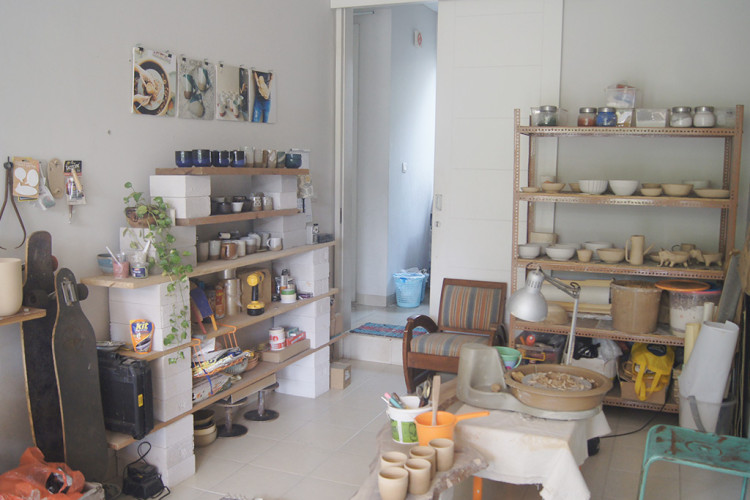
Setelah mempelajari industrial design di Ontario College of Art and Design dan mendalami passion-nya di keramik, Ayu Larasati pulang ke Indonesia untuk mendirikan brand keramik hand-made, sekaligus mengajar di workshop-workshop kreatif di Jakarta. Whiteboard Journal mengunjungi home-studio Ayu dan berbincang mengenai pendekatanya terhadap dunia keramik, desain, dan juga ketertarikannya di seni rupa yang semakin tinggi.
Tahun 2015 adalah tahun keempatbelas perjalanan Cholil Mahmud (vokal, gitar), Adrian Yunan Faisal (bass, vokal latar), dan Akbar Bagus Sudibyo (drum, vokal latar) sebagai unit musik bernama Efek Rumah Kaca. Banyak peristiwa terjadi pada dasawarsa pertama mereka ini, dua album penuh yang dirilis pada dua tahun berturutan, 2007 (Selftitled) dan 2008 (Kamar Gelap), sampai lagu-lagu yang menjadi nyanyi bersama pada panggung-panggung yang terjelajahi di penjuru Indonesia. Tapi diantara semua peristiwa, ada pula getir cerita pada kondisi Adrian yang memaksanya absen pada penampilan live Efek Rumah Kaca. Satu hal yang bisa merangkum perjalanan mereka adalah eksperimentasi yang menjadi inti dari setiap karya. Kekayaan Bahasa Indonesia, dan pemilihan tema adalah area yang telah mereka jelajahi.
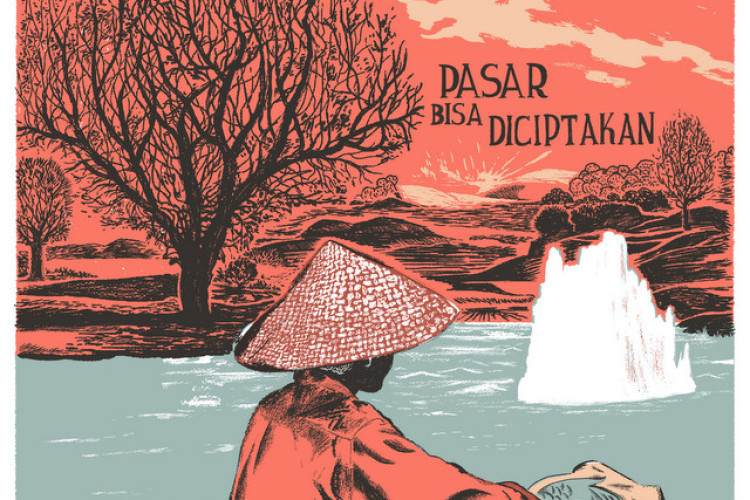
Setelah vakum selama hampir satu setengah tahun sehubungan dengan kepergian Cholil ke luar negeri untuk fokus menyelesaikan sekolah, Efek Rumah Kaca menandai kembalinya eksistensinya dengan single “Pasar Bisa Diciptakan”. Dan seperti yang biasa mereka lakukan, eksperimentasi menjadi kunci di karya ini. Kali ini, musik menjadi fokus utama eksperimentasi. Aransemen dibuat lebih kaya dengan layer-layer gitar yang lebih membahana, dinamika sekaligus struktur lagu juga menjadi semakin berwarna.
Sejatinya, single ini bukanlah materi yang sepenuhnya baru. Dasar-dasar lagu ini telah terbentuk sejak tahun 2008. Ide dasar dari “Pasar Bisa Diciptakan” adalah semacam elaborasi lebih lanjut dari lagu “Cinta Melulu”, tentang kegelisahan Efek Rumah kaca terhadap proses berkarya sebuah karya seni dengan posisinya di pasar/industri. Jika “Cinta Melulu” menyampaikan pesannya dalam nada yang cenderung sinikal, pada “Pasar Bisa Diciptakan” Efek Rumah Kaca memilih perspektif yang lebih optimis. Bahwa selalu ada cara untuk berkarya dengan jujur.
“Seiring dengan waktu, kita sudah tidak sekeras dulu. Masih ada api itu tapi kami ingin lebih kalem. Kita ingin lebih tenang dalam meneriakkan sesuatu. Banyak lirik yang akhirnya diganti karena kami merasa sudah tidak sesuai lagi. Yang jelas, ‘Pasar..’ dibuat untuk kami sendiri, tidak ada rencana untuk membuat manifesto atau apapun itu. Ini hanya cermin kegelisahan kami,” ujar Cholil.
“Pasar Bisa Diciptakan” dirilis bersamaan dengan single “Biru” yang merupakan extended version dari single ini. Ada dua fragmen yang tergabung dalam lagu “Biru”. Fragmen pertama ada pada paruh awal lagu yang juga menjadi versi pendek lagu untuk versi radio edit dengan judul “Pasar Bisa Diciptakan”. Fragmen kedua dengan judul “Cipta Bisa Dipasarkan” berada pada sisa durasi lagu. Secara terpisah, fragmen-fragmen tersebut masing-masing mewakili dua angle dalam proses penciptaan karya dalam kesenian, yakni secara internal dan eksternal. Keduanya membentuk secara utuh, “Biru” sebagai rangkuman pemikiran Efek Rumah Kaca tentang pentingnya eksplorasi dalam proses berkarya.
This episode of Loka Suara is titled “Ampun” a selection of songs to accompany your eid holidays. Take a listen to the episode and do look for the band featured if you like what you hear.
photo by: Samuel Evander
Tracklist:
1. Bungabel - Sungai
2, Billy Aulia Saleh - Salju Panas
3. Stars and Rabbit - The House
4. Danilla - Junko Futura
5. Tika - You Belong to Me
6. Gabriel Mayo - You and Me
7. Orkes Keroncong – Alang-alang (cover)
8. Semak Belukar - Malas Marah
9. Suarasama - Fajar di Atas Awan
10. Gardika Gigih - 'Lagu Ibu' OST 'Lemantun'
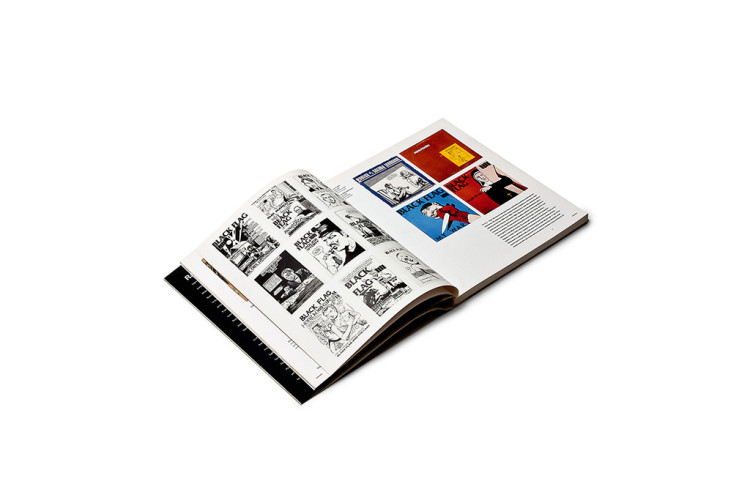
Even with the advent of Google Images, there is nothing quite like going through a book to look at art. In this selection, we have chosen books we look through in the office, whether to look for references or simply enjoying the great visual content.
A mix of familiar Brazilian tunes of samba, bossa, and tropicalia.
1. Gal Costa & Caetano Veloso - Baby
2. Os Mutantes - A Minha Menina
3. Maria Bethania - Carcara
4. Jorge Ben - Comanche
5. Marcos Valle - Não tem nada não
6. Gal Costa - Lmngua Do P
7. Gilberto Gil - Aquele Abraço
8. Tim Maia - Que Beleza
9. Jorge Ben - Chove Chuva
10. Joao Gilberto - Samba da Minha Terra
11. Caetano Veloso - Irene
12. Tom Zé - Gloria
Direktori: Di Makassar, Melihat Harapan dari Indonesia Timur
Di episode ketiga Direktori, kami berkunjung ke Makassar untuk belajar tentang bagaimana semangat literasi menghidupkan budaya kota juga tentang kebersamaan dalam keberagaman.
Di episode ketiga Direktori, kami berkunjung ke Makassar untuk belajar tentang bagaimana semangat literasi menghidupkan budaya kota juga tentang kebersamaan dalam keberagaman.
Di episode kedua mini seri Direktori, kami berkunjung ke Bali untuk mencari apa yang tersembunyi di balik deru pariwisata dan melihat bagaimana keberagaman hidup di sana.
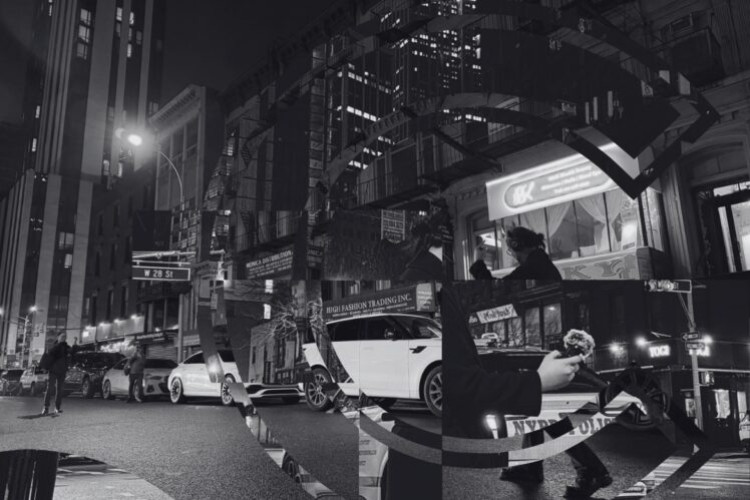
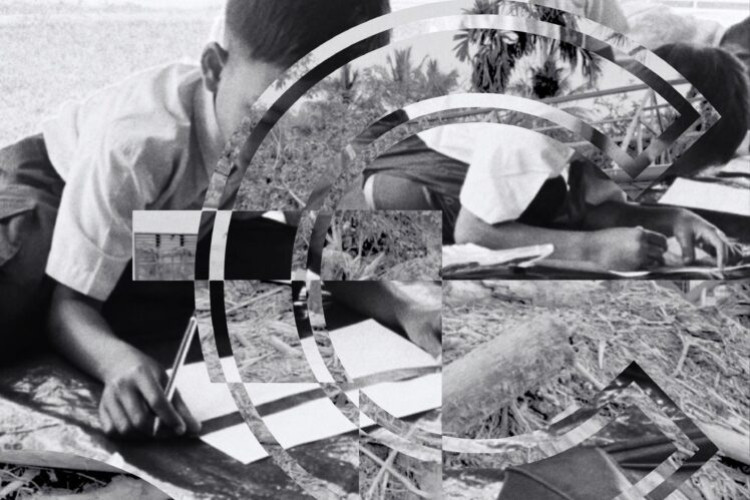
Episode pertama untuk mini seri terbaru kami untuk campaign #Direktorikota, kami memulainya dengan pertanyaan besar, apakah semangat kebersamaan masih ada di keseharian kita?