

A woman’s place has always been in the revolution
In this Open Column submission, like reaching for the light at the end of the train tunnel, Claudia Destianira walks us through the range of disheartening writings splattered on urban walls that can decorate our journey towards a more hopeful stop.

Words by Whiteboardjournal
“A system failed, two kids in jail
And the rich get rich and the rest get sunk
Classist, sexist, racist, ableist, fascist, ageist, homophobic
Country leaders fucked our futures and they think we haven’t noticed”
– RAYE, “Environmental Anxiety.”
In a nation where women were forced to choose between accessing sanitary pads or books, living and reclaiming womanhood is revolutionary.
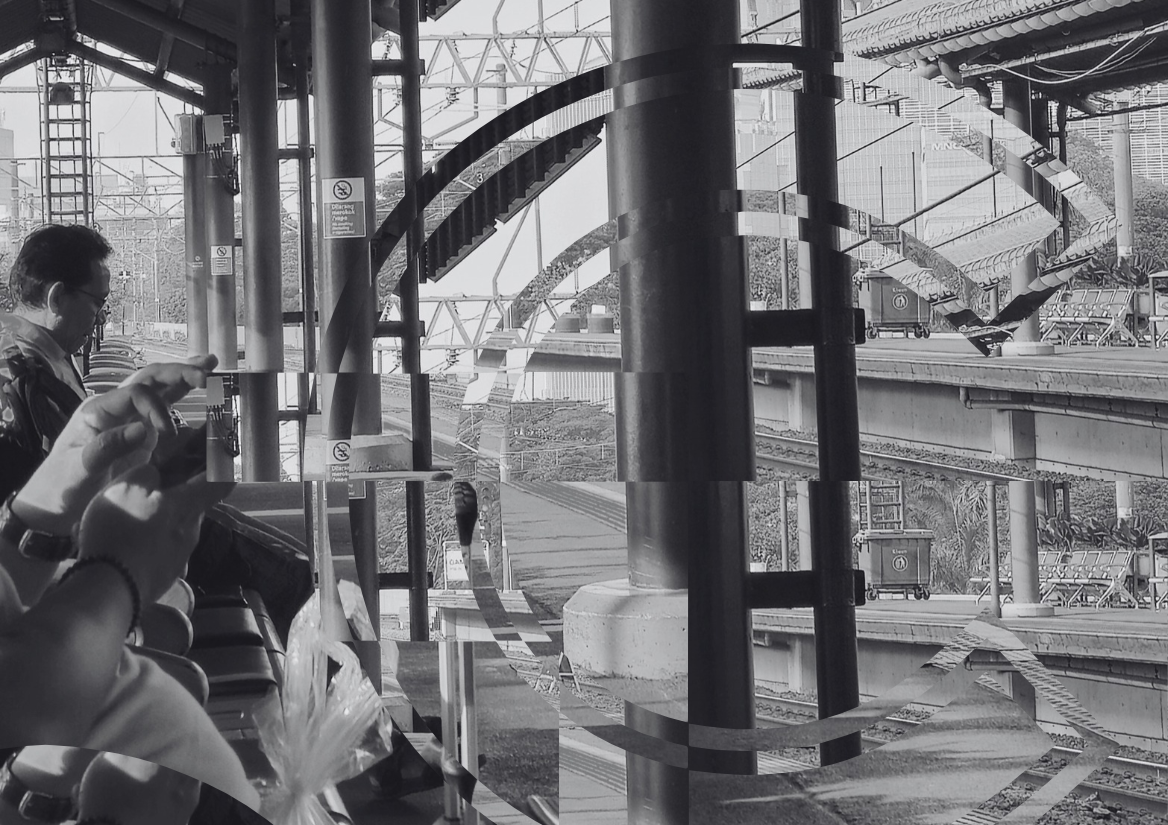
As I walked inside a commuter train station I regularly visit every workday, a huge out-of-home welcomed me brightly, its screen displayed:
“One single provider to afford healthcare, childcare, eldercare, and medical emergencies: YOU! We thank you for your service. Primary benefits: exposure, gratitude, motivational quotes about strong women, and possibly higher taxes without guarantees of betterment of public services!”
Am I teleported into Capitol or what?
Twenty stairs down, another poster in the station’s tunnel greeted me cheekily:
“Rice, cooking oil, eggs, and toiletries NOW on promotion – but you’re not! It’s still twenty times pricier than your parents’ era, but delivery in 15 mins is guaranteed!”
It reminds me of my half-empty dish soap bottle. Twenty-five stairs up, another ad hangs above the station bench:
“WANTED: Data annotator freelancers who are looking for a more flexible, less protected job security! Just got fired, or had an epiphany that the average salary won’t suffice to survive in the town, let alone live your aspired life? Looking for ways to earn more money, or to become more alienated after a full-time job? Check www.disempowermeai.com for more info! Dwell in a moral quandary for pay vs. social justice and environmental preservation now, and you can think about the future later!”
I shook my head, but still took a picture of it, just in case someone needed it.
Ten minutes passed. No sign of the train arriving yet. A pop-up SMS notification displayed:
“Your taxes help our government’s flagship program, the Free-from-Accountability Meals, to feed millions of beneficiaries! Do not worry about the food poisoning cases, corruption cases, or budget cuts for health, education, or even disaster mitigation in the media; it’s all disinformation from foreign agents meant to disrupt our loyalty to the nation! Support the program, and remember how much you’ve helped when you’re unable to access social security services due to budget cuts!”
The train finally arrived. Workers, mothers and their children, the elders, all squeezed into the metal car. Between hanging hands holding the handle straps, another ad on the train car ceiling says:
“Madu Bergizi: Glam will help you stay thin to guarantee you a spot in a packed commuter train, no matter if it’s the green, blue, or red line! Starve and strive! With a suppressed appetite, less iced coffee and more funds for house mortgage is possible!”
Managed to find a spot I could squeeze into, I put on my earbuds. Olivia Rodrigo and Chappell Roan’s “expectations” blasted. As the train passed by the self-built neighborhoods beside the railway tracks shadowed by unequal, inhumane urban development, I began listing realistic expectations.
Affordable basics and protected care work. Adequate housing, food, water, education, and social security as fundamental rights, not commodities, and no one would be forced to sacrifice any basic necessities to afford another.
Freedom from violence and legal attacks. Full autonomy over our own bodies. Safety, both offline and online. Laws and policies made with meaningful participation and consent of the people they affect. An end to destructive ecogenocide. Gender, socio-economic, cultural, and ecological justice. That’s not too many expectations, no?
I’m arriving at my transit destination: the Revolution station. I stepped out of the train, immersing myself in a sea of people from diverse backgrounds, all heading to build a more just, equal world.
At the station, Indigenous Women are preserving both the knowledge and livelihood of generations. Migrant workers and household workers are organising to make sure no workers are left behind in vulnerable conditions. Researchers are producing rigorous, accessible evidence that exposes who is harmed and why, to make sure policymakers sees injustice as a systemic failure instead of an anecdote, an unfortunate accident, or even next term’s election campaign material. Journalists are investigating, writing, and reporting stories of truth, exposing the truthful state of our rights.
Near the station’s lift for people with disabilities and the elderly, gender and sexual violence survivors are fighting for trauma-informed, non-ableist, survivor-centered access to justice. Women human rights defenders are advocating for a safer world for women to reclaim our rights without attacks based on our gender and our full humanity.
The path to our destination might be uphill. But heading there, I realize I am not arriving somewhere new. The platform is already crowded with women who built this place long before me, and the ones still stepping off the train beside me. A woman’s place has always been in the revolution, and it ignites a flame in me knowing I was never alone in it.
If you’re still reading, congratulations! You’re invited to join our march. This Saturday, join Women’s March Jakarta 2026. Bring your demands, your revolutionary baddies, and add your voice to fight for a world where no one is left behind.
Claudia Destianira
Staf komunikasi di organisasi masyarakat sipil yang berfokus pada pemenuhan hak asasi manusia. Punya hobi merajut, menyanyi, dan menulis tentang keadilan, kesetaraan, dan kebebasan untuk semua orang.