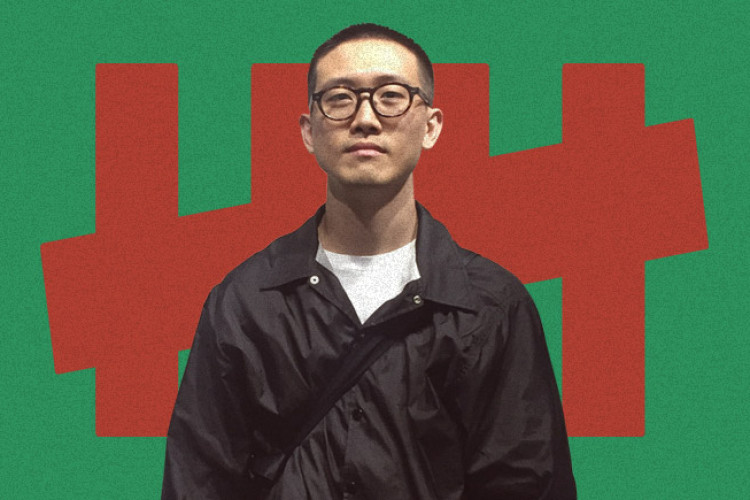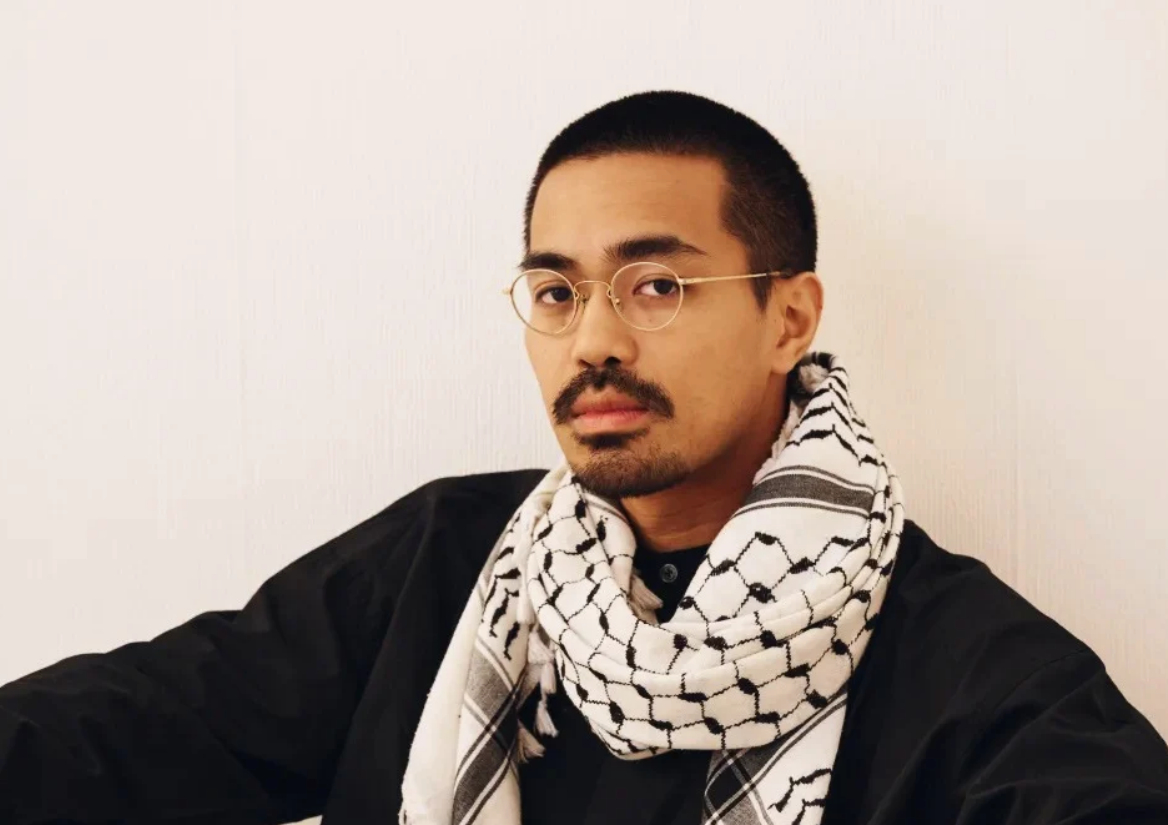


Neo Sora: A person told me that my film inspired them to attend a protest for the first time and that really meant something to me.
We teamed up with Fesa Husnayovari from KAIJIN Labs to chat with Neo Sora about the future of Asian cinema, the importance of independent creative spaces, and the discourse around nepotism in the industry.

Words by Whiteboardjournal
Words by Rajan Nausa
Photo by Getty Images/IMDb
It must be true… or is it? As we navigate a world increasingly defined by the pursuit of knowledge, we are constantly reminded of how little we truly know. Whether what we think we know is shaped by the systems we live in or the boundaries of what we are taught to believe, one thing that many people have in common these days is the stance of always holding onto questions like, “what happens when we begin to question these boundaries?”
In cinema, few things are more compelling than the possibility of challenging what we believe to be true. Through his work, Neo Sora often explores those spaces between reality and imagination, inviting us to reconsider how we make sense of the world around us.
We teamed up with Fesa Husnayovari from KAIJIN Labs to chat with Neo Sora about the future of Asian cinema, the importance of independent creative spaces, and the discourse around nepotism in the industry.
Speculative fiction (which you’ve explored sometimes in your works) can create distance from the present while actually making the present easier to see. What can you say about our current political reality through a fictional or imagined future that you couldn’t say as directly through a documentary or realist film?
I actually have a lot of issues with what realism even means – I guess a lot of the time it means like naturalism or true to present day reality, but you’re still making a film and narrativizing something? Which means that you are seeing the world through like a frame or a prism and you’re intentionally picking and choosing those certain things in a different formation of reality in the film?
So, I’m not sure if there’s as much of a distinction between a film with a committed realism versus like a more fictional film. Obviously, you know, there’s gradations to that, because you have things like P*xar or something, which is not real, obviously.
In my case, I think what I was trying to do with Happyend (2024) was – I was influenced by the idea of Bertolt Brecht’s theory of Distanciation, which includes certain techniques and elements in his plays to intentionally create distance for the viewers to remind the viewers that they’re, in fact, watching a play. What that distance does is to remind the viewers that there’s intentionality behind the authorship of the thing that they’re watching. This allows them to kind of think about the frame, the perspective, and the kind of ideologies that are going on within the picture.
I think that’s what speculative fiction is fairly good at doing. The main reason why I wanted to make a film about the near future – in terms of Happyend (2024) and Sugar Glass Bottle (2023) – was very much more specific of a reason. I was responding to this thing that everyone says in Japan all the time, which is:
Within the next 30 years, there’s going to be a devastating earthquake.
The Nankai Trough earthquake, timeline of within the next 30 years, they’ve been saying within the next 30 years for, like, the last 20 years or something. And so I kind of just imagine this kind of future point. Where, many years into the future, the earthquake still hasn’t happened.
This kind of tectonic pressure keeps building and building until it’s about to pop, and that’s the kind of energy – I guess, the metaphor of ratcheting up tension.
That was the feeling that I was thinking about a lot, which seemed to dovetail really well with the political realities that I was also seeing. And then, there’s more of a direct connection between earthquakes and the politics of Japan, too.
So, those were the starting points of the film. That’s what gave me the idea in the first place and so that really was the reason why I wanted to set them in the future.
And if you set something in the future, it’s automatically going to be speculative.
Yeah, what is it with Asian culture and fear-mongering? Because here in Indonesia, we also see a lot of similarities when it comes to warnings that something big is going to happen.
It’s complicated, because I think fear is just a natural human response to a lot of things. I don’t think every instance of fear or like anxiety is necessarily a conspiratorial thing. But I do also think that these natural fears can be exploited by whoever has the means to exploit it.
I think it’s just very telling that, for example, every time North Korea launches a missile test, everyone in Japan gets an alert. Or like in the media, the constant narrative of China kind of coming into power. It’s hard not to think of it as just like a narrativization of who we should be fearing.
If you look at the great power politics and geopolitics, it’s just extremely obvious that there are these kinds of geopolitical camps that exist, the blocks that exist, and Japan is just part of the American hegemonic bloc. So, the fear-mongering against China, the fear-mongering against North Korea, it’s just clearly like this kind of anti-communist bloc type thing that’s working.
Back to the natural disaster, obviously, there’s more kind of municipal-level organization that happens around, like, evacuation sites and things like that. And then those sites also become sites where xenophobia happens. So, what distinguishes earthquakes and major disasters – which are somewhat different from events such as wars or political conflicts – is that these events ultimately create pockets of political vacuum and whoever is the most organized to fill that vacuum, ends up filling that vacuum.
It kind of tests how well-organized a community ends up being. For example, in Tokyo, a lot of the time there’s not that much organization around smaller places, so the state ends up filling that vacuum. In the case of Kobe in the early 1990s, the Yakuza ended up filling that vacuum of power because they were well organized.
That’s what I think is really interesting about natural disasters – is these pockets of vacuum that get created and how it always reveals what groups are the most organized at that moment.
Alright. It’s definitely a very interesting topic, but I’m gonna have to move on to the next one – Indonesia has its own history of authoritarianism, political violence, and censorship. As an Asian living in New York, do you see any parallels with the political questions you explore in your works?
I mean, I don’t know enough about what the particularities of the politics are in these countries, especially Indonesia. I’ve read some articles though. I’ve heard things from my friend who is queer that it’s harder to make and show queer films, but I don’t really know it too well to fully speak on it.
What’s been really interesting is that, through traveling, I’ve noticed that people are a lot more excited by the film in Southeast Asia and other parts of Asia. I’ve been getting a much stronger reaction – especially from younger people.
Compared to Japan, it’s much better understood by people in Southeast Asia. Japanese curriculums are really bad at teaching colonial crimes, you know. I think that’s kind of playing into it.
Fesa of KAIJIN Labs: Also, Happyend (2024) was released after Sanseitō was established and before Takaichi became prime minister. Perhaps some people might see it as a case of life imitating art. However, your film ends on an optimistic note, just like the title itself. So, what exactly is your vision of Japan’s future?
I was inspired by Sanseitō (read: a far-right, ultraconservative Japanese political party) and had been observing its rise from the beginning. In one scene, Yuta and Kou are sitting in a café while a right-wing politician speaks nearby and protesters gather outside. I wrote the politician’s speech by combining different speeches from the past, including a statement by Sanseitō’s leader claiming that Japan never invaded Asia before World War II because there were no countries in Asia at the time. I found that absurd and wanted to include it in the film.
I wouldn’t say I predicted what happened. I was paying attention to Japan’s political trajectory, from the Abe era and even earlier, and fictionalizing what I saw. There has been a continuing push toward remilitarization, greater government control, and constitutional revision.
Honestly, I’m not very hopeful. I worry that Japan could become a major battleground in the United States’ struggle to maintain global hegemony, particularly in East Asia. Japan is increasingly acting as a proxy for the US, and I worry that its southwestern islands could become frontline territories as military infrastructure and long-range missiles are deployed in response to China.
I’m also concerned about the growing military budget and the expansion of Japan’s arms industry. When a country invests heavily in its military but lacks the necessary personnel, it may eventually need to recruit more people, particularly young people. Meanwhile, economic conditions are deteriorating, and xenophobia toward non-white foreigners is growing.
I think social media and mainstream media are being used to encourage young people to believe that Japan needs to rearm and defend itself against China and foreigners. Fascism can be very effective at absorbing dissatisfied people, especially when they feel economically insecure.
I’m not entirely without hope, though. Young people are increasingly active, and that gives me some encouragement. But in Japan today, even calling for peace can get you branded as a communist or a leftist. I don’t think saying no to war is radical at all.
Fesa of KAIJIN Labs: You recently participated in a documentary about former Japanese Red Army member Masao Adachi, directed by Palestinian filmmaker Kamal Aljafari, and you’re also very active on social media, especially regarding the Palestinian cause. How do you view art as a form of resistance, and how effective do you think art can be?
I don’t really think art is particularly effective as a form of resistance unless there’s a serious and significant resistance movement that can use it. Film and art can help spread awareness, educate people, recruit supporters, and imagine what a better society could look like. But their impact depends on whether there’s an active movement behind them.
Without that, art is largely self-expression and remembrance. One form of resistance that I find particularly important in the Palestinian context is archiving. Preserving a people’s history and visual culture is a way of asserting that they’ve always been there and that they exist.
This connects to the idea behind Third Cinema, whose filmmakers believed that films should move audiences to take collective action. The filmmaker’s job is to stir people enough to demand change. Once they’re ready to act, they should leave the cinema and join the movement.

 Apple Books
With Happyend (2024), I wasn’t necessarily making the film with that intention. I made it as an expression of myself, and people will engage with it in different ways. But…
…one person told me the film inspired them to attend a protest for the first time. That meant something to me. I’m not sure whether that alone constitutes resistance, but it’s something.
Yeah, all my friends went crazy when they saw Happyend (2024). Speaking of, with streaming platforms, film festivals, independent production, and online communities all reshaping how films are made and watched, what do you think the future of cinema in Asia might look like? What possibilities excite you the most?
Hard to say. Everyone does talk about the democratization of cinema because the equipment is just more easily available and things like that. I think cinema will be more and more defined by actually how we watch it – by how we watch it together, how we are dedicating the event, and things like that.
I was just watching this short film yesterday, actually. It’s South of Tehran (2026) by Kleber Mendonça Filho. It was a portrait about Jafar Panahi, the Iranian director. It was actually really inspiring to hear him talk because he was talking about how much effort you would put into going to see movies.
I guess it’s a little bit different now because if you wanted access to a movie, you could probably figure out a way to download it. But in the past, when he was living in the South, in Tehran, he would hear about a movie he wanted to see really badly, he had to wait until it came out to the theater and drove to some faraway theater once it came out, because he might not be able to watch it ever again.
So, maybe the more difficult it is to actually see a movie, the more sacred the viewing experience becomes – and maybe people are looking for this kind of more sacred viewing experience together. So, if that’s the direction of the future of cinema in Asia, I think that’s a really great thing.
Those kinds of things where small communities assemble to share an experience is a beautiful thing. It’s like a one-time event, like you’re all getting together. It does have the danger of becoming elitist because, you know, only being accessible to people with a meaningful time. But, there are ways to curb that.
Right, I was about to ask you something related to that. Because across Asia, we’re seeing young people increasingly create their own spaces through music, nightlife, independent cinema, and other forms of underground culture. What do you think they allow young people to say or experience that mainstream culture cannot?
I think what’s really important is the motive behind doing it. Most of the time, the point of mainstream culture is for profit. In a lot of cases, these small independent spaces or venues, there’s basically no profit mode because it doesn’t make any money. Just people really wanting to show a movie and come together to have the experience. Usually they are losing money by doing this, or they’re breaking even.
It’s very rare that people can sustain themselves in this hypercapitalist world, and yet these people still want to do it – which I think is proof that capitalism hasn’t really dominated our consciousness. It’s pretty powerful and I feel like it’s often taken for granted.
In slightly more mainstream settings, it doesn’t feel like you’re actually bringing a group of people together. However, having an independent space where, all of a sudden, your personal space is truly squeezed because there isn’t enough room – where you’re simply a group of people who share the same interests or ideology – actually creates a much greater force with immense potential. Potential power or the potential to disrupt the existing power structure, as well.
I think it’s kind of a testament to these underground screenings and like the potential that they have. So that’s something to think about, I think.
Speaking of people assembling, the Cineconcert Happyend in Resonance also happened. Naya (Orchestrator) asked: “How is the relationship between the synthesized sound and the visuals in your work established? Do the urban visual elements shape the scoring?”
It wasn’t that direct of a relationship between the visuals and scoring. In some of the orchestral instrumentation of the score, a lot of that sounds were actually synthetic. So it sounds like real strings.
I was talking to Lia (Composer) about this. The main thing that we really talked about was to have the perspective of the music. The emotional perspective from the Yuta and Kou in the future.
We were imagining, “What if Yuta and Kou were like 30 years old and they ran into each other again, then they remembered all the things that happened in high school? What would the emotions be as they’re remembering these scenes?”
There’s a different emotional narrative that’s happening on top of that at the same time, which I think creates this kind of nostalgia.
I have this theory of how to use music in movies. A lot of times – if the movie were a sculpture, the music is used to just paint the sculpture.
For me, I like to use music as putting a second sculpture next to the original sculpture. It’s two separate objects in space. It’s creating dimension, not simply just coloring the details of the original sculpture. And that’s how I’ve been thinking about using music a lot.
I don’t know if the syntheticness of the instruments that we use also influence this, I kind of left that more up to Lia. But from my conceptual point of view, that’s sort of what I see.
Oh, so it’s a speculative scoring of the speculative future. It’s a speculative paradox.
Yeah, yeah. I’m making a narrative about a future but that future is already a memory.
Alright, the next question is not gonna be very speculative. If you could bring together five young filmmakers from different parts of Asia to make one film, what would you want that film to be about?
I guess the recent filmmakers that I’ve really been drawn to are Rafael Manuel. Whammy Alcazaren, also from the Philippines. I love them both. From Indonesia, I really like Aditya Ahmad. What else? I guess Trương Minh Quý from Vietnam. I really love his sensibility.
One more? Yeah, I would want to be in that as well, if I could. I don’t want to choose myself, but yeah, I would love to be in that vibe 🙂
Obviously, there’s been a lot of discussion around “nepo-babies” and access in the film and music industries. Given your own position within the film world, how do you think privilege and access shape who gets to become an artist – and what responsibilities, if any, come with having that access?
Admittedly, people are going to call me a nepo baby, and that’s true. There’s nothing I can really do about that.
I just happen to want to make films as well, and to say that I didn’t have more access or resources to be able to do that is a lie. Nepotism works to my advantage, but at the same time, people on the nepo-baby discourse probably overestimate the amount of influence that it does have as well.
The reality is, it’s probably somewhere in the middle. Perhaps it would be better for you to take advantage of those privileges – not to adapt better yourself, but to help others become better.
I think that’s just, like a very flawed way that society functions. A lot of the time, the more famous you are, the more free stuff you get, for example. How stupid is that, right? If fame is already bestowing one with money, why should brands give you free shit? I think it’s better to actively dismantle and destroy the system.
But, back to the discourse, I guess if you grow up under the influence of someone who’s very connected to the arts, or being exposed to art a lot, it’s also kind of natural to want to do it.
Last one, what’s next for you?
They’re very in early stages, but I’m really interested in comedy at the moment – like screwball comedy. Not a lot of people noticed, but I tried to incorporate some of that in Happyend (2026) as well. But yeah, that.