

The world told me that walking will cure my depression in the face of me losing my mobility
In this Open Column submission, Sora Anindya shares their experience before and after being partially paralyzed, which gave them newfound insights that we (and the larger world) need to also understand.

Words by Whiteboardjournal
Alongside antidepressants, I was prescribed to walk by my psychiatrist. Twenty fingers are no longer enough to count just how many times I have heard the advice “exercise” coming out of psychiatrists and psychologists’ mouths, but it was the first time I had been advised to walk, out of all other forms of exercise.
So I started walking in my backyard, which in reality was more of a sideyard. There were cages of loud birds, yellowish green grass, slippery moss under the tap, papaya trees with rotten fruits, and old clay tiles in one corner. In my batik daster and Swallow slippers, I circled the yard over and over, increasing the duration each day as I built up my stamina. My cats would sit on the porch and look at me, seemingly puzzled by the anomaly that I was: their depressed and anxious owner, who never came out of their cave, was walking outside. Outside, where the afternoon sun poured its warmth and the song of the birds pierced the eardrums.
That dry season ended and the days began to look grim. The ground was constantly wet from rainfall, one wrong step and my foot would get stuck in the mud. The wind was harsh enough to knock the bird cages and scare my father’s dear pet birds, so he had to evacuate them inside. The rain would come and go and come, making laundry impossible to do as we relied on the sunshine. The clothes were so damp that my parents made clotheslines inside the house, and if they were still damp, we would use the hairdryer and iron to dry them as best as we could. In the wet season, my routine went like this: I would wake up at noon, have a meal, take my medications. By the time I heard the muazin call for Asar prayer, I started observing the weather through the wide windows in the dining room. I came back to the same sight every time: gray sky, strong wind, swaying trees. Within 30 minutes, the rain was bound to fall. The wet season turned my mood sour. It came right when I gained the courage to leave the house and walk around the district.
After a couple weeks of lamenting over the weather and putting up my Nintendo Switch for sale, I decided to buy a walking pad. It came with a tablet stand that I ended up using to prop my phone. I walked up to five times a week for an hour while doing all sorts of things—listening to bossa nova classics, falling in love with Astrud Gilberto’s The Shadow of Your Smile (1965), reading Eva Baltasar’s triptych, and watching Agent Cooper unfold the secrets in Twin Peaks. The season took my afternoon walks around the district, but the season couldn’t take my afternoon walks inside the house. Finding a form of exercise that I loved meant wrapping up my years of depression with a “happily ever after”, until my body rewrote the ending.
One night in August, I was hospitalized. Another night in September, I was hospitalized. The next time I saw the neurologist, equipped with an elbow crutch, I brought up my nerve pain and limb weakness. She told me to keep walking to rebuild the strength of my legs. I took her advice, I walked with my wobbly left leg, then my mother caught me right before I collapsed on the walking pad. During the neurologist appointment, I told her that my left limbs were weak and painful to the point I couldn’t walk, and she advised me to rest for a couple minutes before resuming my walk. She encouraged me to keep walking, so I did. I sat down when I felt weak, except I couldn’t continue walking at all. My mother helped me get back to my room and I flopped onto my bed. I was sweaty, skin clammy, in the face of losing my mobility. One night in November, my legs became very weak, and I started a mutual aid to buy the cheapest wheelchair I could find.
Personally, I think the fact that there are 1.3 billion disabled people is an underestimation.
The wheelchair arrived, so did a new phase in my life. At first, I was giddy to wheel myself around the house—circling the living room, passing by the dining room, circling the kitchen, before wheeling back to my room in child-like excitement. I could get used to the magic of a wheelchair. My parents weren’t very amused about it. They were scrambling to find ways to cure me, to make me regain my ability to walk. Physiotherapists visited my house to cure me. One in particular gave me a religious lecture, told me to pray to Allah, so that I can walk and be cured of my illnesses.
I spent a lot of time doing physiotherapy and when I walked slowly on my two feet, my parents’ eyes glimmered with amazement. The moment felt like a scene from the local soap opera, where a sick character finally can walk after a thousand episodes. “What a miracle from God.” To my parents, walking was the embodiment of cure and being healthy; to me, walking was painful and thus unnecessary. Not only the neurologist, physiotherapists, and my parents pressured me into walking. One time I went to a neurology seminar and the organizer, a private hospital, introduced their new robotic technology that could help patients regain their ability to walk. The brochure showed a very expensive price of the treatment and I started to question: who benefits from walking? Is it the disabled person, the ableists who can’t bear looking at the disabled person in a wheelchair, or the money hungry healthcare industry?
The medical model views disability as something that needs to be cured. An ensemble of doctor appointments, medications, treatments, laboratory tests, and screenings will cure your disability. But what happens when a disabled person desires not to be cured, but for their pains to be bearable? For ramps in every single place on Earth? For elevators instead of stairs? For distance learning and work from home? For inclusion to devour the fruit of life?
Approximately 1.3 billion people, 16% of the world population, is disabled. This makes disabled people the largest minority group in the world. Disability is even more prevalent in a Global Majority country like Indonesia. Personally, I think the fact that there are 1.3 billion disabled people is an underestimation. Many disabled people are unseen: some have invisible disabilities, some mask the fact that they are sick, some are bedbound inside the house or hospital.
This paradigm shift requires you to believe that every single human is in pain, regardless of their form of mobility and the visibility of their pain.
My radical opinion is that disability is not black or white. It’s not a binary where you are either disabled or nondisabled. If you feel any sense of pain, whether it’s in your body, mind, or bodymind, you can identify as disabled. This paradigm shift requires you to believe that every single human is in pain, regardless of their form of mobility and the visibility of their pain. You look to your right, your mother is diabetic. You look to your left, your friend is depressed. You look into your memory, your late eyang had a stroke and was bedbound as you are now. You look ahead and you see a universal disabled future.
The months I spent grieving the loss of my ability to walk had brought me to reflect on what walking meant/means/will mean to me and the people around me. It gave me the space and time to think about why walking is the norm for most people and why they impose it on disabled people with mobility issues.
The current system we live in insists on ablenormativity for the sake of capital. It’s willing to push our bodyminds beyond its limits, and when our bodies turn into corpses, it would simply replace us with other bodyminds to work to death. But our lives are far too precious to be valued by our contribution to capitalism, instead of by our crip story, creativity, wisdom, experience, excellence. We are not disposable. We are here and we will sit, lie down, crawl, roll, wheel, flop, shuffle, limp our way into liberation.
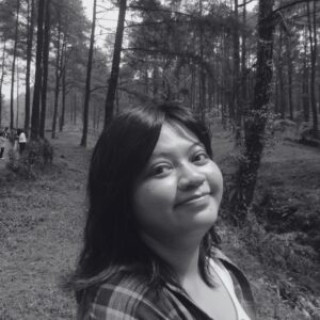
Sora Anindya
Sora Anindya is a Banjarese-Javanese disabled poet and aspiring essayist. Everything they write is written from bed, in constant pain, inside a pitch dark room. Though housebound, they let their mind travel through bamboo forests, irrigation canals, angkot routes, paddy fields, and murky rivers beyond the house. Their recent works are published in Aphrodisia Journal, re:wave press, and beestung.
Menarik

Lima Film Baik

Menyendiri di Masa Pandemi