

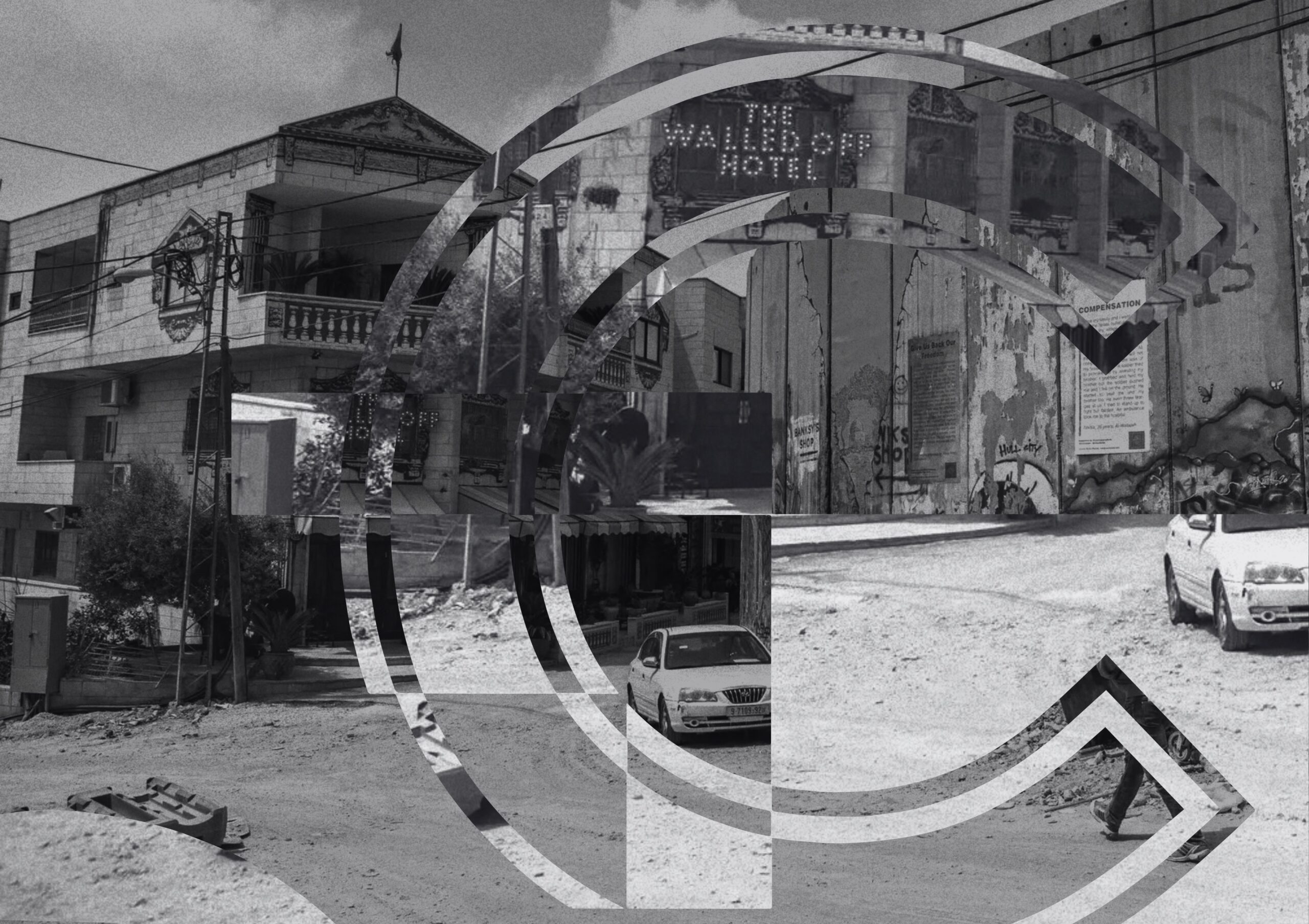


Hospitality as the Quiet Rebellion Against a Divided World
In this Open Column submission, Radit Mahindro shines through a variety of lenses – from tourism to the Tower of Babel – to respond to the current heightened tension between Iran and neighbours in the Arab League, Israeli occupation of Palestinian land, and over-tourism while the loss of place takes place, all to explain how geopolitical friction could be rooted in a fundamental refusal to see the “other” clearly.

Words by Whiteboard Journal
The old story of the Tower of Babel is often told as a cautionary tale about human hubris, a divine intervention that scattered our ancestors and muddied our speech.
But if we look closer, the real weight of that myth isn’t about the confusion of tongues; it’s about the sudden inability to see the person standing next to us as a dear neighbour. When we lost a common language, we didn’t just lose words—we lost the shared context of our humanity.
Today, we are living in a digital and geopolitical version of that tower. We have more tools to communicate than ever before, yet we find ourselves retreating into linguistic and ideological echo chambers. We aren’t building a tower to the heavens anymore; we are building fortresses around our own identities, fuelled by a global anxiety that treats every “other” as a potential crack in the foundation.
The Pulse of the Wanderer
To understand why we build these towers, we must first look at why we leave our homes. In the vast tapestry of biology, Homo sapiens stands as a singular anomaly. We are the only species on this planet that moves and travels for reasons entirely detached from immediate survival and communal enjoyment. While the Arctic tern flies thousands of miles to find nesting grounds and the wildebeest crosses the Mara to follow the rains, their journeys are dictated by the hard math of calories and climate.
Humans, however, cross oceans simply because we wonder what is on the other side. We are a species defined by curiosity. This innate drive to seek out the unknown is what allowed us to inhabit every corner of the globe, but it is also what makes our current global anxiety so tragic.
When we replace that primal curiousity with fear, we aren’t just closing borders; we are betraying a fundamental part of our evolutionary DNA. Travel, in its truest form, is the ultimate expression of human curiousity—a bridge built not out of necessity, but out of a desire to understand.
Passportism
In the world of travel, we often talk about how small the world has become, but that depends entirely on the colour and crest of the little book in your pocket. This is the reality of passportism—a modern caste system that dictates who is allowed to be a global citizen and who is destined to be a permanent “other.” While a Western traveller might glide through borders with a smile, someone from the Global South is met with a wall of bureaucracy. As of 2026, the gap between the most and least powerful passports has reached an all-time high.
For many, travel is rarely an act of spontaneous discovery; it is a marathon of proof. You must prove your bank balance, your employment, and essentially, your worthiness to breathe the air of a different latitude. This systemic friction creates a psychological hierarchy where the host in the Global North subconsciously views the travellers from the Global South not as a seeker of culture, but as a risk to be managed.
The irony of this power imbalance becomes painfully clear when we look at the conduct of those with the most powerful passports. In many destinations across the Global South, we see a rise in unruly and disrespectful behavior from Western travellers who treat foreign lands as lawless playgrounds. Whether it is posing inappropriately at sacred sites or flouting local social norms, there is a lingering sense of entitlement—a belief that their dollars grant them immunity from basic human decency. This is the modern face of the “ugly tourist,” where the privilege of mobility is confused with the privilege of being above the law.
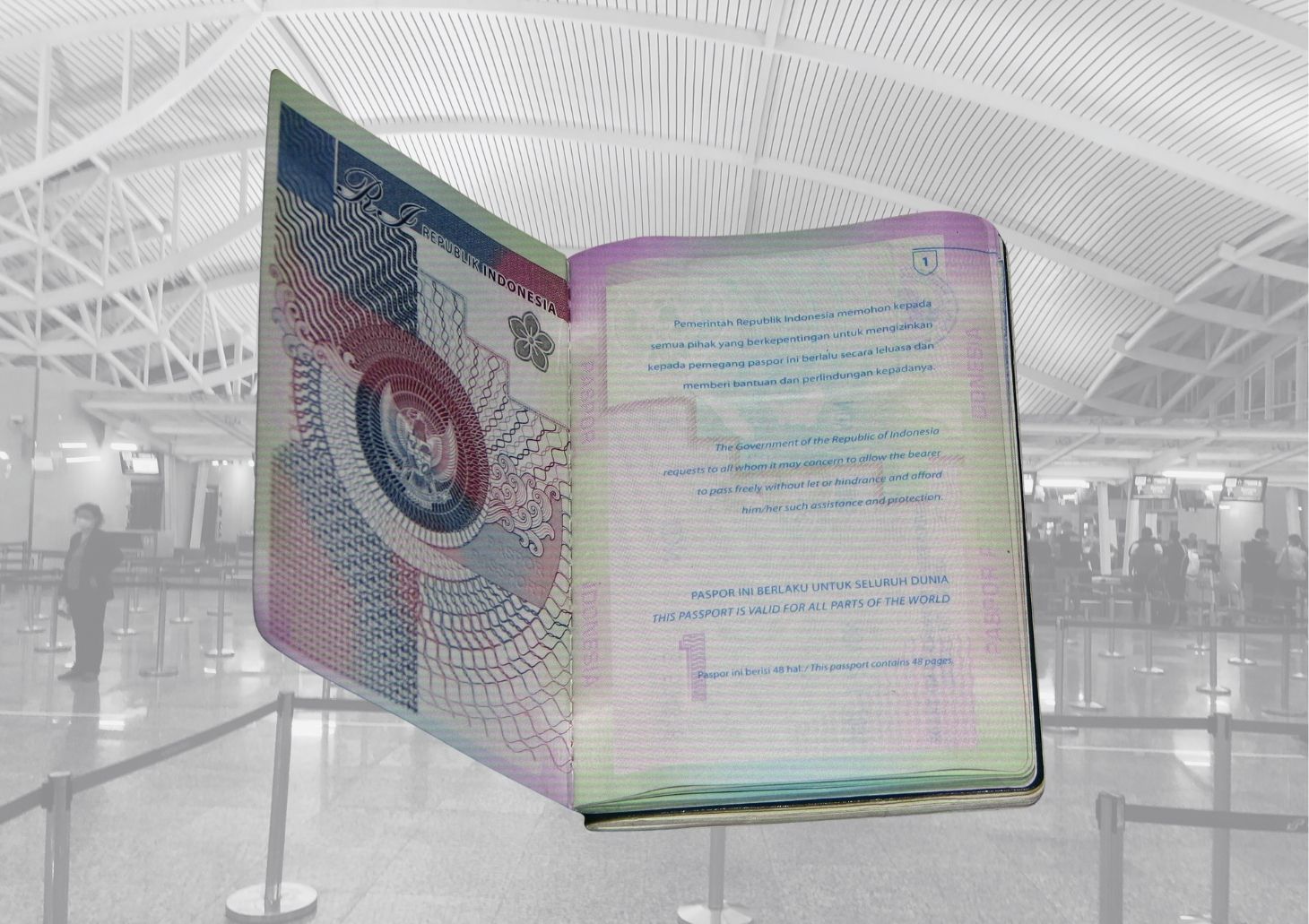
A passport and a regular airport immigration situation.
Furthermore, this entitlement often extends into the local economy. We are seeing an increasing number of Westerners who enter countries on tourist visas only to take up jobs as digital nomads, yoga (or asana) instructors, or photographers without the proper working permits. By bypassing the legal system, they not only avoid contributing to the local tax base but also actively reduce the opportunities for local talent to find work and thrive. When a foreign workforce takes a role that a local professional is perfectly capable of fulfilling, it isn’t just a breach of immigration law; it is a continuation of the colonial practice of extracting value from a land while suppressing the agency of its people.
Persian Identity and the ‘Al-Ajam’ Label
Even within regions that the West often lazily groups together under just one “Middle East” or “Islamic countries” umbrella, the lines of “othering” are deep and historical. Consider the complex tension between Iran and its neighbours in the Arab League. To many outside the region, the distinction might seem academic, but the geopolitical friction is rooted in a fundamental refusal to see the “other” clearly.
The Iranian people are Persian, not Arab—a distinction that has carried weight for over a millennium. Historically, the term Al-Ajam was used by Arabs to describe non-Arabs, particularly Persians. While it literally means “one who speaks unclearly,” it evolved into a label that emphasised a cultural and ethnic distance.
This distance is layered with a deep historical irony. Persian culture is part of the Indo-Aryan lineage, which predates Arabic culture in many of its foundational aspects. In reality, Persia shares far more structural similarities with the Vedic culture of northern India than with its immediate Semitic neighbours. From close linguistic ties to shared mythological and ritualistic frameworks, the Persian and Indian Vedic worlds are cousins of the same ancient thought. When we fail to recognise these unique textures, or when we reduce the Middle East to a monolith, we participate in a form of intellectual erasure. We lose the poetry of Rumi and the architectural grace of Isfahan in the din of geopolitical posturing, treating human lives as abstractions in a game of regional dominance.
The Geography of Exclusion
The ethics of where we stay have never been more fraught. Investigations by The Guardian and reports by the United Nations cited in Reuters, the Times of Israel, and numerous global news outlets have repeatedly highlighted how global accommodation booking giants like Booking.com and Airbnb have listed establishments located within Israeli settlements on seized Palestinian land.
These listings effectively monetise the displacement of people, turning contested territory into a holiday destination. Human rights organisations have long argued that by facilitating these stays, platforms contribute to the normalisation of settlement expansion and the resulting apartheid-like conditions for Palestinians.
In sharp contrast to this corporate complicity is The Walled Off Hotel in Bethlehem. Conceived by the anonymous artist Banksy (or is that you Robert Del Naja?), it is famously dubbed as the hotel with the “worst view in the world”—looking out directly onto the concrete slabs of the 450km-long Israeli West Bank wall. The hotel is not just a place to sleep; it is a narrative intervention. Its design, filled with artwork depicting the realities of life under occupation, forces guests to confront the physical and psychological barriers that define the region. It uses the framework of hospitality to expose the antithesis of it: the systematic exclusion and “othering” of an entire population. Here, the “view” isn’t a landscape to be consumed, but a reality to be understood on a daily basis.
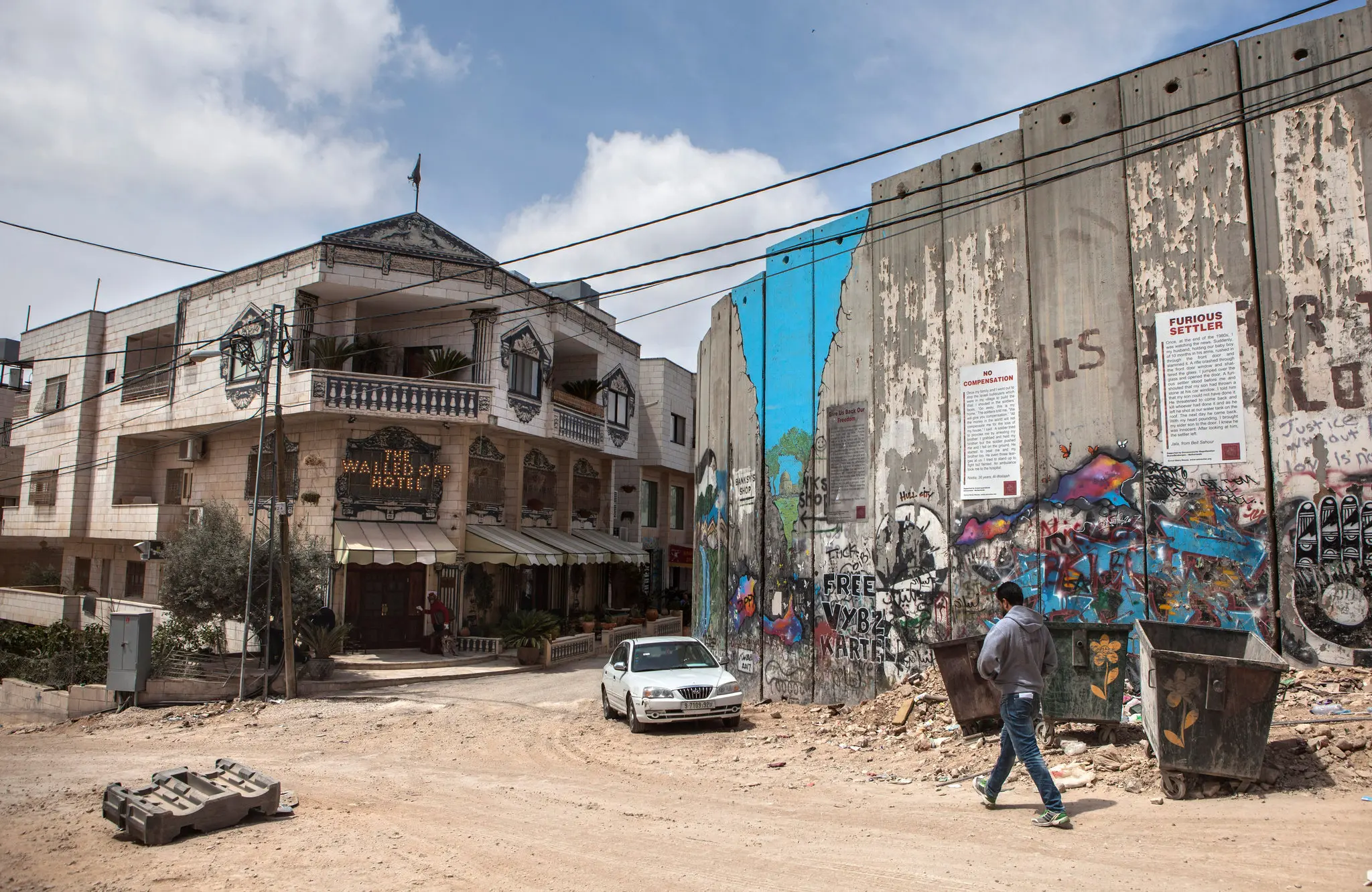
The Walled Off Hotel, 2017. (Image via Dan Balilty for The New York Times)
The Mall of Mindfulness and Curated Other
Perhaps the most subtle form of “othering” happens when we claim to love a culture so much that we decide to buy it, strip it of its context, and sell it back to ourselves. We see this clearly in the wellness industry, where indigenous mindfulness is often homogenised into a marketable aesthetic. Yoga is a prime example. In the modern fitness landscape, the word has become almost synonymous with asana—the physical postures and exercises. But asana is only one of the eight limbs of classical yoga. When we treat it as a luxury workout, we overlook the ethical precepts and the spiritual goal of liberation. This is cultural trivialisation disguised as self-improvement; it says, “I like your peace of mind, but I don’t need your history.”
This commodification is deeply linked to a patronising mindset that pits progress against a curated version of primitivism. There is a pervasive trend in the travel industry where indigenous and “Third World” cultures are pressured to remain frozen in time to satisfy a traveller’s craving for “authenticity.” If a remote village gains high-speed internet or starts wearing modern textiles, the industry often decries the loss of their soul and authenticity. This is a subtle form of suppression; it demands that the “other” stays underdeveloped so they can serve as a rustic, “authentic” backdrop for someone else’s vacation.
By labelling modernisation as spoiling a culture, we deny these communities the right to evolve. It suggests that their value lies solely in their aesthetic distance from the modern world. When we separate the practice from the people—whether by turning sacred rituals into “vibe-enhancing” experiences or by fetishising the “primitive”—we aren’t having a cultural exchange; we are having a shopping trip. True hospitality doesn’t demand that a host stays in the past; it respects the host’s right to define their own future.
The Horror and Erasure of the Self
In Indonesia, the struggle with the “other” is often an internal one. There is a curious phenomenon of cultural amnesia, where many feel a sense of inferiority toward their own heritage while simultaneously obsessing over foreign trends. We see this in the way the Javanese have begun to distance themselves from Javanism. What was once a sophisticated philosophy—a way of harmonising the self with nature—is now frequently dismissed as klenik or dark superstition.
Our entertainment industry has played a significant role in this. The modern Indonesian horror film often uses Javanese rituals and ancient chants as the primary source of terror. By turning ancestral wisdom into a sloppy jump-scare, we effectively antagonise and ridicule our own roots. This cultural amnesia creates a void that is easily filled by a homogenised, globalised identity that lacks any real tether to the soil. We find ourselves more comfortable with a Western-style wellness retreat than with the quiet, profound spiritualism of our own ancestors.
This internal erasure is also mirrored in state policy. Indonesia’s Ministry of Tourism is always excited to promote regions like Sumba, Mentawai, and Toraja as exotic travel destinations, capitalising on their unique rituals to attract global visitors. Yet, a painful paradox exists: the Indonesian government does not officially recognise the indigenous cultural-spiritual belief systems of these very people. Under Indonesian law, citizens are often pressured or forced to convert to one of the six “officially recognised religions.” We want the unique cultural image of the Torajan funeral or the Mentawai tattoo for our tourism brochures, but we refuse to grant the people the right to their own spiritual identity that came from their own soil. We treat their lives as a performance for travellers while denying them the dignity of their own truth.
Overtourism and the Loss of Place
When travel becomes a purely extractive industry, we end up with the “overgrown gardens” of Kyoto, Barcelona, and Bali. In recent years, the world is witnessing the breaking point of these iconic destinations. In Kyoto, the Gion district has had to implement strict bans on tourists entering private alleys to protect geiko and maiko from “paparazzi” behaviour. What was once a living neighbourhood of artisans has become a stage set where residents feel like animals in a zoo, leading to a profound sense of “tourism pollution” (kankō kōgai).
In Barcelona, the tension has boiled over into the streets. Residents have taken to spraying tourists with water pistols, a desperate symbolic act against a city that feels it is being hollowed out. Rents have surged by nearly 70% over the last decade as housing is converted into short-term rentals, turning the Gothic Quarter into a sterile museum of itself where the local baker can no longer afford to live.
In Bali, the crisis is etched into the landscape. The UNESCO-recognised subak irrigation system—one of the backbone of Balinese culture—is facing extinction. When the rice paddy is paved over for a new villa, it isn’t just land that is lost; it is the spiritual and social fabric of the community. This displacement is fuelled by a relentless drive for accommodation capacity; on digital platforms, travellers can now, according to Booking.com, “choose from 23,050 hotels and other places to stay across the island.” While this variety suggests a thriving accommodation sector, it often masks the reality that the Balinese are relegated to being service providers in a land they no longer own.
The Quiet Act of Welcoming
Real hospitality is the antithesis of the echo chamber because it requires us to listen. It is the moment when you sit across from someone whose life is entirely different from yours and you realise that your fears are often just stories you’ve been told by a screen. The essence of this journey—of moving from a spectator to a witness—is captured beautifully in the words of David Sylvian and Ryuichi Sakamoto in their song, “World Citizen:”
World citizen
I want to travel by night
Across the steppes and over seas
I want to understand the cost
Of everything that’s lost
I want to pronounce all their names correctly
To pronounce a name correctly is perhaps the simplest and most profound act of hospitality. It is an acknowledgment that the person in front of you has a specific history, a specific weight, and a specific right to exist exactly as they are. Travel, when done with humility, is a way to look into each other’s eyes and find the common thread. It is the realisation that the “other” is also navigating the complexities of war, displacement, and the desire for a better life.
In a world divided by language, algorithm, and borders, hospitality becomes a radical act of peace. It becomes a choice to treat the stranger not as a demographic or a risk, but as a guest in our house where the simple act of sharing a meal or a conversation can be the most revolutionary thing we do to understand each other. It is a way to remind ourselves that we don’t need to speak the same mother tongue to recognise a shared human dignity, and that the Tower of Babel wasn’t a punishment for our differences, but a challenge to find our way back to each other, as social animals, one name at a time.

Radit Mahindro
Currently serves as the Senior Marketing + Commercial Director at Potato Head. In 2020, alongside Balinese art director and gallerist Krisna Sudharma, he co-founded Paras, an online platform dedicated to documenting tourism destinationism in Bali. He launched his 336-page book, Paras: Documenting 100 Years of Hospitality and Hotel Architecture in Bali, in 2025. Radit has previously worked with and consulted for Alila, Aman, Begawan, Regent, Soori, Space Available, and Tandjung Sari, among others. In his spare time, he shares stories through publications such as Travel + Leisure Asia, Manual Jakarta, and Eastside Asia, documenting how design and travel reflect the wider culture and society.

Potret Kediaman Tony Prabowo

Love

Open Column Invitation
