

Here, there, everywhere: Sexism as institutional
In this Open Column submission, Hana Anandira contends that sexual harassment against women in the workplace is inseparable from the patriarchal norms that enable unaccountable conflict resolution, and how the institutionalized misogynistic work of neutralizing violence against working women is made apparent through the depoliticization of Marsinah’s murder.

Words by Whiteboard Journal
Much of my day job involves sitting in front of a computer, copyediting investigative and workplace whistleblowing reports. Out of the dozen disclosures I review each week, at least half contain some form of gender-based violence. The cases range from pressuring female colleagues into video calls and sending inappropriate content to unwanted physical contact and repeated sexual assault perpetrated by male superiors. These abuses occur across industries — including healthcare — and primarily target women in entry-level or lower-authority positions. In many cases, whistleblowers take months to come forward out of fear of retaliation or job loss.
As a woman analyzing these cases behind the screen, I naturally found myself overwhelmed by the threats that restrict our ability to exist safely in our own bodies. This is compounded by the knowledge that such threats follow women around the clock and across nearly every social space, from the unwelcome stares and jeers on the way to work to the more intimate dimensions of our personal lives. While many instances of sexual harassment manifest overtly, the normalization of gender-based discrimination in shared spaces is often less visible and harder to articulate. This is because normalization operates on multiple levels and does not necessarily mean condoning or ignoring violence against women. Rather, it rests on the deeply ingrained assumption that violence must appear visible, straightforward, and “extreme” to warrant recognition.
Normalization judges the validity of gender-based harm through the lens of outsiders rather than the lived experiences of those harmed. It also redirects toward survivors’ own behaviors, questioning whether they created room for mistreatment; a pattern widely recognized as gaslighting or victim blaming.
What emerges from this is the discounting of survivors’ distress by framing gender-based abuse as an interpersonal or behavioral issue rather than as a manifestation of systemic violence rooted in misogynistic and patriarchal social norms. Such norms often emphasize explicit vulgarity while overlooking the quieter ways misogyny surfaces in everyday attitudes and interactions: the perception that women in workplaces are passive targets to be pursued, the unsolicited intrusion into their personal lives, or the assumption that women must continuously articulate non-consent and boundaries in order to avoid unwanted advances.
Normalization, then, is built on invisible social codes that subordinate women’s humanity to the assumptions attached to their femininity. It is a cultural script that expects women to temper their self-expression or to express themselves in ways that are less visible or otherwise different from men. This becomes especially apparent in how unwelcome advances toward women are routinely described as “unintentional” or “misunderstood,” placing the burden on women to educate men about consent, restraint, and self-regulation.
Undoubtedly, workplaces normalizing gendered forms of misconduct place additional strain on women within an already precarious labor market. Management-mediated resolutions that prioritize neutrality or pacification, such as encouraging both parties to reconcile through “familial” approaches, often fail to address the broader patterns enabling harmful behavior at work. Instead, they encourage women workers to internalize fear and discomfort while preserving the appearance of institutional harmony.
Women in more precarious roles, including domestic workers and those employed in project sites, warehouses, or contract-based factory work with minimal oversight, are likely to endure harassment more regularly unless it escalates into visibly “extreme” violence.
It is important to understand workplace gender-based abuse as a consequence of the broader paternalistic and misogynistic superstructures that shape social relations in Indonesia. We only need to look at the recent Jakarta State Administrative Court ruling in favor of Culture Minister Fadli Zon, who faced legal action after denying the 1998 mass rape of Chinese-Indonesian women and describing the tragedy as “rumor,” despite the extensive body of scholarship and documentary work detailing the violence.
Fadli’s dismissal of one of the gravest assaults against women in Indonesian history demands unpacking for several reasons. As Culture Minister, Fadli occupies a position responsible for safeguarding the nation’s collective memory. His denial therefore carries institutional weight. More importantly, when a government authority actively denies evidence of historical violence, it denies it as a lived reality altogether by severing it from its temporality. This positions sexual violence as something that exists only in thought: not here or there, now or then.
Most dangerous of all, institutional denial weakens the moral conditions through which violence is collectively recognized and condemned. If a minister may openly diminish one of the gravest assaults against women in Indonesian history without meaningful accountability, such dismissal risks becoming normalized elsewhere — in workplaces, schools, neighborhoods, and everyday interactions beyond institutional walls. For is it not precisely these unofficial relations and unsupervised social practices that quietly shape how violence is understood, tolerated, and reproduced across daily life?
Examining the denial of the 1998 ethnically targeted mass rape allows us to understand sexism not merely as a cultural phenomenon confined to interpersonal relations, but as an institutional logic reproduced across formal and informal structures alike. Seen this way, sexism emerges not as fragmented incidents but as a continuous social condition organizing life at multiple scales, including life at work.
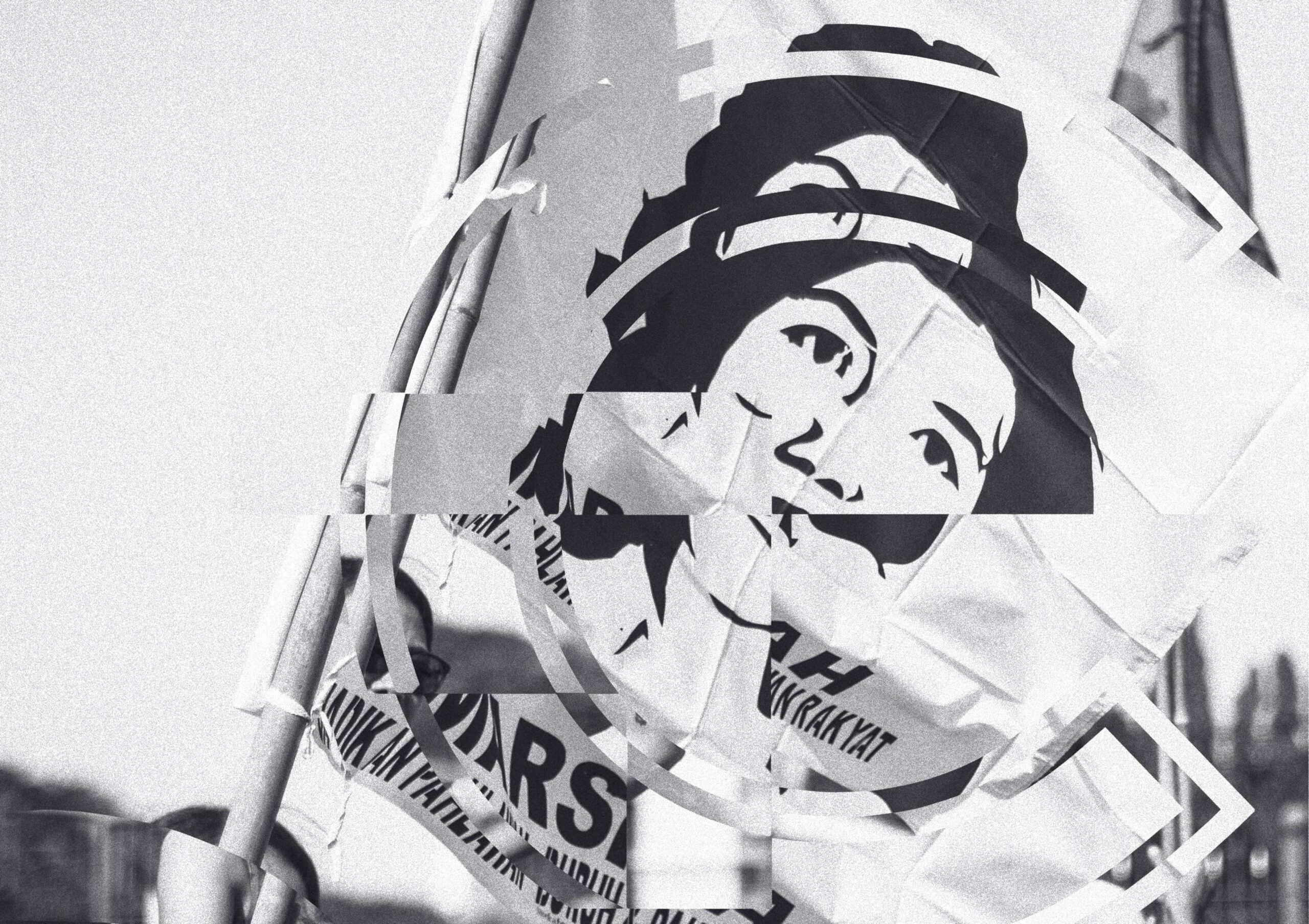
Further, in a move both sinister and ironic, President Prabowo Subianto posthumously named Marsinah — a factory worker brutally raped and mutilated in 1993 for organizing a strike — a National Hero and established a museum in her name, obscuring the state’s decades-long failure to transparently investigate military involvement in her killing or deliver justice.
The lack of discernment and accountability was made grotesquely clear as the President conferred the same title to former President Suharto, under whose militarized regime Marsinah was killed. This seemingly noble act is further undermined by Suharto’s association with numerous human rights violations, including the mass killings of 1965–1966 and the widespread sexual violence committed during Indonesia’s occupation of Timor-Leste, as well as during the May 1998 unrest itself.
Accounts of sexual violence, particularly against women made vulnerable through intersecting conditions such as class and ethnicity, must therefore be understood within a broader ecosystem that normalizes, sanitizes, and ultimately perpetuates violence. Without linking everyday gender-based abuse to the sanitization of these histories, instances of women being violated at work — in factories, warehouses, offices, schools, hospitals, and kitchens — will continue to be dismissed as marginal events within a much larger orbit of violence.
It is fundamental that we begin understanding acts of normalization, whether through explicit dismissal, institutional denial, or unaccountable forms of resolution, not merely as reactions to violence, but as forms of violence in themselves.
When institutions continually domesticate, minimize, or obscure gendered harm, they reproduce the very conditions allowing such violence to persist. The result is a world in which women must constantly negotiate their movement, speech, safety, and visibility while the structures enabling violence remain largely intact.
So long as gendered violence continues to be interpreted through patriarchal frameworks that demand women quantify trauma, moderate discomfort, or prove the legitimacy of their experience, the norms sustaining gendered harassment will continue to proliferate across both institutional and everyday life.

Hana Anandira
Hana Anandira is an editor and independent writer-researcher examining the links between emerging technologies, colonial violence, and everyday life. She has worked as a culture editor, technology reporter, and technical proofreader, with bylines across Jakarta and London. She is currently a volunteer translator at Progressive International, editor-at-large at IDWRITERS, and an occasional Instagram book reviewer.