

What if Sabrina Carpenter’s “Manchild” Is More Than Just a Tale of a Bad Boyfriend?
In this Open Column submission, Georgiana shared her findings that lie within the hit “Manchild” song: a fundamental and systemic problem, and how we have to understand that stopping the cycle can come from a collective effort.

Words by Whiteboard Journal
In 2025, Sabrina Carpenter released “Manchild”. It became the anthem nobody asked for, but everyone needed.
It’s funny and ironic how women worldwide sing it so religiously. While everyone gravitates toward the chorus, I am stuck on a line from her second verse, “…I choose to blame your mom.”
I choose to blame your mom.
What exactly is the connection between a manchild and his mother? Is the manchild the sole perpetrator in this toxic relationship or a victim? This essay is my attempt to answer that question not only as an observer but also as a woman who used to live in that dynamic, and to explore what it takes to stop repeating it.
What Even Is a Manchild?
Manchild, in its most literal sense, describes an adult man who does not behave in the calm, serious, or sensible way that you would expect from someone of his age. It isn’t just a guy who can’t do laundry or doesn’t cook a single meal in his life. The term evolved from a neutral description of a male infant into a modern idiom for something far more complicated — a grown man whose emotional development was arrested somewhere in childhood.
A manchild is not a biological accident. More often, he is a manifestation of fatherlessness, a condition in which a father is absent and a mother is overcompensating for everything. He becomes the projection of the man she wished she had: someone to worship, to love, to care for. In return, without ever being asked, he learns to accept that position as his birthright.
All his life, he watches the women around him — his mother, his sisters, eventually his girlfriend—absorb, manage, forgive, and shoulder the emotional and physical labor. While he just needs to… breathe, as if their existence alone is a contribution. Years of structural training and lack of responsibility shaped him into a manchild.
The scary thing about manchild behavior is that it doesn’t always look like what it is. On the surface, he appears to be a confident, charming, well-spoken adult man. But inside, he is a fragile little boy. Sometimes it looks like a high-achieving guy everyone admires at work. Sometimes it looks like a calm, soft-spoken boy who listens to Clairo and drinks a matcha latte. Sometimes it looks like a guy in love who needs you a little more than is healthy. That need can feel, especially to women raised in certain households, dangerously close to genuine love—a call for your destiny. This is where the cycle begins. This is where we need to pay attention.
Manchild: Perpetrator or Victim?
Although Sabrina blames the mother in the song, she is probably not the real villain — more of an enabler.
In every abusive environment, there are three key roles: the perpetrator, the victim, and the enabler. An enabler is a former victim who, without awareness, becomes a passive perpetrator and keeps the cycle continuing.
The mother never set out to raise a manchild. She was likely married to or abandoned by a man who gave her nothing emotionally — or perhaps she was raised by one. She was a victim of a society that enabled the abuse. Then, she had a son and poured that unmet love into the only man who reciprocated. She unconsciously made him the man of the house she never had, giving him the privileges without adult accountability. In doing so, she protects him from accountability while carrying the burden herself.
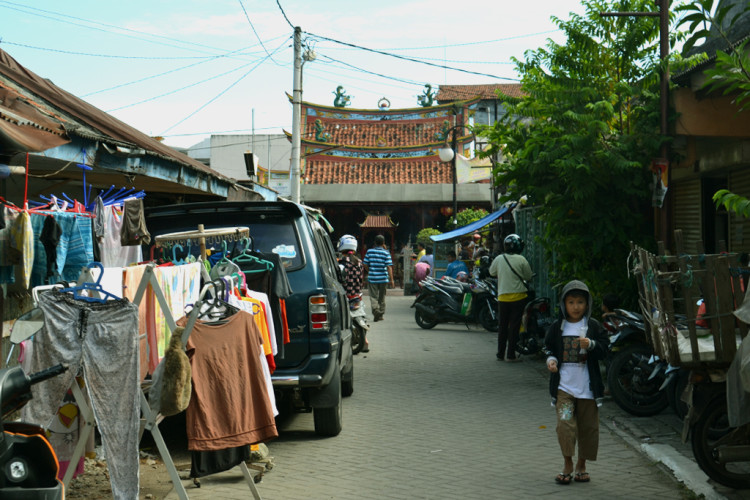
This statement is not far from the reality of Indonesia’s sociocultural landscape. Mothers are always expected to take on greater responsibility. The phrase ‘Ibu adalah madrasah pertama’ places the moral weight of the entire family on mothers. But when the father is absent, she carries it alone. The phrase ‘Cinta pertama anak laki-laki adalah ibunya’ emphasizes the blind idolization of the ‘ideal woman’ figure.
The son learned that a good woman obeys, serves, and overworks. He is a victim of his lack of knowledge, enabled by his mother’s blind love. He projects that model to his sister and future partner. Now he becomes a perpetrator too.
In the other room of the house, there’s the daughter who watches everything. She watches her mother work twice as hard for half the recognition. She watches her brother get excused from house chores. She watches her brother get prioritized. She watches her mother cry in the kitchen — the one place the boys never touch. She hears her mother sigh silently and keep doing the same chores.
The daughter doesn’t like what she sees, but she learns that silence is safe from her mother. She learns that love is endurance. Love is something you perform, not something you simply receive. The harder the work, the purer the love. Neither her mother nor his brother is the real victim in this household; she is.
Later, she grows up. She finds a man who needs saving, who needs managing, who needs a woman willing to carry what he won’t. It feels familiar. It feels like home. It feels like the ‘savior’ role her mother played has finally been passed down to her. This is where I have to be honest about myself.
The Fully Formed Manchild at Dinner Table
Somewhere in mid-2024, I was engaged to this guy and was invited to a dinner with his extended family. At that time, I inevitably gained ten kilos due to stress and dysregulated hormones. The fiancé was also aware of this. By the time I arrived at the restaurant and shook hands with his mother, she looked at me and said, “Kamu gendut banget sih sekarang, kecilin dong badannya. Gendut tuh jelek tau.” I tried to brush it off by replying jokingly, “Yah, tandanya sukses dan bahagia, Tante. Jadinya makannya banyak deh.” But his mother insisted that I looked ugly; she was so sure that it sounded almost like an order for everyone around her to agree. He was there, he watched, he heard, and he chose to stay silent.
Later, when we were alone, I told him that his mother’s treatment was uncomfortable, to which he replied, “Kan kamu mau jadi bagian keluargaku, ya kamu harus terima dong mamaku kayak gitu.” He added, “Jangan cengeng, kakak-kakakku (perempuan) pernah dapat (komentar) yang lebih parah, tapi biasa aja.“ This is normal for him. I was speechless, yet I decided to stay.
In that moment, three layers of realization unpacked: he enabled it, he normalized it, and he couldn’t see it. Not malice, but trained blindness that emotional and verbal abuse towards women is normal. That night, I was also too blind to realize that my decision was a script I’d been handed and replayed since childhood. Because somewhere in the back of my mind, his response didn’t feel entirely foreign. It felt, in the worst way, familiar.
I remembered seeing my grandmother, mother, and aunts serve the sons first. Sons eat, daughters clean. Sons play cards in the living room, daughters stay in the kitchen. I saw the daughters who worked harder and asked for less. I saw that daughters should accept being the doormat because that was the hierarchy. I learned that real, genuine love means tolerating what you shouldn’t.
For the next six months, I accepted everything he said with the hope that my genuine love would pay off — it didn’t. It took me a long time to understand that what I had learned wasn’t love. It was a script that I had been performing faithfully for years. It was a cycle of gender-based violence.
Breaking the Cycle
Understanding the manchild cycle requires acknowledging two truths at once: it is both individual and structural. He’s a victim of his upbringing, but also a perpetrator enabled by his environment. The behavior is personal, but the pattern is inherited. Hence, the work is necessary for all parties in society, and clarity is the first step for change.
For women in similar relationships, change is possible, but it requires awareness, accountability, and hard work — often through professional intervention. It is not something that can be fixed through patience or devotion by one person alone. This dynamic sustains on an imbalance, not love. And an imbalance will eventually become exhaustion. You cannot save someone if you don’t save yourself first.
For daughters and sisters in similar households, recognition is the first disruption. Noticing the pattern is already a form of resistance. You are not obligated to carry what your mother carried. If you recognize an imbalance in your household, get curious about that and ask yourself the necessary difficult questions:
What did you learn love was supposed to feel like? Is this the model you actually want to continue?
For Indonesian Gen-Z, the change is collective. The cycle begins to break when people with access to education, to mental health resources, to broader perspectives choose to act differently. It looks something like when boys are taught accountability instead of being excused. When mothers allow sons to face consequences. When peers stop normalizing harmful behavior with phrases like “dia emang gitu orangnya.”
The system may be inherited, but it’s not permanent. So, next time we sing “Manchild” out loud, instead of choosing to blame the mom, we choose something harder: understand her, start the conversation she never could, and become what she wasn’t given the chance to be — free. 

Georgiana
Hi! I’m Georgiana, a Jakarta-based digital creative and designer. I write and create content about gender, culture, and the arts, mostly drawing on my own experiences.