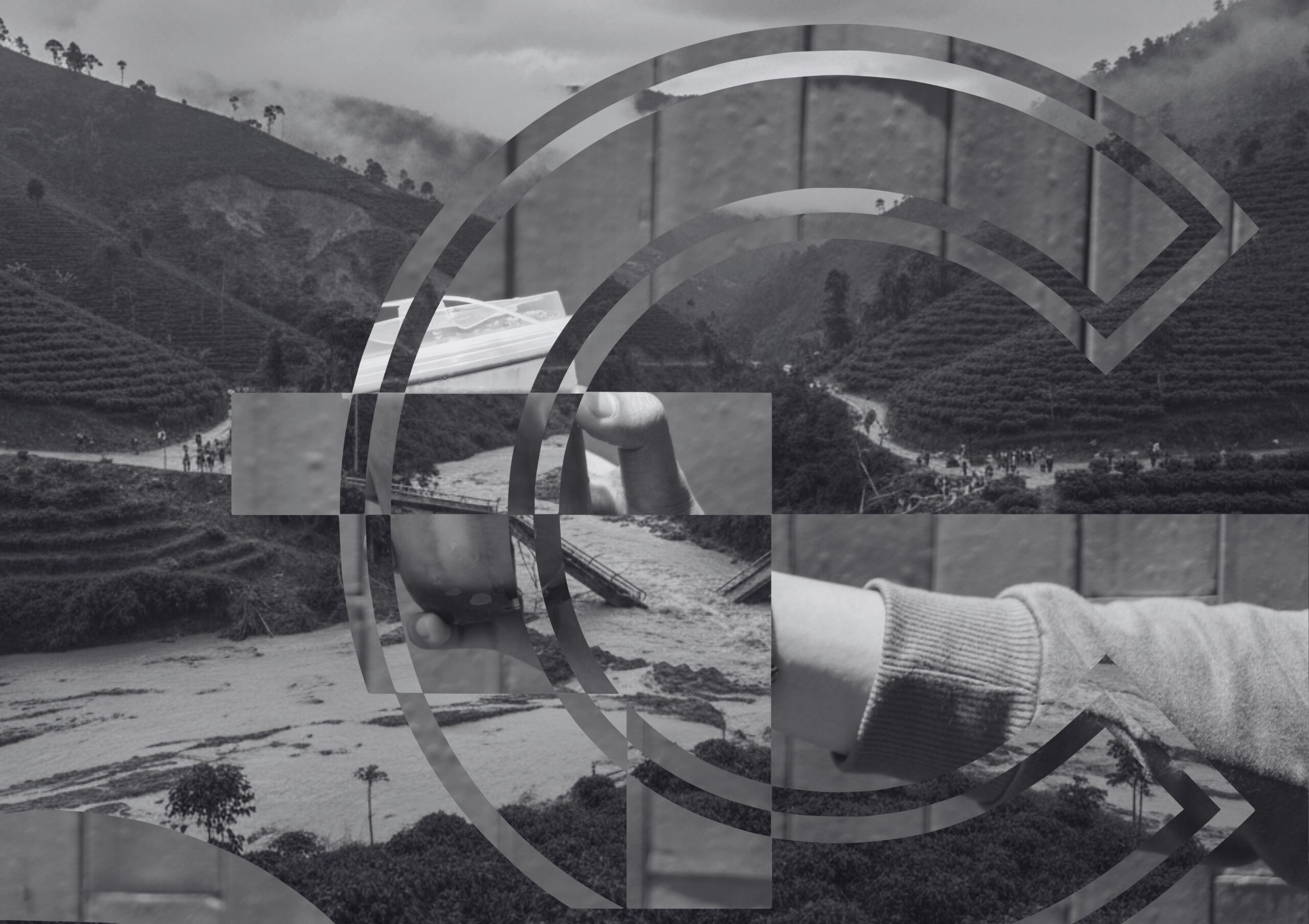


By Remembering How Coffee Is Sourced From Aceh, It Can Also Teach Us Empathy for the Soil and Its People
In this Open Column submission, Allestisan Citra Derosa brews coffee to show how it can weave together its Aceh and Sumatra origins, science, memory, and landscape that exists in our lived soil (that is often reduced to just ‘dirt’), while also bringing forward the nuances in solutions addressing ecological collapse.

Words by Whiteboard Journal
Imagine the journeys you might take if a sip of coffee can carry you back to the hands of those who grew its beans:
Perhaps in a silent kitchen in Brazil—the world’s largest coffee producer, where annual harvests yield over 3.5 million metric tons. Your spouse just handed you divorce papers.
Or, you might find yourself in Finca Takesi in the Bolivian Andes, among the highest clouds and coffee trees on Earth.
Instinctively, you choose the second path. Little did you know, reaching Finca Takesi means braving the “Camino de la Muerte” a.k.a the Death Road.
This single-lane gravel track, clinging to fog-shrouded cliffs with a 600-meter void below, claims its legend as the world’s most dangerous road. The air is thin and the margin for error, zero.
Historically, coffee was never meant to be grown like this.
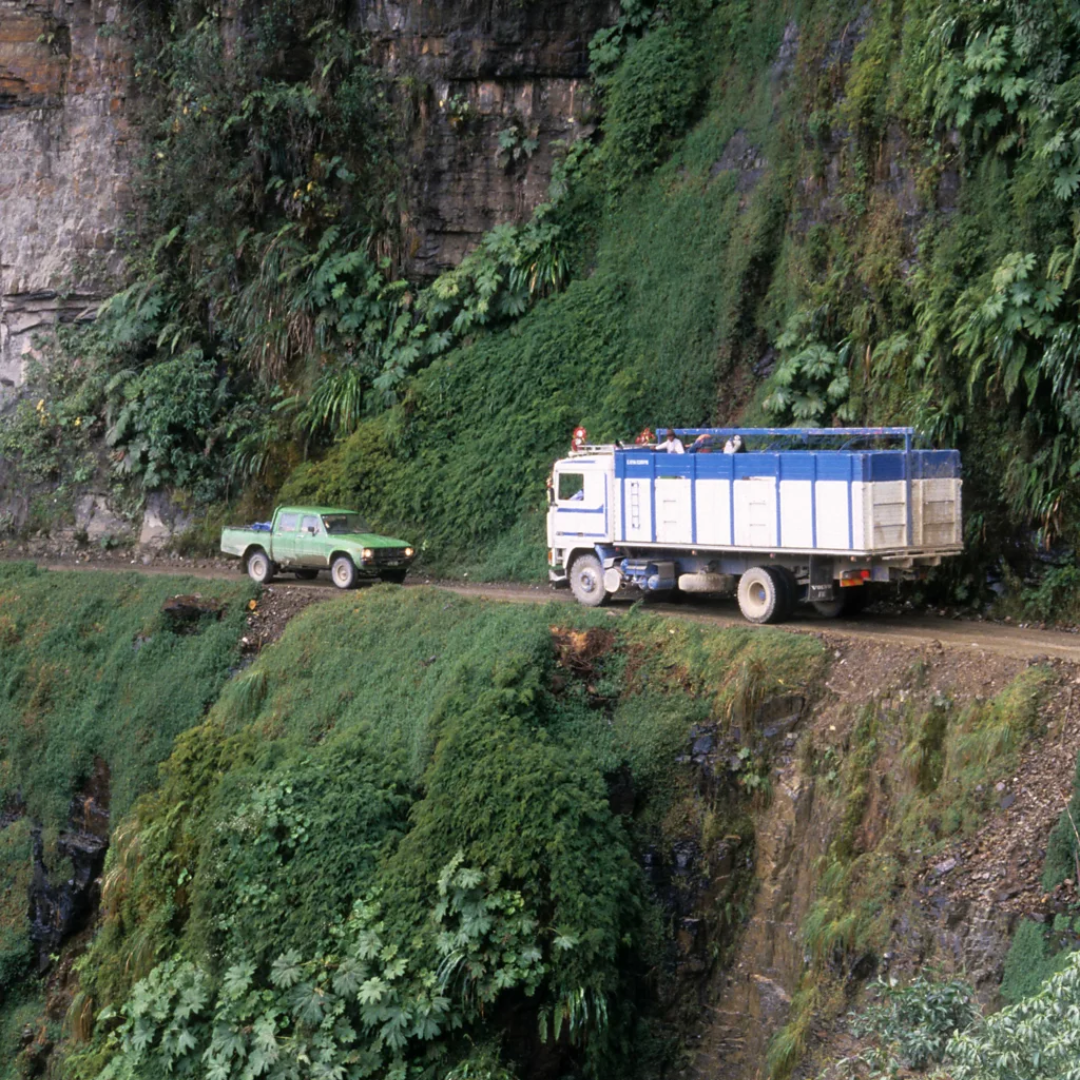
Image via James Brunker/Alamy
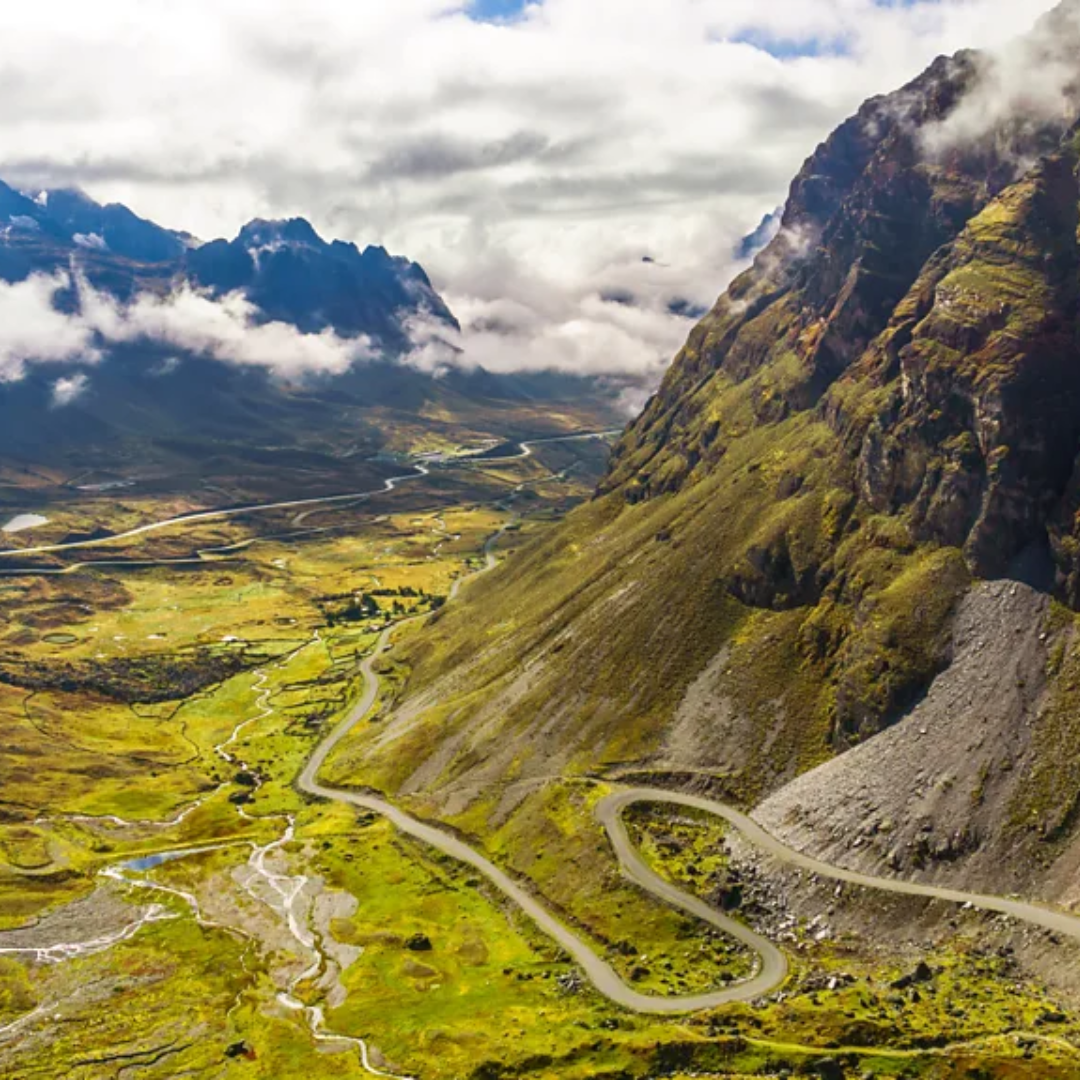
Image via Streetflash/Getty Images
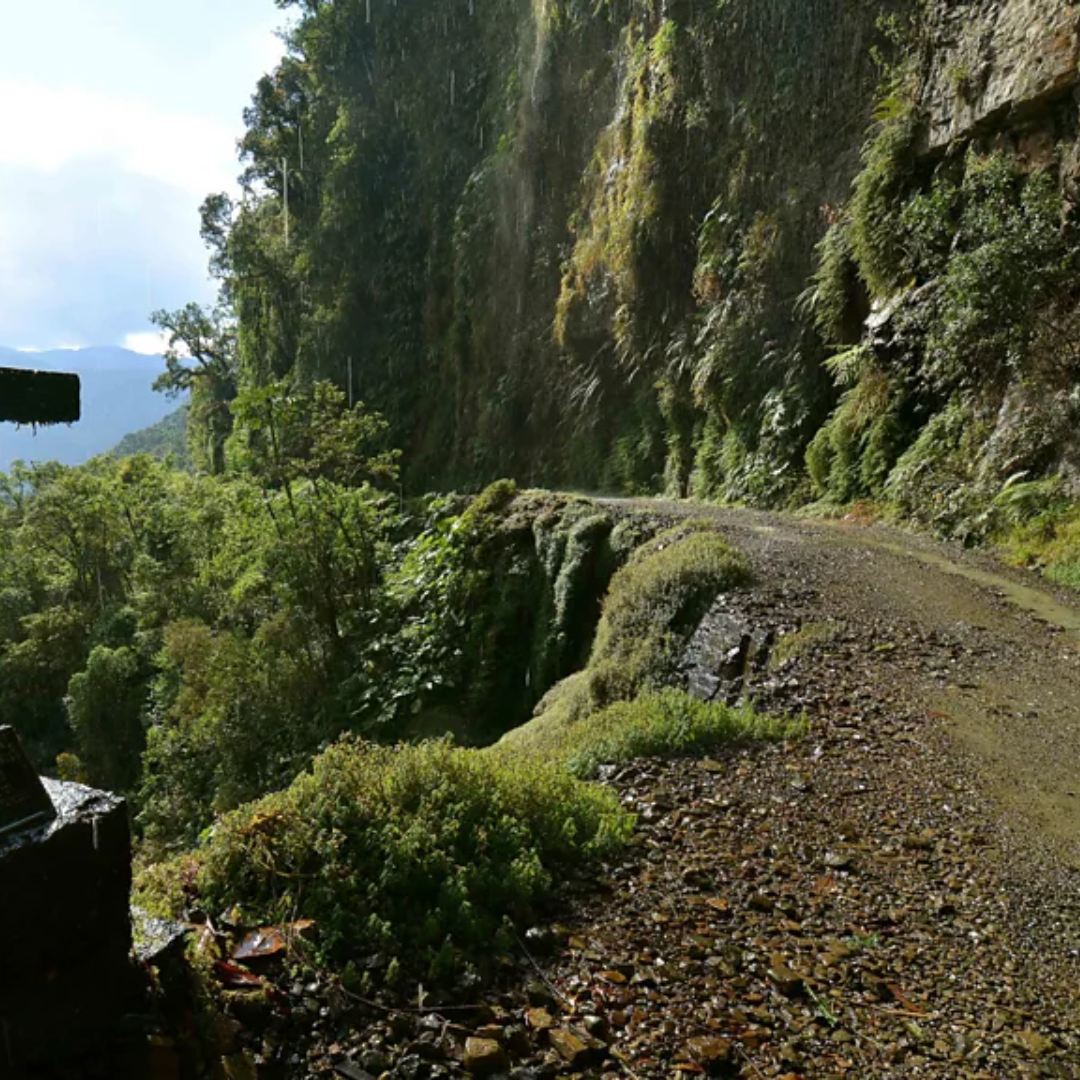
Image via Harald von Radebrecht/Alamy
Farmers across the coffee belt are forced to migrate to ever-higher, more perilous ground. Climate change is making the lowlands too warm and the weather too unpredictable for the world’s favorite beans.
Today, we can see the decades-long prophecy of coffee’s extinction is materializing.
Arabica beans—about 60 to 70 percent of global coffee production—are especially vulnerable. They dominate the market and suffer for it. Arabica is delicate, picky, and notoriously bad at handling stress.
In 2022, PLOS One projected that by 2050, more than half of today’s prime Arabica-growing land could become unsuitable. Brazil, Vietnam, Colombia, and Indonesia—the pillars of global supply—are expected to lose their best regions. Meanwhile, new territories in the United States, Argentina, and China may gain suitability, quietly redrawing the coffee map.
None of this is new. Over a decade ago, researchers from the Royal Botanic Gardens, Kew, working with Ethiopian scientists, issued the same warning. We listened politely. Then we kept brewing as usual.
Of course, science doesn’t merely spot problems—it engineers solutions. And faced with extinction, where else would we look but the genes?
Researchers are delving into Arabica’s evolutionary history, using deeper genetic insight to guide smarter crosses. Breeders are developing F1 hybrids that deliver higher yields and stronger resilience in a shorter time.
Others are stepping outside conventional cultivation altogether, turning to wild coffee species and genome-wide studies to see how nature has already solved challenges like heat, drought, and erratic rainfall.
Yet what does even the most resilient genetics depend on?
In November 2025, more than 12,000 hectares of coffee gardens in Aceh’s Gayo Highlands—across Bener Meriah and Central Aceh—were wiped from the map in a flash by catastrophic floods.
Even if scientists can successfully archive the most superior coffee’s DNA in freezers, extinction doesn’t happen as a pure genetic event. It happens when the soil disappears.
To safeguard the future of our coffee, we need to square back to soil—the source of 95% of our food.
Soil is autopoietic: capable of self-regulation. Within it lies the rhizosphere—a communicative zone where roots, fungi, bacteria, and microfauna coordinate life.
Through mycorrhizal networks, trees speak to one another. They warn of drought. Signal pest attacks. Share nutrients with the young, the sick, the shaded.
These underground conversations stabilize ecosystems, prevent erosion, buffer floods, and soften climate extremes.
When the conversation underground holds, human societies above ground do too.
Understanding nature as sentient is central to Indigenous knowledge systems, including the Penukal communities of PALI Regency in South Sumatra.
For them, coffee is not something to be farmed. It is something that lives in the jongot—a forest-like agroforestry system that mirrors natural ecosystems. Diverse trees cooperate. Nutrients cycle. Shade is shared. Soil deepens instead of depleting.
Here, coffee owes its existence as much to squirrels and civets dispersing seeds as to human intention.
This model of profound listening to nature is now guiding solutions beyond Penukal. In Central Aceh, where 56 percent of coffee farms overlap with protected forest land, social forestry offers a way forward.
The policy legalizes cultivation while mandating agroforestry: no clear-cutting, mandatory native tree cover, and long-term stewardship. It follows models proven elsewhere, like Java’s pine-based systems.
The future of coffee, therefore, is being rewritten in the language of nature itself.
Yet for centuries, imperialism taught us to look down at the ground beneath our feet and see nothing but dirt.
Soil became shorthand for backwardness and poverty — a sign that one had not yet been lifted into the shallow abstractions of offices, machines, and markets.
And with that shift, our sacred relationship with soil was erased. Women felt the rupture first.
In Java and Bali, the story of Dewi Sri was never just about rice. It was about the dark, wet earth that receives the seed, holds water through dry months, and quietly decides whether a village will eat or go hungry.
In India, women learned to read land the way others read books: by touch, by smell, by memory. They saved seeds for specific soils—heavy, sandy, tired, generous—maintaining biodiversity long before it was fashionable.
In Indigenous Brazil, women worked cassava into safety and sustenance, rotating plots and tending living soils with an understanding that food, land, and ancestry were inseparable.
Caring for soil was a moral practice, folded into ritual and daily life. Imperialism broke that intimacy.
As soil was reduced to resource, traditional farmers were reduced to labor—displaced from seasonal knowledge and denied rest.
We are now living under the illusion that progress is defined by how quickly we can bulldoze, poison, and conquer the soil.
The numbers tell the story.
Indonesia has about 1.2 million hectares of coffee, compared to 16–17 million hectares of oil palm. Of its 1.9 million km² landmass, only 26.3 million hectares are suitable for cultivation—just 0.096 hectares per person.
Around 70 percent of that land is acidic. Decades of Green Revolution intensification have left 73 percent of rice fields critically low in organic carbon. Agronomists diagnose this condition as “sick” or exhausted soil.
The irony lies in the backlash. As soil exploitation is framed as the natural order of survival those who reject it are labelled biologically inadequate.
Seen this way, the crisis facing coffee is not a failure of genes or technology. It is a failure of imagination.
There is a reason the coffee in our cup is the color of earth after rain: that deep black-brown, holding a hint of rust, the memory of iron and life.
It reminds me of the cool mud rising between my toes in the rice fields behind my grandmother’s house in Matur, West Sumatra. A feeling of belonging so physical it outlives memory.
Coffee is a distillation of soil: mountain rain, decomposed canopy, centuries of leaf fall and microbial negotiation. Within every sip, we taste it because we are part of it.
Our bodies echo nature’s designs. Neurons branch like mycelium. Fingerprints spiral like tree bark.
We resemble each other in function: in distributed intelligence, mutual responsiveness, and the capacity to sustain life through connection.
The gene odyssey cannot end in a lab freezer. The strongest genetics mean nothing in a dead world. To save coffee—and ourselves—we must relearn an ancient distinction:
We do not grow coffee on soil. We grow it with soil.
Our future cup depends on remembering that—and defending the fragile, living world beneath our feet.
Allestisan Citra Derosa
Alles is a branding agency writer covering creative and cultural subjects, including luxury and fashion. She’s pursuing journalism as a way of understanding the world and her place in it.