

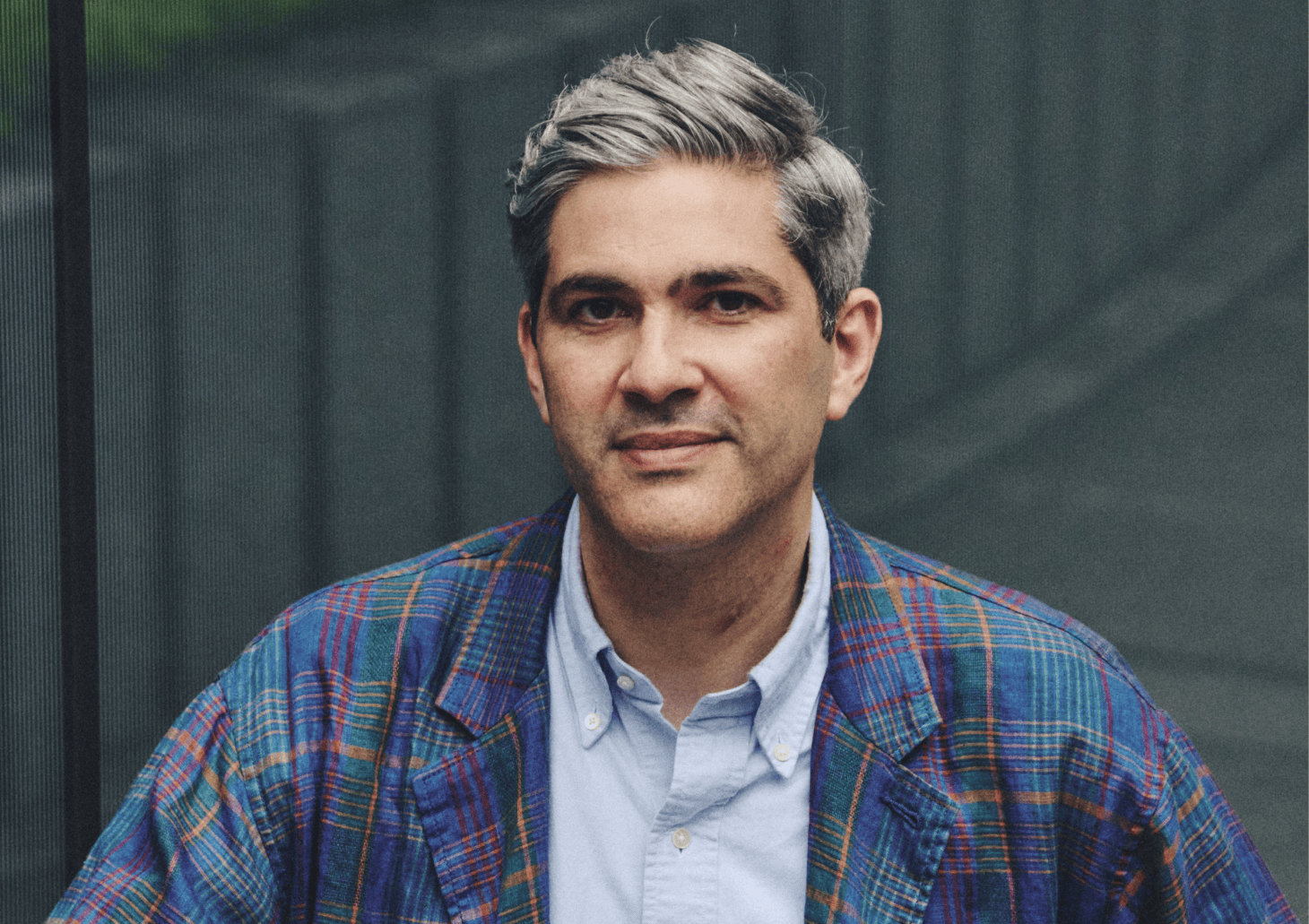


W. David Marx: “What’s most important is that Indonesia develops its own culture that is not derivative of what’s going on in other places that is unique and interesting.”
During an online talkshow held by KAIJIN Labs and Pusat Studi Jepang UI, we had a time to virtually sit down with W. David Marx to talk about the forecasting of Japanese fashion outside of Japan, the global pop culture system, to his suggestion for how we can set our sights on making things for the international audience.

Words by Whiteboard Journal
Words: Garrin Faturrahman
Photo: Seishi Shirakawa
If you’re in store for the city boy aesthetic, Japanese Americana look (denim to workwear, which would then become streetwear), or even anything that would find home in a Popeye magazine cover, then you may need to acquaint yourself with one of the household names of the style: W. David Marx, the American fashion–culture writer (or perhaps also culture historian) that has long gone down the winding, engrossing scenic route that is Japanese culture.
Being raised in an academic family, pretty much everything that passes the unending waves of culture were then brought to a new, longer-lasting life by him through a number of books he’s written: from his recent one, Blank Space: A Cultural History of the Twenty-First Century (2025), to the engaging Ametora: How Japan Saved American Style (2015). With these, safe to say his findings are worthy of being an ultimately quintessential guide and encyclopedia in enriching yourselves in the world of the intertwining Japanese and American style (and a pain-stakingly detailed one, at that).
Marx was featured in an online talkshow held by KAIJIN Labs and Pusat Studi Jepang UI for their first edition of Japanoramic, a lecture in which explores how trends could progress and reshape culture, from Japan and beyond. During the same event, we also had a time to sit down (albeit virtually) to talk about the forecasting of Japanese fashion outside of Japan, the global pop culture system, to his suggestion for how we can set our sights on making things for the international audience.
You have just translated Popeye for its first official English version of the magazine. How would you forecast the life of Japanese fashion outside of Japan, now that more have more access in reading said edition?
There’s a huge change that’s happened in the last 25 years, in terms of access to Japanese fashion. So, when I was in college in the late 90s, early 2000s, I came back from Japan, very interested in Japanese streetwear, and there was literally nowhere, anywhere outside of Japan you could buy it.
So, there’s two shops in the entire world that sell the brand of Bathing Ape. And one of them, the one in New York that I would go to, only had access to it like three times a year or something, just random occasions. You could go to Comme des Garçons, but really that was very expensive and only for, you know, people with money.
But ultimately, it was pretty hard to acquire Japanese fashion unless you were in Japan. And now, almost all the major brands have distribution outside of Japan—if you go to Paris for Men’s Fashion Week, some of the biggest shows that week that people are very excited about are brands which are Japanese.
Japanese men’s fashion and culture mag @POPEYE_Magazine began publishing in 1976, and now 49 years later, I helped the editors translate and edit the first-ever all-English issue. This Tokyo guide is pure POPEYE: extremely deep recommendations and superhigh info density. pic.twitter.com/lekDNn0IKc
— W. David Marx (@wdavidmarx) September 21, 2025
There is a huge basic integration among Japanese fashion, which, for a long time, was isolated into the global fashion system. UNIQLO is the clearest as a brand that almost everyone in a major city has access to now. So you can buy Japanese fashion really, really easily, but then even the high-end brands, you know, are mostly sold around the world.
So the good news is, they’re integrated. But the bad news, there used to be this term called Galapagos effect where Japan would—because it was so isolated—kind of go off in strange directions. And honestly, I think a lot of the innovations that we see that people are still excited about in terms of Japanese fashion is because there was that isolation.
And so the isolation is gone and everything is being done within a global context. But, a brand like AURALEE is just, it’s not necessarily valued for being specifically Japanese. It’s just really, really good clothing and people love the design and the quality. But it is Japanese and people associate it with ‘Japan’s very good at making clothes and this is a very good brand.’
So I think the future of Japanese fashion is bright in the sense that talented, creative designers will continue to get a lot of attention from around the world. But maybe the one thing that’s changed is that there just isn’t this, um, strange isolated Japanese fashion that’s off being innovative and in new ways.
I think everyone’s kind of working to the same goals globally now.
We’ve also seen Ametora (or American Traditional) spread across regions, even in Bangkok, it’s also prevalent and has specific shops for that genre. However, we’ve seen how the Global South is moving upwards, too. In your eyes, would there be an equilibrium in the topic of global fashion between the bigger countries with the new rising voices of the Global South?
In the last five years, it’s been really, really interesting to see brands emerging from India, Southeast Asia, to Africa. My friend, Aren Pe, who runs a brand in the Philippines just had an exhibition in Japan. And then the other person he was with, had a brand in South Africa that used all this African production. And so all of that is really, really cool and really interesting and starting to, I think, rebalance in a certain sense where 10 years ago, the participation from the Global South (in terms of design and higher level production) was almost zero. I mean, maybe things were happening, but they weren’t getting caught into the global system.
View this post on Instagram
So there’s already interest in seeing how people are going to take what they’re going to contribute to global culture. The only thing I would say is, the process does take quite a while and it’s incredible that France is a country that has not been an economic superpower for a long time. It has not been a military superpower for a long time. And yet, France is still the center for luxury goods, right? So what is a luxury good and what is not a luxury good has a lot to do with, is it French in origin, right? And, you know, it doesn’t even have to be made in France. It just has to have the marker of something that is French. So, the things that give products value over others, it’s a really long process.
And so it is encouraging to see that we live in a world where people from everywhere can start contributing, but, to balance it out, it really means the Global North and Global South get equal billing. And I think that’s going to take quite a long time.
The Japanese translation of Ametora is now in its 10th printing (10刷) pic.twitter.com/HlA40WQszJ
— W. David Marx (@wdavidmarx) June 19, 2025
Speaking of Japan, we’ve seen sharp concerns regarding overtourism in Japan. How can we, as future tourists, be more mindful when planning to go there?
I used to say, you gotta go to Tokyo and you gotta go to Kyoto. And now maybe it’s, uh, maybe skip Kyoto, and go to Kobe instead. You should visit another city with some traditional architecture. Maybe it’s not Kyoto, it’s somewhere else. I’ve been to 46 out of 47 prefectures, so I’ve been around quite a lot and my general experience is everywhere I go. It’s great that it’s a country of a lot of geographical and cultural diversity and really high quality tourist experiences, really, no matter where you go.
So my advice would be to try to see Tokyo, and you need to spend a couple of days there. But try to get out of Shibuya, get out of Shinjuku, go to some newer areas. So there’s all that. And then, instead of Kyoto, maybe pick some other cities. I think Kobe is one of the best cities in Japan and very few people go there. So there’s that, but then there’s also just a general approach, which helps with over tourism, but I think it’s the right way to do it, which is that people go on to TikTok or if it’s China, a little red book or whatever it is, and then they see, oh, this is the one cafe you have to go to because it has pudding or something.
You don’t have to just go to that one. I mean, there’s so much good stuff that it’s, it’s more about… don’t think about tourism in Japan like a checklist. Like, we got to go here, we got to go here, we got to go here. If this place does curry, there’s like, you know, a hundred other places that are good at curry too. Like you just, you don’t have to think about it in the scarcity. Like there’s only one good thing when the food is so good, almost consistently everywhere.
So I would think about going to Japan and more just go on with your task that day—not to go to this museum and do this, but just go to this neighborhood and walk around. And if something looks good, eat it. And if, if something looks cool, see what it is, but just explore rather than show up, having seen what you’re supposed to see, and then take a photo of it. And I took a photo of it. Now I’m showing people that I saw the thing I’m supposed to see. I mean, that’s, I think that’s where the overtourism comes from.
It’s just, everyone being there and doing the same things. So if you break off from that, you’ll find a better experience. And honestly, how I enjoyed Tokyo now is completely different than it was 10 years ago, because I don’t go to Shibuya and I don’t go to Shinjuku because it’s too crowded. I used to go there all the time. And now I go to a different neighborhood, uh, because those are the ones that aren’t so crowded and it’s quite nice to be there.
Can I have three places as your top three?
I mean, it’s funny cause it just got voted the number one coolest neighborhood in the world by Time Out Magazine, but Jimbocho, the used bookstore district is like one of my favorite areas. I go there quite a bit. And then, there’s an area in East Tokyo that’s called either Asakusabashi or Kuramae. They’re kind of next to each other, and it’s an old warehousing district that now has a bunch of cool stores, but you have to kind of know where to go. And, you know, just like there’s parts of North Tokyo that people don’t go to that are quite interesting just because they haven’t really changed in 50 years.
View this post on Instagram
And so there’s a train line. There’s one trolley line left in Tokyo at the very top, called the Arakawa line. And sometimes I just walk across the line and go through those neighborhoods and they’re just not places that any tourist goes, but it’s, it’s really interesting.
You’ll find new things you’ve never seen before.
As a culture writer, how do you forecast the future of culture itself in the age where most are identifying themselves as global citizens?
Most of the trends that we talk about are really online trends these days. So you don’t necessarily know where they come from. Give Labubu as an example. So Labubu is technically made by a Chinese company. It’s made by PopMart, but the creator is from Hong Kong and he uses for inspiration a lot of European fairy tales.
So it’s not necessarily local Hong Kong culture. I think he’s been inspired by Japan. He’s been inspired by Europe, but it’s made by a Chinese company.
It has been around for a long time. It’s become very popular suddenly because a K-pop star, Lisa, who’s from Thailand, used it on her bag that was a French bag. And then, you know, all these copies are coming from, from all these places in Asia.
I just saw somebody who went to Kyrgyzstan and they were in the, like, market and there was a huge thing of fake Labubus or whatever. And so it’s global, but it’s very much the production, I would say, centered in Asia, based off that list I just gave you. But it’s online really, really where it spreads.
So it is starting to get complicated in that it’s not just some American company that makes things in America and they become famous because everyone is looking at America. It is becoming quite hard to figure out where trends come from. But at the same time, you know, the thing that I’m trying to think about, and I think prediction is always difficult, but really what is happening is there’s a sense that we’ve gone online too much, that there’s this kind of saturation of everyone’s just on their phone all the time.
And real life is great. And hanging out with friends in real life is great. And I do think people are going to start moving off of online culture, these big platforms, there isn’t a new big platform, the platforms have kind of peaked, I think people are going to move off of them.
And so they’re going to start making culture again in their own places in their own neighborhoods and with their friends. And so I think you could go back to something that is, you know, only people in Jakarta do this thing. And now it’s really cool and it’s spread somewhere.
So there’s going to be a parallel online culture and maybe a lot of different little offline cultures. And so that direction is interesting to me. And it’d be interesting to see how that develops in the next couple years.
Many Indonesians look to Japan for fashion and cultural references. Have you seen anything notable that you’d like to point out from the culture scene around here?
Yeah. I visited Jakarta, I want to say at least three or four times. I haven’t been recently.
I think maybe the last time I was there was probably more than five years ago before COVID. But my sense is that Indonesia, the youth culture or youth energy is just incredible because there’s just a lot of young people. And when you compare to Japan or Korea, where there’s fewer young people, that’s a really powerful asset to have many young people and just this kind of optimism about things.
And so I do not know many specific things that are going on in Indonesia. There was an Indonesian, I forgot the name of it, an Indonesian kind of Brazilian influenced indie band who I used to listen to. I thought it was pretty cool. Do you know what I’m talking about? It was something in the White Shoes.
White Shoes and the Couples Company.
Yeah. So I heard that. I was like, oh, this is great. So, I think there’s an opportunity.
As a country, one of Indonesia’s biggest dreams is to go international. Do you think that it’s still relevant in this era, or do you have a better suggestion for a cultural mission/goal that we should aspire to?
I think being part of the global pop culture system is a reasonable goal for any country, because honestly, until recently, there were very few countries that participated at all. As you know, American things are cool and English things are cool, and maybe some French things, but like, that’s it. You know? And then, okay, now Japanese things. Okay, now Korean things—so it keeps expanding, and it used to be sector specific, like Hong Kong films, but only Hong Kong films, nothing else from Hong Kong.
And so I think being part of that network is a good goal. But what’s most important is that Indonesia develops its own culture that is not derivative of what’s going on in other places that is unique and interesting. And that people from around the world when they see it are like, oh, this is very cool and new. I want to bring this into my life. And so I don’t think you get to be global by thinking that we’re going to be global.
So let’s start making things for an international audience. It’s more about making things that don’t feel like everything else, and feel quite exciting for people, the actual young people there.
And, you know, maybe through a little bit of that Galapagos effect in strange cultural evolution, it will kind of move and eventually become something that people around the world will notice.
But it takes time. But it’s more, it’s less, the goal should, the ultimate goal can still be going global. But the goal for everyone on a daily or weekly basis is more just like, how do we make more stuff? Like, how do we encourage people to throw more parties and more music and do interesting things with food and make more art? There needs to be more activity. And the more activity you have, that usually leads to some innovation in the long run.

LOCALFEST Online 3rd Edition, Hadirkan Ratusan Brand Lokal ke Platform Digital
Melalui Kolektif, Melestarikan Nilai Lokal bersama Muhammad Sibawaihi
Slip-On Terbaru Kolaborasi Nicole McLaughlin x Vault By Vans Dirancang Untuk Keperluan Berkebun
