

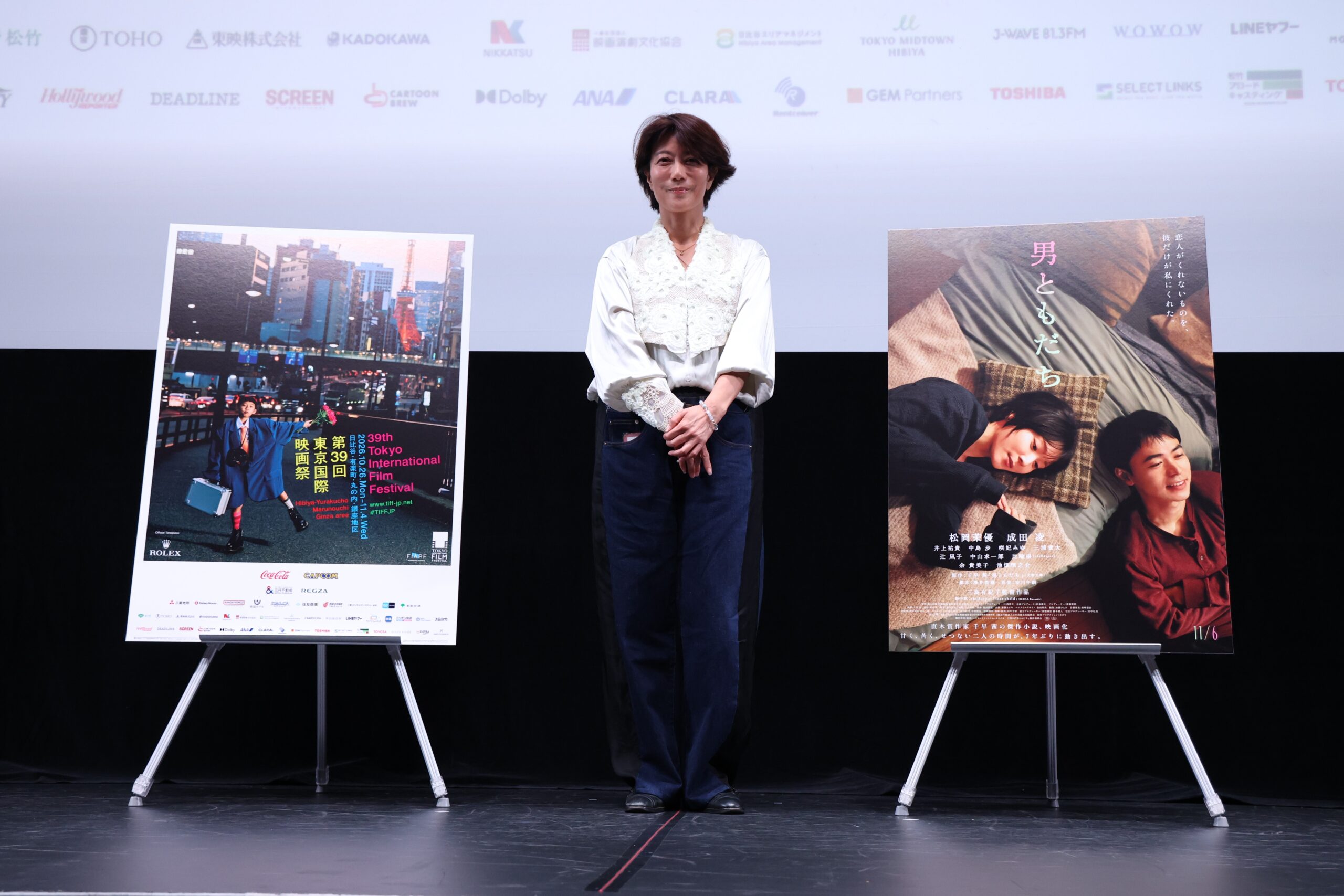


Yukiko Mishima: Other than on people being destined to come together like the film Past Lives, I think what I wanted to do with this one is to depict a relationship that goes beyond the boundaries of sex or no sex.

Words by Ghina Sabrina
Words: Garrin Faturrahman
Interpreter: Mihoko Imai (今井美穂子)
Photo: © 2026 TIFF
A fateful encounter, or kismet if you will, might be the single enigmatic force that can reroute one’s life path to another. Though, it might actually be better for it to be left unturned as we’ve learned from, for instance, the devastatingly haunting Past Lives (2023). If that’s something that gets you going, then the recently released Two Cigarettes, Three Nights (2026) could be something worthwhile for all your “haphazard” attempts in “compensating for these voids,” as mentioned by the filmmaker herself, Yukiko Mishima, when we talked about the main character in her film, Kanna.
We sat down amidst the busy schedule of Tokyo International Film Festival 2026 to have a heartfelt chat on finding our own dignity in those fleeting moments of kismet, how a specific spatial structure could help in facilitating one’s next journey, to how grief actually propelled her to pick up this compelling story.
What drew you to adapt Akane Chihaya’s book, Otoko Tomodachi (2014), into a film?
There were two things that I wanted to achieve with this film. I first read the novel during the pandemic in 2020, and it just so happens that the year before in 2019, I had lost a very dear male friend of my own. I thought it was wonderful the way that this novel was telling the story of a significant other half and cherishing that kind of relationship.
That compelled me to bring it to the screen. And also, it was the character of Kanna, she starts off in a place where she doesn’t really see anything, but through these three nights with Haseo, she comes to see the world, and I wanted to bring that narrative to the film, and to the screen as well. It is a character arc where she starts from not understanding, not seeing anything, to capturing the world as it is. So it was these two things that compelled me.
I’m sorry to hear, but that layer of grief is what makes it hit so close to home, so thank you for saying that.
I think another element is that, of course, this loss of a friend is huge, but also there are several points through which I resonate with the character of Kanna. I am an artist in my own right, and the void or the trauma that she carries because of what happened to her in childhood, I also have a similar history as well. So that’s why the character resonates with me.
I’ve read how you were inspired by the painter Chisato Tanaka’s method of work, you said “I realized what I liked was starting from darkness,” which I relate greatly to. Can you please kindly elaborate more on how said ‘darkness’ helped you pave your path?
I decided to employ or allude to that style in this film because, to talk about Tanaka-san’s work, she starts with a white canvas and she paints it black and she starts her artwork from there. And I think it is very much similar to what we do as filmmakers because when we have audience members come see our work, it starts with blackness and the narrative or the story starts from there.
And I think it also gives us license—it’s almost like a way of giving us license for us to acknowledge our own darkness and for allowing us to start our art, our expression from there, which is why her work resonates with me so much. So it’s just a visual way in this film of alluding to that and saying that. And the protagonist, Kanna, is also that way as well.
But it’s very much the way I personally, as a filmmaker, work as well. I don’t start with a white canvas, like where you can put on this white canvas and to think in a very freestyle way—no. With me, I start from my own darkness as well.
Speaking of darkness, there’s something lingering about Japanese cities that pulls you into a bad place whenever it’s dark out and there’s no one in sight. You captured this isolation while also preserving architectural and spatial memories of places, too. How did these details play part in bringing out unspoken yearnings your characters are trying to outrun?
To talk about Tokyo that you mentioned, I think there’s a bit of a difference between Tokyo and cities like Osaka and Kyoto. Osaka and Kyoto, because they have long-time residents there, it’s very easy to communicate with people—so, it’s a bit different than Tokyo.
And I think Tokyo is probably the loneliest city because you have all of these tens and thousands of people in this city, but you’re on an isolated island where 13 million people live. So, it’s very, very lonely. So, it’s quite different from the other cities.
And Kyoto, the way the architecture is structured, it structures in a way that is conducive to conversation, because, for example, you have these streets where you can just walk along with a partner or with somebody and just continue on conversation forever. Or you have the engawa (縁側) that is in a Japanese house, the kind of hallway or balcony that’s between the outside and the inside where you’ll just sit with somebody and just facing in the same direction. A lot of the Kyoto landscape allows for people to enjoy the same landscape and then enjoy continuous conversation together. So it’s quite different.
And I suppose that you feel a sense of loneliness and isolation in the Kyoto landscapes because, well, of course, the character of Kanna starts from a place of uncontrollable loneliness and sadness. And so, that is shown in the way that we position the camera or the way that we frame her within the frame. So I think that is what you were feeling.
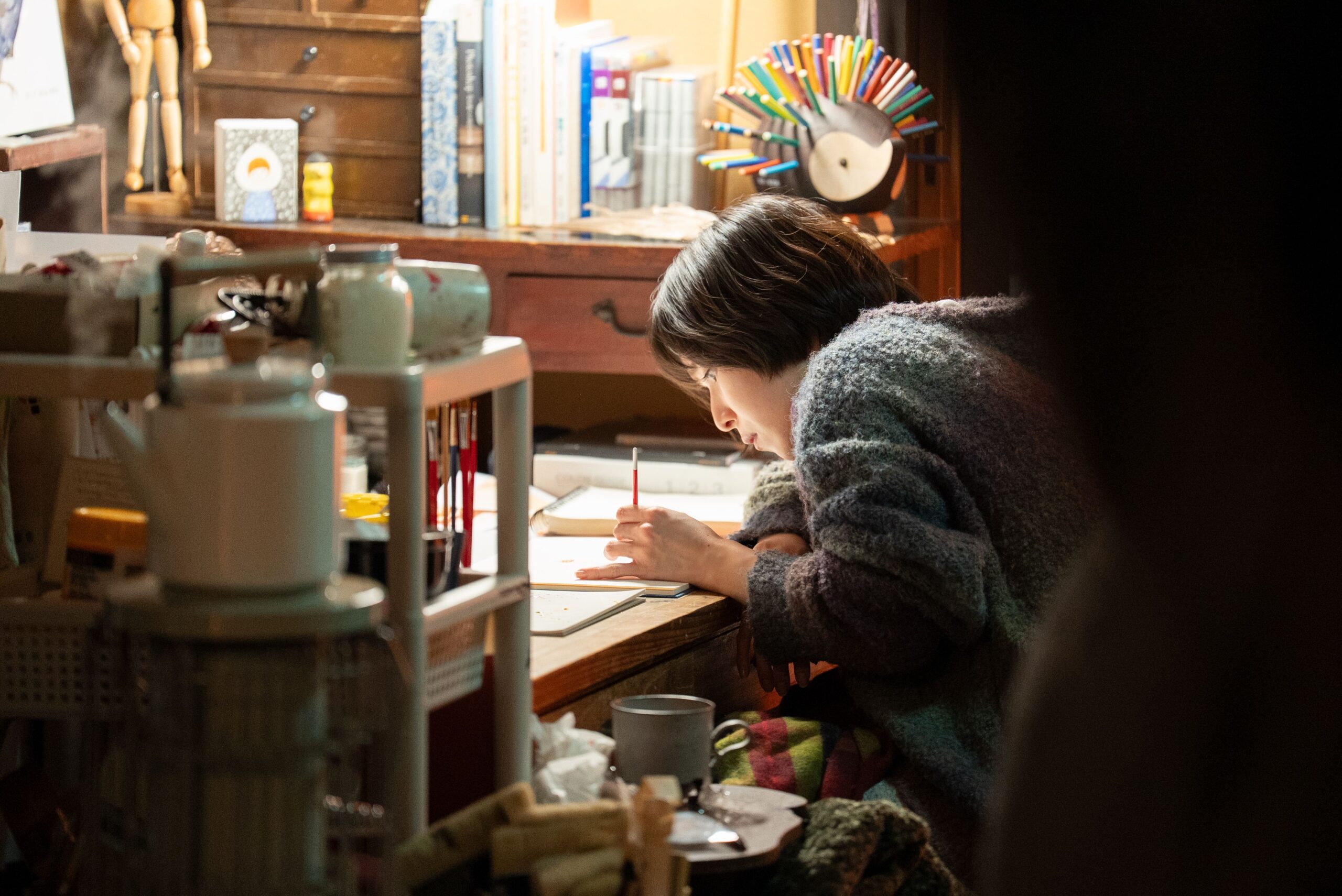
Image via © 2026 “Otoko Tomodachi” Film Partners
Someone told me how nostalgia used to be termed as a disease, especially for those in isolation. Would you say Kanna, as she is drifting through relationships, is actually battling in her own ways to fend off that condition?
Well, first of all, Kanna, she really doesn’t know what she truly, really wants. And so she’s almost very kind of haphazardly trying to compensate for these voids that she carries with her, but it’s never a right fit. And then she meets, for the first time in quite a long while, Haseo. And he very meticulously tries to lead her back to that which she really wants. And this film is trying to capture that process.
To delve a little bit deeper into the character of Kanna, of course she is very traumatized because of something that happened in her childhood. And so she can’t quite form appropriate distances with people, and so goes with Haseo, because he has that same kind of trauma. So it’s two people who can’t quite figure out distances between the other coming together. So it is a type of love story.
I would name other films as analogies. For example, there’s Clint Eastwood’s Million Dollar Baby (2004) or Roman Holiday (1953) or you have films like Naruse Mikio’s Ukigumo or Floating Clouds (1955) where these are also types of love stories where you have two people coming together, even if it’s for a brief moment or just for temporarily, they come together and through that encounter or whatnot, they’re able to find their own dignity.
And that’s what makes these stories a love story, even if the protagonist, for example, dies in the end. And I think this is one such love story as well.
Fateful encounters are also interesting – which was also a theme in the film Past Lives. That seems to be something that relates to people today. What do you have to say about that?
To talk about two people destined to come together or to meet again, this sense of destiny or something that’s meant to be. So when you talk about these two characters in the film, Kanna and Haseo, it is because they carry the same void that they resonate with each other. And they’re also quite similar in that they are morally corrupt—they are less than perfect, and therefore they have to, in order to acknowledge and be okay with oneself, you have to okay the other person that has the same kind of moral level, let’s say. And so this is the kind of relationship that they are in. In that sense, there is a bit of kismet between these two, a sense of destiny between these two.
Another characteristic of this relationship is that it doesn’t matter whether they have sex or not. I attempted to express a relationship where they exceed or try to traverse over the boundaries of sexual relationship or non-sexual relationship—it does not matter, it’s a non-issue.
And so you were talking about people destined to come together or destined to reencounter with Past Lives, but I think that’s what I wanted to do with this one is to depict a relationship that goes beyond the boundaries of sex or no sex. And it’s not supposed to matter anymore whether they become physically intimate with each other.
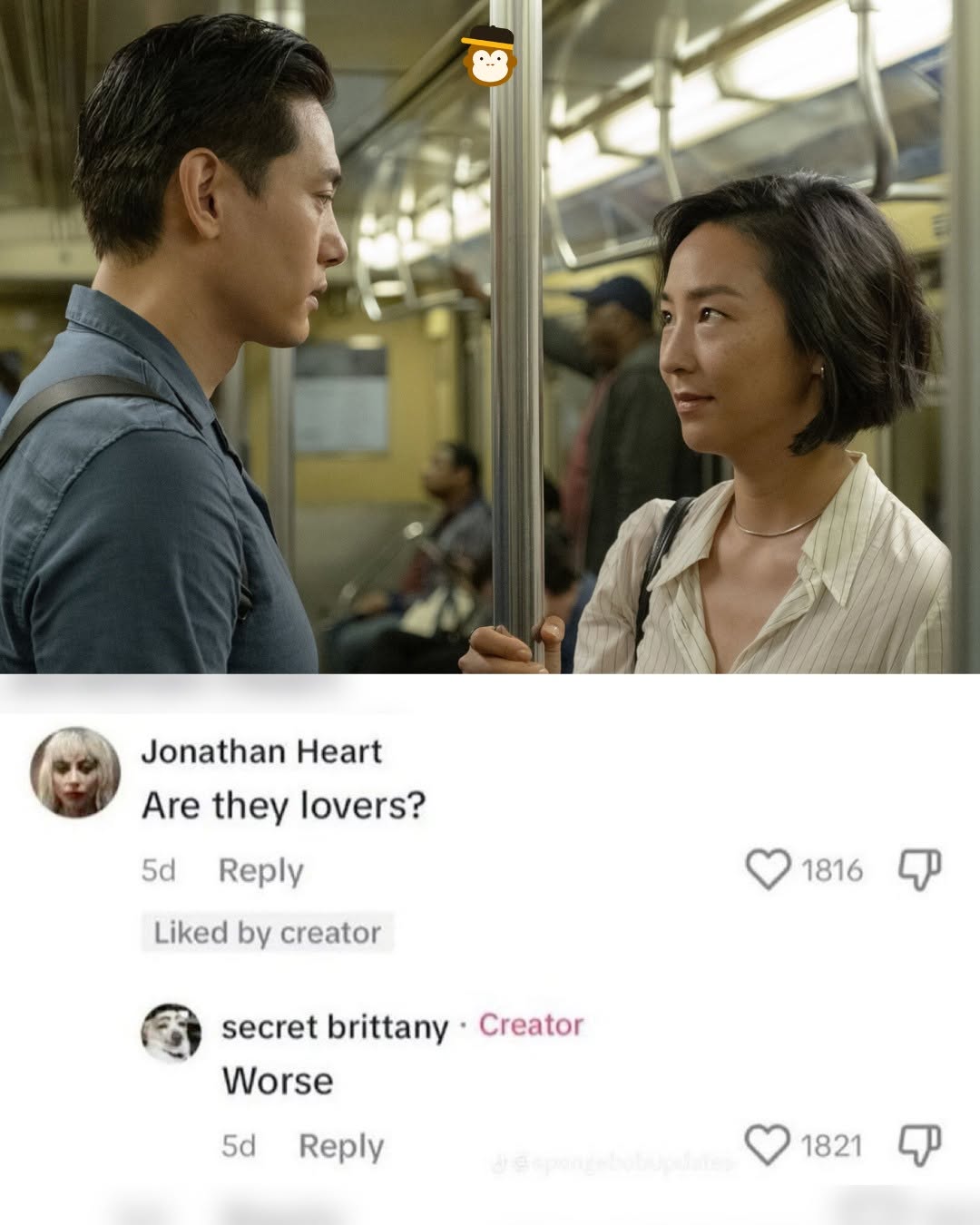
The ever-relevant internet humor regarding Past Lives (2023).

Is Print Still In?
Lebih dari Sebuah Film, “Moonage Daydream” Ajak Penonton Hidup dalam Dunia David Bowie

Trailer Untuk Film Kamila Andini ‘Before, Now & Then’ Memperlihatkan Cuplikan Kisah Karakter Nana yang Diperankan oleh Happy Salma
