10.08.19
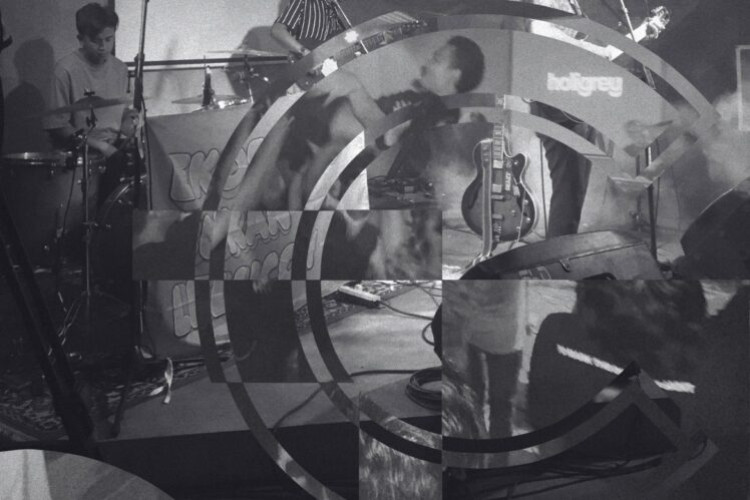
Backstage Life Bareng Grrrl Gang di Episode Kelima Vindy Ngapain?
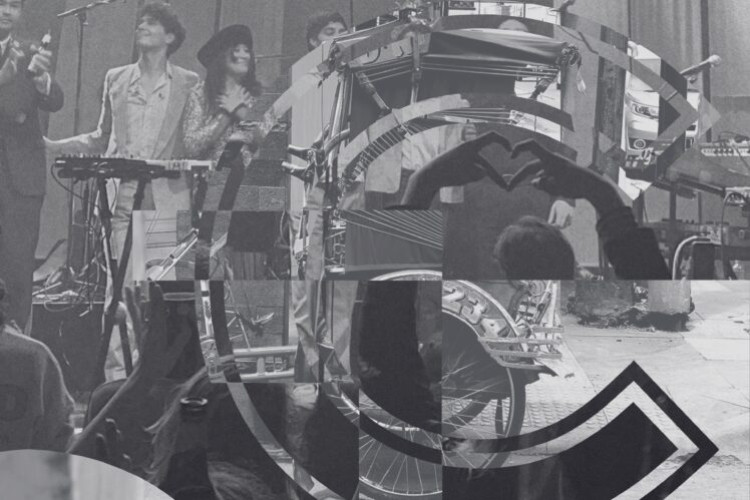
Tahun ini Grrrl Gang mendapatkan kesempatan untuk menjadi salah satu line up di We The Fest 2019, dan Vindy diperbolehkan untuk mengikuti aktivitas mereka.

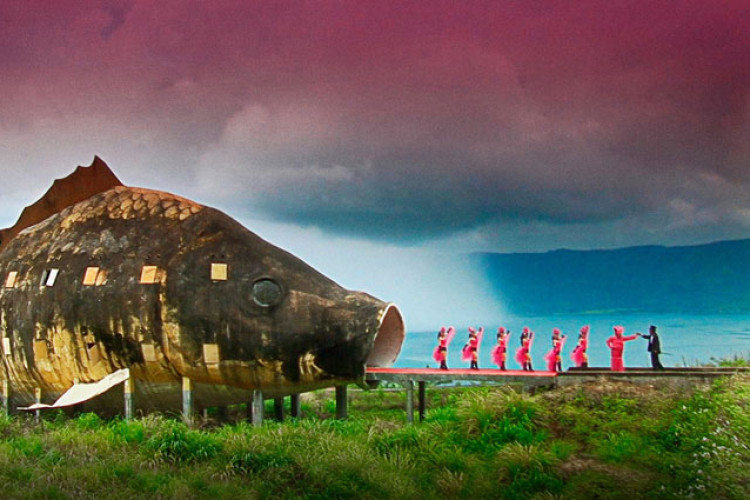


psychological documentary which has Indonesian death squad leaders re-enact their murders is now available free for Indonesians. In a statement published on their site, the filmmaker would like Indonesians to download it, discuss it, and spread the word about to . Supported by Drafthouse Films, Vice, and VHX, The Act of Killing can be downloaded via their website in regular and HD quality. Here is a review of the film by our very own Mar Galo.

Art intersects with so many different disciplines that we often forget to talk about art in relation to itself. How would we begin a conversation that is dedicated to art alone? Below is a list of recommended articles, essays, and novels that you might want to check out before We Discuss #4. The Exhibition-Machine: The Education Potential of an Exhibition by Mitha Budhyarto “The kind of leaning that takes place in an exhibition is one that – despite lacking the formality and strict regulations of institutional education – mobilizes new ways of thinking and doing. Exhibitions educate us when it ignites lines of inquiries that we never expected before, when it propels us into thinking and feeling in ways we never have. Certainly not only about art practices, but also about the way we live our lives.” Can exhibitions be an effective alternative learning platform? In what way can the “new ways of thinking and doing” be developed? Is there one kind of exhibition that is better than others? The Great Swindle by Roger Scrouton “Art must give offence, stepping out armed against the bourgeois taste for the conforming and the comfortable, which are simply other names for kitsch and cliché. The result of this is that offence itself becomes a cliché.” What is the role – if there is one – of art? Against Interpretation by Susan Sontag “Interpretation does not, of course, always prevail. In fact, a great deal of today’s art may be understood as motivated by a flight from interpretation. To avoid interpretation, art may become parody. Or it may become abstract. Or it may become (‘merely’) decorative. Or it may become non-art. The flight from interpretation seems particularly a feature of modern painting. Abstract painting is the attempt to have, in the ordinary sense, no content; there can be no interpretation. Pop Art works by the opposite means to the same result; using a content so blatant, so ‘what it is,’ it, too, ends by being uninterpretable.” In Sontag’s opinion, the act of interpretation defeats the purpose of art because it emphasizes art’s content instead of the work of art itself. The surrealist artist, Rene Magritte, thought that “questions like: ‘what does this picture mean, what does it represent?’ are only possible if one is incapable of seeing a picture .” Do you agree with Sontag and Magritte’s view on interpretation? “…to be an artist, in his view, was above all to be someone . Someone who submitted himself to mysterious, unpredictable messages, that you would be led, for want of a better word and in the absence of any religious belief, to describe as , messages which nonetheless commanded you in an imperious and categorical manner, without leaving the slightest possibility of escape—expect by losing any notion of integrity and self-respect.” What makes an artist, an artist? Does one have to have specific qualities in order to be considered an “artist”? “…we need art because we are so forgetful. We are creatures of the body as well as of the mind, and so require art to stir our languid imaginations and motivate us in ways that mere philosophical expositions cannot. Many of our most important ideas get flattened and overlooked in everyday life, their truth rubbed off through casual use. We know intellectually that we should be kind and forgiving and empathetic, but such adjectives have a tendency to lose all their meaning until we meet with a work of art that grabs us through our senses and won’t let us go until we have properly remembered why these qualities matter and how badly society needs them for its balance and its sanity.” Does this mean that good art have to shock us, that it must, as de Botton claims, “grab us through our senses”? Tuesday, October 22, 2013 7—9 pm Kinokuniya Plaza Senayan (near the language section) Jl. Asia Afrika 8 Sogo Plaza Senayan Lt. 5 Jakarta 10270 Look out for updates on our Facebook page and Twitter account! If you’d like to share your opinions, or if you have friends who’d like to share theirs, please sign up via e-mail with the subject title “We Discuss” at ! If you have comments or questions, tweet us .

It is already the second week of October! Which means that our next discussion session is coming up pretty soon. In our previous gathering, we talked about fashion and its relation to art. This month, we are going to focus exclusively on the broad topic of… What is art? But perhaps a more important question is not to know art is, but we perceive it. How do we make sense of artistic objects? Do we see them as things that are beautiful, or do we care more about what sort of ideas and emotions they could possibly stand for? The discussion will be divided into three sections, starting with the many ways in which art can be defined. - According to the ed.), the first definition of is: “skill as the result of knowledge and practice.” - In the , however, the word first and foremost means: “the expression or application of human creative skill and imagination, typically in a visual form such as painting or sculpture, producing works to be appreciated primarily for their beauty or emotional power.” - While both definitions include the word “skill,” the latter emphasizes on the creative aspect of it, along with notions of beauty and emotions. - Nowadays, however, anything that is beautiful can be called art, as if it is an excuse for things that cannot be explained or categorized. - But if art is so diverse, and so difficult to explain in one way, how do we identify “artists”? - Form is the tangible component of art, and it is therefore the thing that initially draws us to any work of art. - But can form alone our attention and interest in a particular object of art? - Is it possible for one form of art to be more “superior” than others (such as the classic example of paintings over photographs)? - The assumption is that art has a message, that it is supposed to mean something. -The Turkish writer, Orhan Pamuk, explores the notion of the message embodied in visible symbols (letters, etc.) in a clever essay entitled, “Meaning.” The narrator is the representation of meaning, which in this case is the text, and it laments over how its essence (i.e. its meaning) is not always grasped. The following line expresses that frustration: “You see, the only reason I’m here is to mean something. But you look at me as if I’m just an object. Yes, I know – I do have a body. But my body is only here to help my meaning flap its wings and take flight.” - But if art representation, one would have to it in order to uncover it. And to interpret, one has to think that within something, there is always something else. - However, Susan Sontag notes in her essay “Against Interpretation” that interpretation is “based on the highly dubious theory that a work of art is composed of items of content,” and therefore “violates art.” -This goes hand in hand with René Magritte’s disapproval of interpretation: “Questions like: ‘what does this picture mean, what does it represent?’ are only possible if one is incapable of seeing a picture .” - Should a work of art be appreciated for what it or for what it ? Tuesday, October 22, 2013 7—9 pm Kinokuniya Plaza Senayan (near the language section) Jl. Asia Afrika 8 Sogo Plaza Senayan Lt. 5 Jakarta 10270 Please look out for more #WeDiscuss updates on our Facebook page and Twitter account! If you’d like to share your opinions, or if you have friends who’d like to share theirs, sign up via e-mail with the subject title “We Discuss” at ! If you have comments or questions, tweet us .
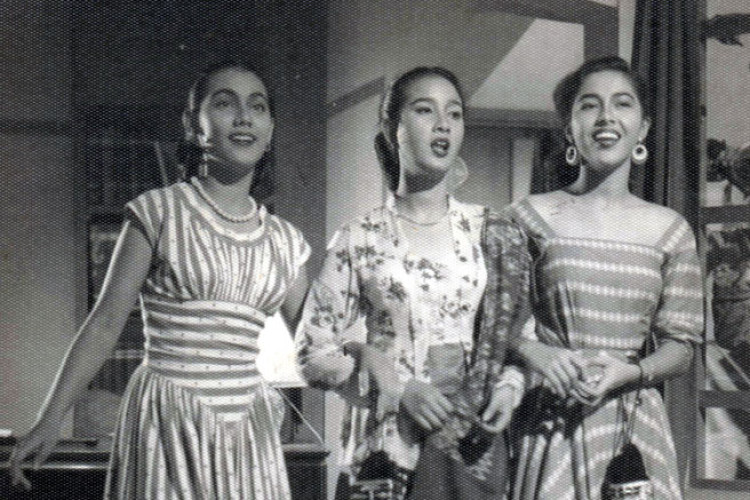
Classic movies are always interesting. Through them, we can get vivid images of the era's social context; the storyline, the characters’ wardrobes and styling, the music, and so on. (WSATCC) is an Indonesian indie-pop band which greatly inspired by the classic Indonesian movies such as Tiga Dara (1956), Badai Pasti Berlalu (1977), Gita Cinta dari SMA (1979), and Ali Topan Anak Jalanan (1977). WSATCC’s performances make us imagine about Indonesian society in the late 1960s to 1970s through their style of music, the way they dress and their stage acts. The frontwoman of the band, through the elements of the movies. Sari stated that most of WSATCC’s songs are strongly influenced by the soundtracks of the movies, which she found really beautiful Beside the soundtracks of the movies as their musical references, WSATCC also do some research on the social context in Indonesian society through the movies and their parents’ collection of photographs for the visual reference of the band. We can see through Sari’s blog post that the classic that results a fresh concept for the art scene which is highly appreciated by the art enthusiasts in this country. Click the highlighted link below to read her post:
In ’s latest single music video, the Greek dreampop duo collaborated with the Canadian based videographer Jesse Lamar High and Nik Harper (LAMAR+NIK). The song is called LAMAR+NIK are famous for their unique character of their videos they created such their work for Pixies’ two latest singles, “Indie Cindy” and “Bagboy.” The video for Recollection is a distinctive piece of theirs as well. The video took place at an abandoned school building, where we follow a middle-aged woman wandering through the deserted classrooms while reminiscing about her days as a student. As she wanders in the building, there are bubbles appearing in various shapes in every room she enters. The message of the video seems to be that our lives are surrounded by memories; everything we do will soon become memories and all we can do is to recollect the memories as much as we can, whether the memory is good or bad. The bubbles that appear in the video reflect that like bubbles, our memories have different forms, too. Another interesting fact about this video is that all the bubbles in the video are real. LAMAR+NIK stated that they did not use computer-generated imagery (CGI) in this video at all. To find out more about LAMAR+NIK’s works, click here.
The new collaboration between Japanese modern artist and the cosmetic brand entitled just released a 3 minute promotional animation done by the artist himself. The art direction is based on Murakami’s upcoming animation series, which was previewed back in 2010, 6 Hearts Princess. It involves magical girls, or majokko, so think cosplay, animes, mangas, and a series of colorful fantasy explosions when you think about this collection. The concept behind the entire collection is around “dual beauty” of the pink and black princess. A notion that states that every woman has a pink (light) and black (darkness) side in her, nice and naughty, innocent and sexy. Playing with the concept, the make-ups will allow you to freely transform yourself from pink to black, or from black to pink flawlessly. In an exclusive interview to WWD, Murakami said, The 6HP collection launches in November, and if you're a Murakami fan or a makeup junkie, get your wallets and clicking fingers ready. Because the collection will be exclusively available on their USA website early November and the lineup will range from $24 to $75.

Tahun ini Grrrl Gang mendapatkan kesempatan untuk menjadi salah satu line up di We The Fest 2019, dan Vindy diperbolehkan untuk mengikuti aktivitas mereka.
Temukan siapa dirimu dan bagaimana karaktermu menentukan arah masa depan.