The things that are closest to use are often the most difficult to talk about. Or maybe we think that their sheer proximity alone makes us experts. But sometimes, we are just too embarrassed to start a conversation on things whose nearness is too ingrained in our own self-image, our absolute existence.
Those who like to dabble in philosophy from time to time would be familiar with the much-discussed (and debated) notion that the core of human existence is the mind, and that our bodies are just vessels that serve to contain it. While there is no end to what can be said about this idea, the human body exists regardless of how we perceive it – that is, whether we consider it to be nothing more than a container or something that possesses its own significance. The fact is that consciousness coexists with body. To disregard the latter would be to deny the accepted perception of reality.
This brings us back to proximity. The physical body is not only close to us, but it is also a part of us; it us. The concept of the body, however, is close to us. Its role is present in every society, but the abstract idea of the body itself is not something that is not equal across cultures. In some cultures, and I think Indonesia is one of them, the idea of “the body” is the big elephant in the room.
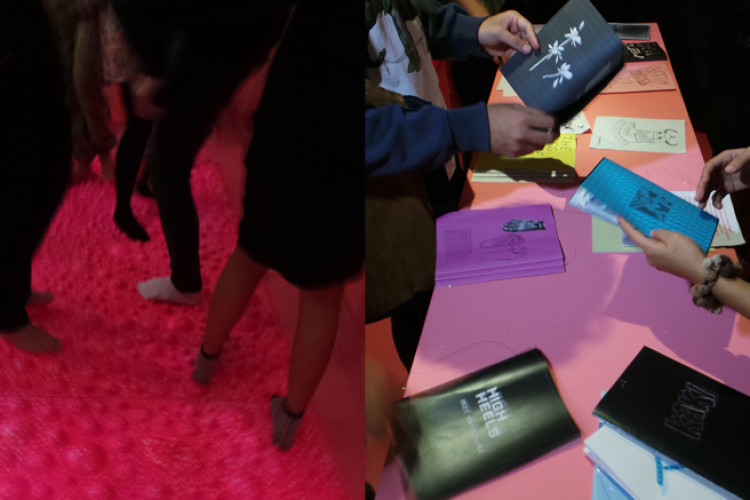
, and want to put an end to the awkwardness that comes with any mention of the body. Not only do these three young female artists aspire to change the attitude that people have towards the image of the body, but they also want to invite everyone to celebrate it with them. , a collaborative exhibition curated by that begins today (July 5) and will end on July 20, is the embodiment of the artists’ goals and ideals. Through creative interactive installations – such as Tontey’s , a long plank covered with all sorts of little objects designed for visitors to tread on – the talented individuals behind the exhibition want to invite the wider public to be more comfortable with their bodies. (A celebration of the body without the fear of being accused), the exhibition’s catchphrase, accurately sums up the exhibition’s purpose.
The opening event of the exhibition, held on July 4, 2013, was casual and warm since the audience largely consisted of the artists’ friends or family members. One of the highlights of the event was the quirky performance by a group of four masked people who danced to a song about premarital pregnancy. Humour rarely fails at touching upon the taboos of a particular society.
If you also believe that art is a great tool with which we can point to important, yet often neglected, issues in our society, be sure to visit RURU Gallery in Tebet!
--
Jl. Tebet Timur Dalam Raya No. 6
Jakarta 12820
Visit ruangrupa's website for additional information.
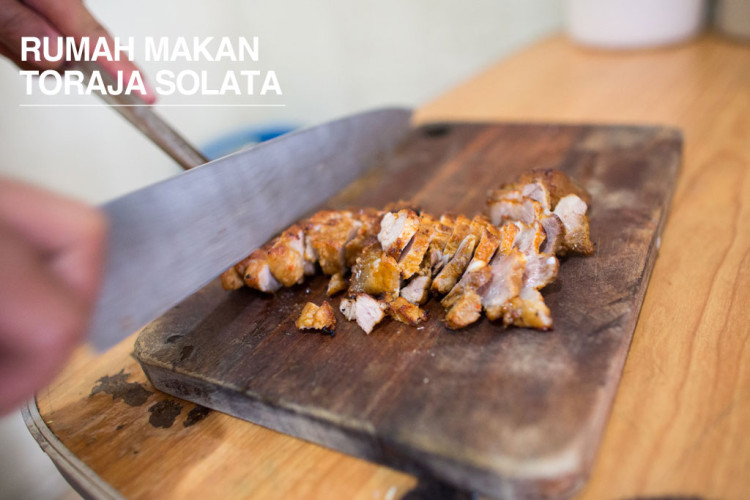
Underground Secret Dining’s last hoorah is going to fully showcase the best of Indonesian cuisine, as it always has. Celebrating the ingredients and ethic groups of Indonesia. We were able to speak to three different native individuals: Ibu Fifi, Ibu Lenna, and Pak Aan about what makes their ethnic foods delicious. And it being the last event, the Whiteboardjournal will be giving out 5 seats for the event on July 7, 2013.
The skill of an artist is often judged by the degree to which she or he can pour his or her soul onto a non-living thing — be it a canvas, a piece of paper, or even a wall. It is like filling an empty vessel. But what if the medium is a human being? This is why being a tattoo artist is a real challenge. Thinking Tree Tattoo's Mulie Addlecoat is willing to take the risk.
Bluelounge is an internationally acclaimed design studio founded by Swiss-British product designer, Dominic Symons. The studio is known for its line of modern accessories especially designed to solve the minor, but consistent problems we face when using electronic devices such as laptops, tablets and smartphones.
Bluelounge is headquartered in Singapore with a studio located in Jakarta.
One of the things that make Jakarta (or any city, really) incomplete is its lack of outdoor events. Sure, we have festivals from time to time, but the day-to-day chaos of the city pushes most social activities indoors. Large, air-conditioned shopping malls often become Jakartans’ first choice because they are more convenient than the alternatives – especially with the unsupportive traffic. People can shop, eat, chat with friends, and if the mall is big enough, they can even get a bit of exercise by simply walking from one end of the building to the other.
While this system seems to work to a certain extent, it’s probably not the most ideal. There are many factors – the heavy pollution, the traffic, etc. – that make outdoor events difficult to organize in Jakarta and it might take a while for us to find a solution. Bandung, on the other hand, has an advantage that Jakarta does not. It’s smaller, the air there is fresher, and most importantly, there are people who believe that there are things that can be done in open spaces.
House The House, a Bandung-based design collective specializing in environmental regeneration, collaborated with EOC and PT Kereta Api Indonesia to present .
But what is Keuken?
The word itself means “kitchen” in Dutch, strongly implying the presence of food in the event. After all, if food can’t lure people out of the house – where they probably spend hours and hours watching television or browsing the Internet – what can? The event’s concept combines two of humanity’s most inherent desires: eating and being in the company of others.
But that’s not all there is to it. The first Keuken festival was held on July 24, 2011 along East Cikapundung. The motto was: Trying to get the residents of a city – no matter how small the city may be – to participate in a huge social event definitely requires a lot of effort and dedication. After days, months, and years of taking the same route, or frequenting the same shops make us forget that we only do so because the city is ours – and it is these big events that can connect its owners.
This year, however, the team behind Keuken decided to take the festival to the next level. Instead of turning a street into a venue – a part of the city that we frequently see and pass, and therefore constantly reminds of its existence – at an abandoned train station in Cikudapateuh. It’s easy to claim ownership of what you always see, but it’s not as easy to do so when you hardly ever lay eyes on it – even harder when you don’t know it exists. House The House transformed the event from an everyday, familiar vibe to a historical one. And it was indeed an interesting experience.
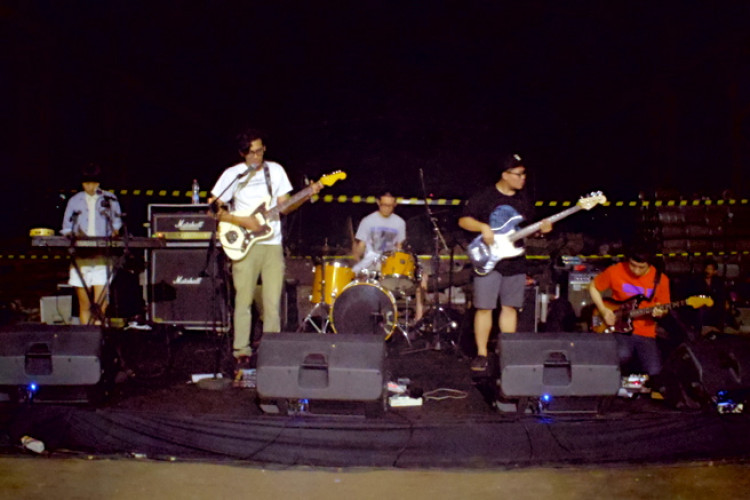
Seeing so many food stalls selling different kinds of munchies (from assorted fritters to an Indonesian take on ramen) and music performances by bands such as and – all of which are products of more recent times – in a place so connected with the past made me realize that it is important to engage the inhabitants of a city with their current surroundings, as well as the city’s history.
The fact that Keuken #4 was packed with visitors throughout the entire day shows that there is a demand for fun activities that aren’t consumer-oriented (which malls tend to promote) and more natural and social.
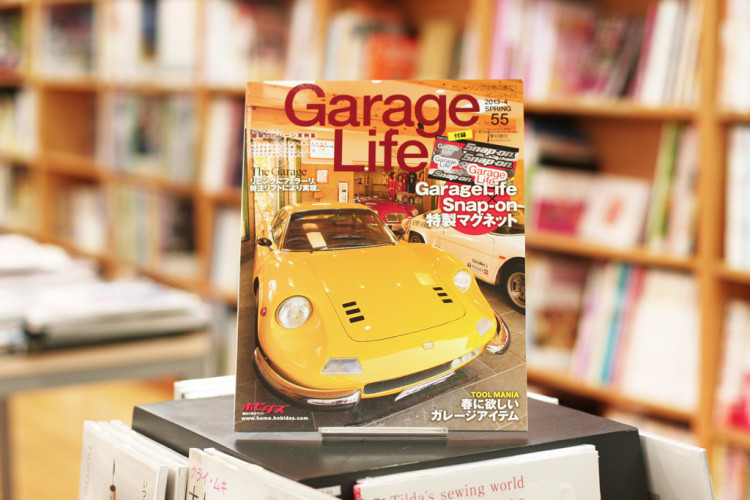
Everyone knows a Japanese magazine when they see one. Though one can easily tell from the language, it is the clean layout and unique combination of images and text that make Japanese magazines distinguishable from the rest. This month, Whiteboard Journal offers a selection of Japanese magazines of various categories — from interior design to fashion — with the courtesy of Kinokuniya.