



Wolf Alice: “I don’t think you should be making music, based on trying to appease a certain group.”
Earlier in January, we sat down in an intimate conversation with Ellie Rowsell, Joff Oddie, Theo Ellis, and Joel Amey of Wolf Alice about how they consume media, ‘coming of age,’ and spilled the behind the scenes of the band and The Clearing album.

Words by Whiteboard Journal
Words: Jemima Panjaitan
Photo: Collective Minds Asia
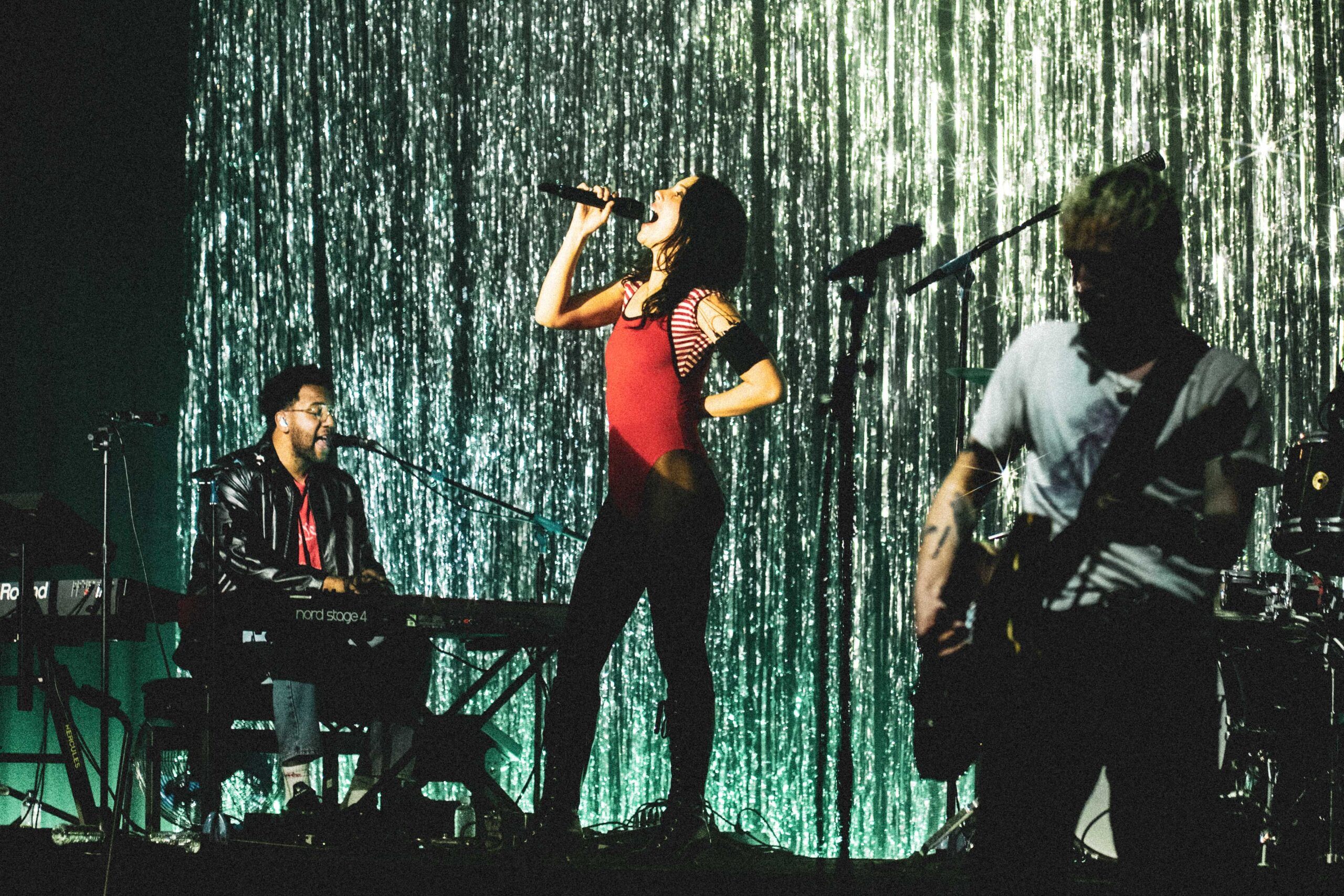
Rich in movements, in the sight of a shimmery wall, red suit on, stands Ellie Rowsell in the middle alongside her bandmates, Joel Amey, Joff Oddie and Theo Ellis greeting the crowd in Jakarta, earlier this January.
Started in 2015, Wolf Alice has been a four-piece devout to music—and it shows in their latest album, The Clearing (2025). Shedding their skin of adolescence, welcoming adulthood in a laid-back manner, Wolf Alice has made navigating the passage of time in adulthood gentler. Filled with nostalgic warmth, but unlike their previous releases, The Clearing has a way to get you into a gauzy headspace.
In our conversation with Ellie, Joel, Joff, and Theo, they reveal the preconscious thoughts on how the theme of ‘coming-of-age’ works, their approach to creativity and creation, and what it feels like to see their music grows up alongside their listeners.
Does the change in atmosphere from London to the humidity and neon energy of cities like Bangkok and Jakarta physically alter the way you perform your moodier, darker tracks in The Clearing?
Joff: My hair gets frizzy, so it’s harder to move around in the humidity.
Ellie: I think there’s an element of excitement in coming to a new place and a place that feels totally different and a place as cool as here or as, like you say, Bangkok, that makes you feel a bit more romantic or something. So, you can put another element to your performance where you feel like you’re even in a movie or something. I think it changes your feelings on stage, but hopefully your performance is just as good as it is in reality.
A lot of your music in the past is rooted in the perspective of coming of age. And in The Clearing, you are still talking about the same emotions, only it’s in a newfound clarity. How does it feel to reintroduce yourself to an audience that has grown up alongside your discography?
Joff: It’s interesting. I think the more backlog you have, the more, the greater expectation there is, maybe, or I think people build up an expectation about what they expect from your new music, if that makes sense. I think for some people that can be disappointing and for some people that can be really good. So, I think that’s something that I’m more aware of, the more you release music, that you have a kind of public musical history that you have interacted with. But I think you’ve kind of got to put that out of your mind, really.
I don’t think you should be making music, making great decisions based on trying to appease a certain group. You don’t want to actively alienate them. I don’t know how you do that musically, really.
Ellie: And you don’t want to listen to something with the context of what’s come before. I’ve been trying to do this in my own listening, in my own consumption of art, in movies as well as music. Watch something without the context of maybe the previous works of that artist. It’s a disservice sometimes to be like, this isn’t as good as the thing that came before, this is too different from what came before, this is the same as what came before. If this was the first time you’d experienced this person’s work, did you enjoy it? And that’s that.
Theo: I realise I’ve been consuming art quite prejudiced sometimes. Not in a necessarily negative way, but that’s a really interesting way of looking at things. I think context and how things are marketed is quite a commonplace thing in society. I think you know something because you’re familiar with it and maybe you want to go back to it to get that same feeling. I think I am guilty of that with certain artists or certain things, and I’ll be like, I’m only going that way because of what it offers me. But it’s not a service, it’s art. It’s supposed to potentially change the way you think.
Ellie: Also, I changed my mind. It’s not always about enjoying something. I watched this film the other day and I didn’t enjoy it at all, but I wrote so many things down from it because I was inspired by certain elements of it. That’s also a really interesting way of how you consume stuff and not to always just be in the pursuit of enjoyment.
Joel: With records, they’re snapshots of time. Do you know what I mean? When you’re talking about coming of age, you’re always coming of age, aren’t you? The parameters of what that means change. You can have a coming of age album as your sixth album potentially, but it’s a snapshot of writers, or a band, or an artist at a certain period of time. And it shouldn’t be, to me, necessarily the same as the snapshot of time ten years before it, unless you’re stuck in that snapshot.
Ellie: Yeah, that’s so weird that coming of age now means that everyone is in their 20s. You come of age all the time.
Joel: I do feel that’s kind of publicly changing, isn’t it? They’re taking longer to evolve.
Joff: When it comes to coming of age, back in the day, I swear in the 50s and 60s, a lot of performing artists were quite old.
Joel: Yeah, totally. But then I think because there was a youth revolution in the 60s and George Harrison was 17 and it almost became like, we need the next one of that, and it went on for so long. I even remember when we started, there were these shows that used to happen in London and one was called Underage Club and there were all-age concerts because it was so hard to get into bars to watch gigs and stuff. These promoters were putting on shows where you had to be under 18 to get into and then it felt like anyone over the age of 25 or 24 was kind of past it because they were surrounded by bands that were 15 years old.
Ellie: I remember being so scared to turn 23. I was like, oh no, I’m 23. No one will listen to my music.
Joel: The Arctic Monkeys were like 19 when they came out. I remember turning 21 and not being signed or anything. I was like, fuck, I missed the boat, but it’s bollocks now.
The Clearing is your first project with Columbia Records. Is there anything different this time when it comes to the pressure and the sense of being ambitious?
Joff: I think the older you get, the stakes are higher because you’ve got less time, generally, in life and more experience. So in a way, I have less reckless abandon for life. Not in a boring way, in actually the best way possible. And I kind of value things more, which means that the stakes are always higher in everything I do. So making an album is one of the things I revere, that means the stakes are higher.
But that doesn’t necessarily mean that anything’s changed in some contrived way, I think we’ve been afforded the space and creative freedom to do exactly what we want. And actually, when it came to making some of the visual side of the albums, I felt like we were being pushed into more of a left-field direction than we ever have in our career. Some of the directors and the collaborators that were proposed or that we did work with, it was really an expression of faith, which is difficult in this day and age because it costs quite a lot of money to do those kinds of things and they’re supporting what we wanted to do. So, so far, it’s been pretty liberating in that sense. We’ve been able to do what we want.
With the virality of social media, what have you learned about yourselves as a band from playing for audiences who discovered you through a completely different way compared to when you first started making music in 2015?
Theo: Do you know what’s so funny is that it is a hugely different context, but if you’re talking purely as a marketing thing, as a business, the most effective thing, I think, still for us is just playing a gig. We played Glastonbury and that Glastonbury moment for us was one of the biggest things in this campaign, I think. I always feel like people get us more once they’ve seen the show of that album campaign. I don’t know whether that’s just me thinking that or whether that is actually happening. So, in a way, it’s really reassuring to know that some of the mainstays, like the album and the live show, which are, like, the two things that are always constant.
But there are also so many different opportunities to extend your creativity now on all those different viral platforms. Yeah. I think it’s easy to get kind of, like, disillusioned with being the biggest moment in culture, or the biggest moment online.
So having faith in yourself is difficult. Has that tapped into the zeitgeist, if it didn’t, is it not good? I kind of had that battle sometimes where I was like, oh, this doesn’t seem to sum up what the world is feeling. I don’t know whether you can do that yourself or whether that just happens to you. But, yeah, music is always, it seems to be changing at the quickest rate. Our industry is bonkers at the moment.
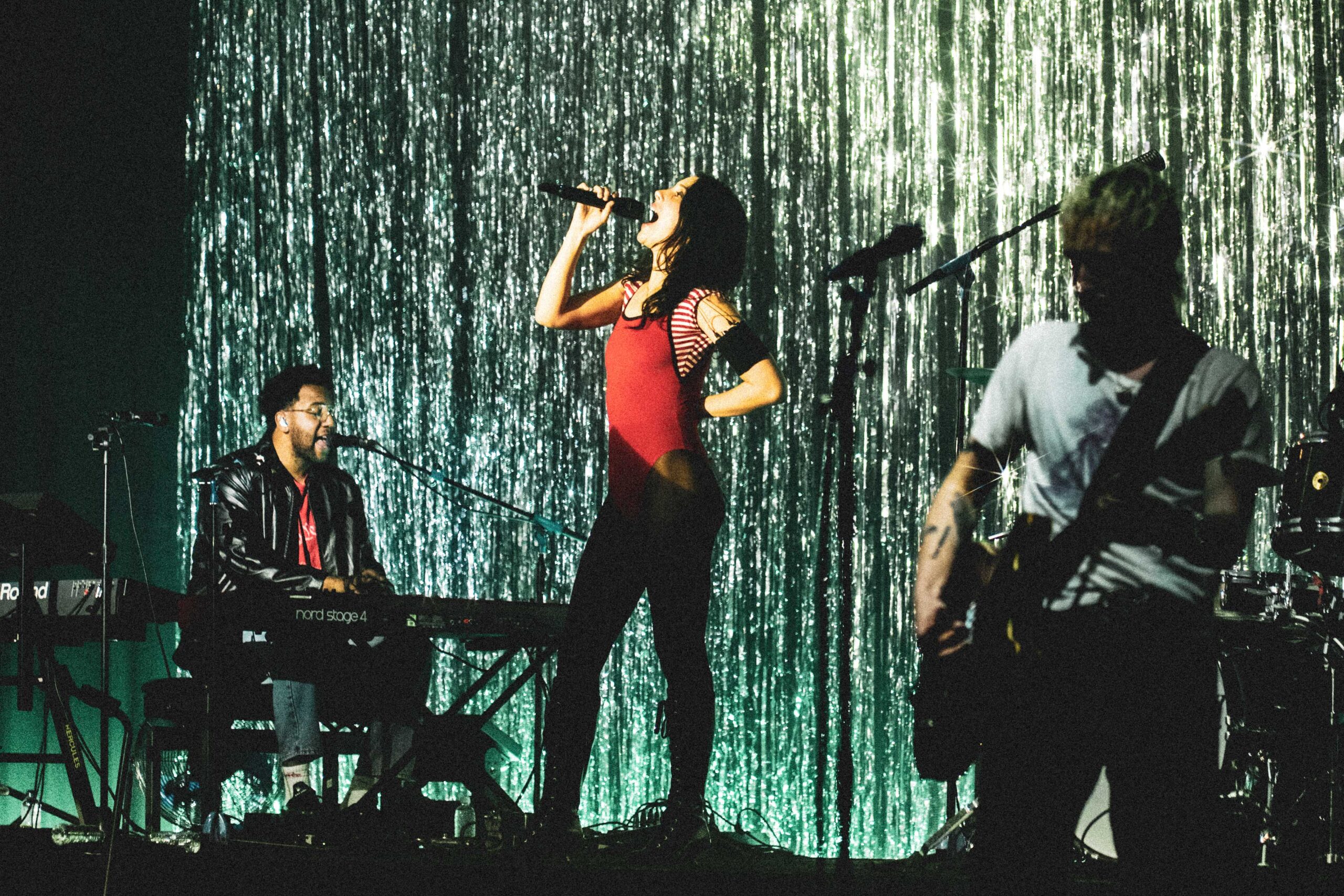
Image via Collective Minds Asia
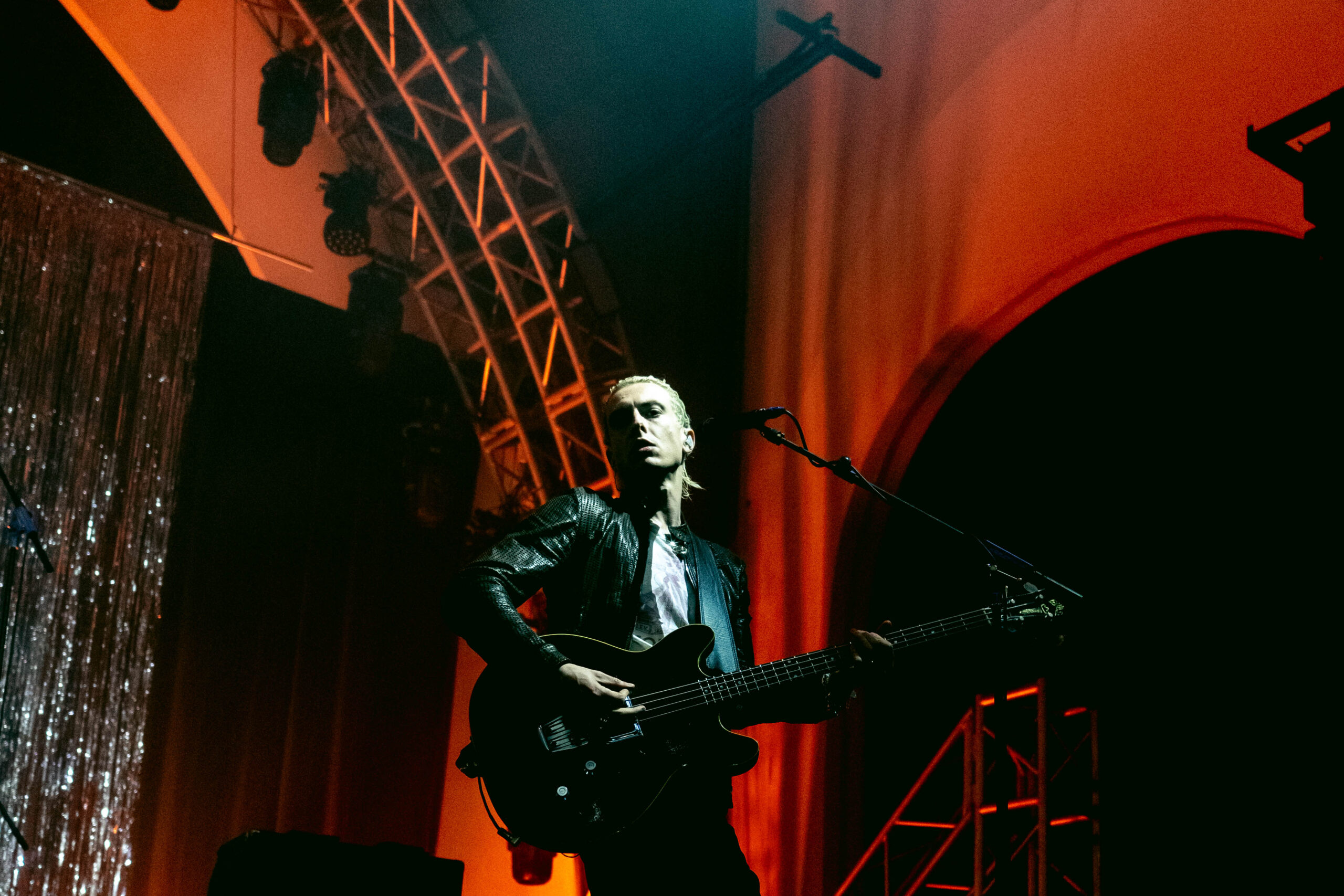
Image via Collective Minds Asia

Image via Collective Minds Asia
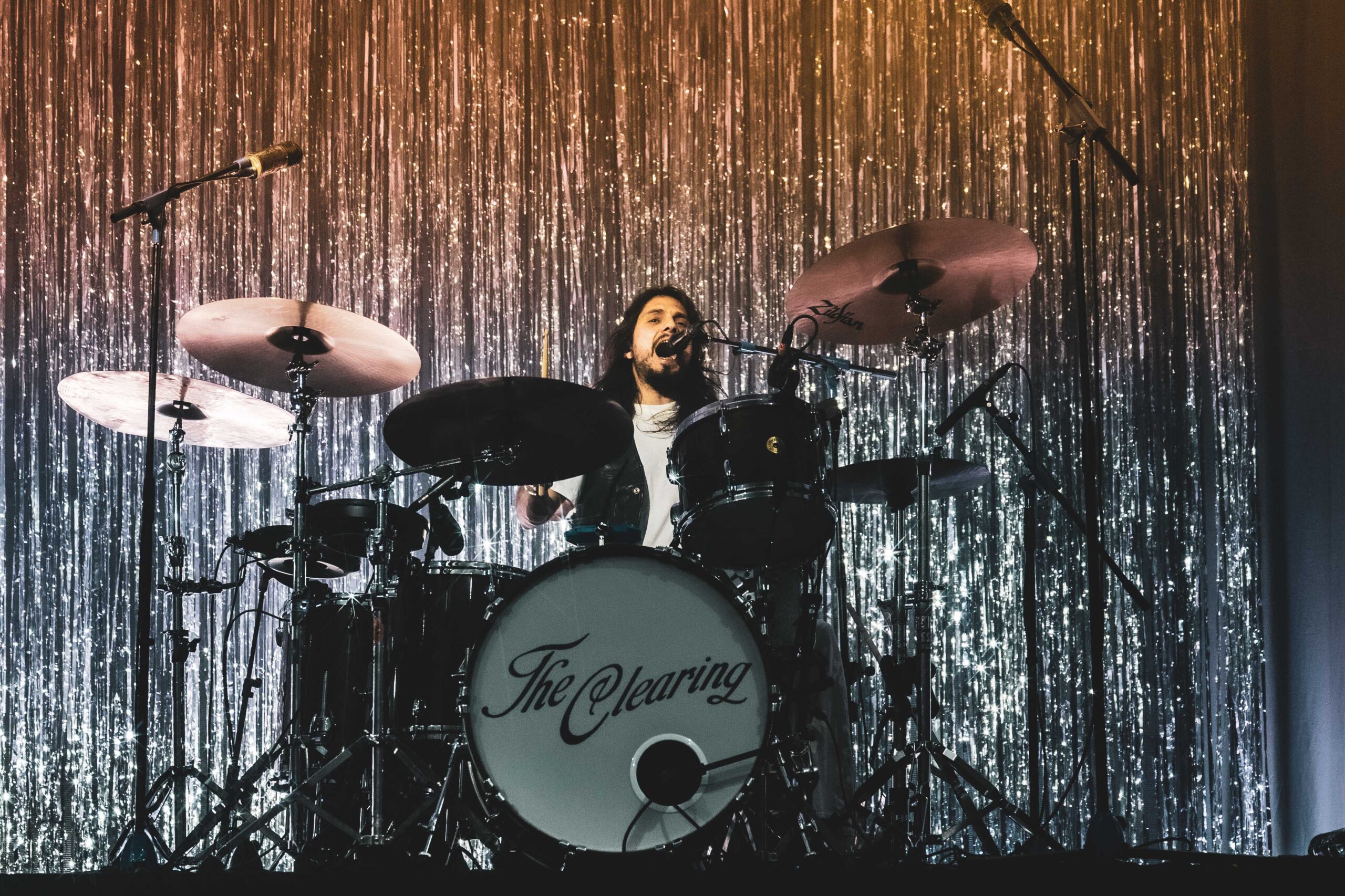
Image via Collective Minds Asia
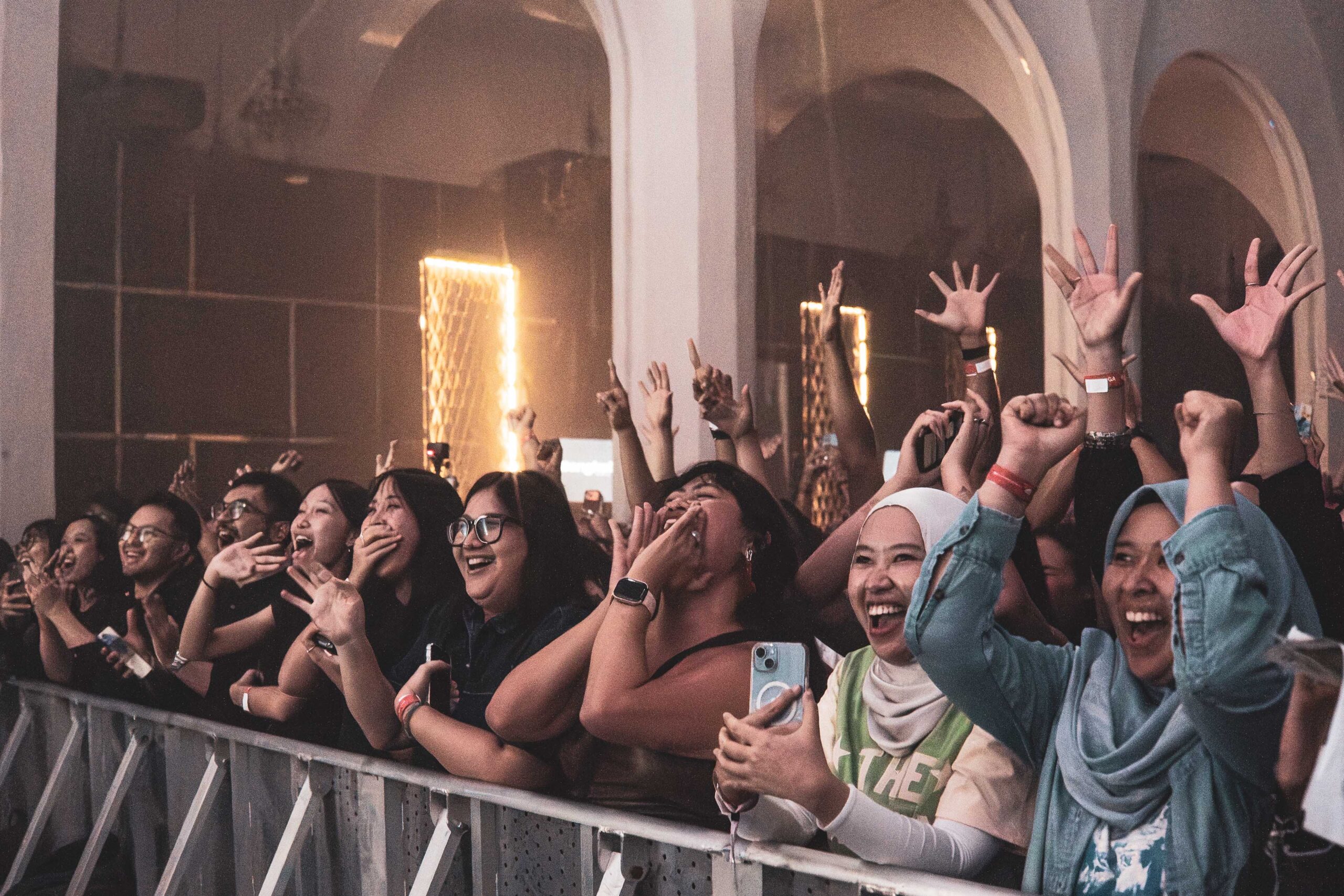
Image via Collective Minds Asia
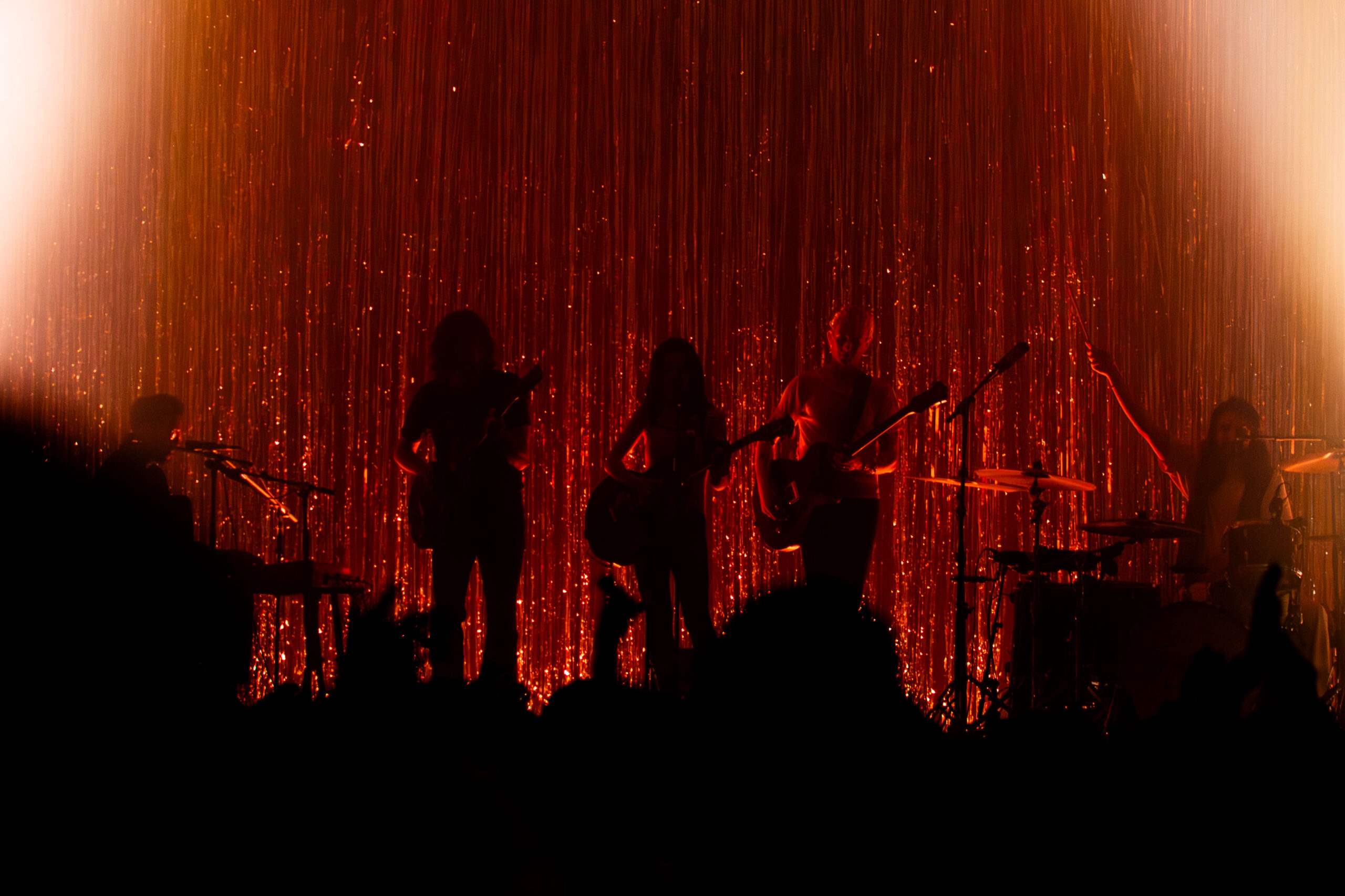
Image via Collective Minds Asia
Are there any themes that Wolf Alice wants to explore that are not so Wolf Alice?
Ellie: Hm… No, I think everything’s open to exploration. You just don’t know what it is yet. That’s why every day is so exciting because you don’t know where your inspiration is going to come from. That’s why you should always be doing things, you know? That doesn’t mean you have to go places or anything, it can be just opening a magazine or something like that. I just feel excited that you don’t ever know what is going to be the thing that, like, makes you want to put pen to paper. I don’t think you should close yourself off to any subject, really. I don’t know what it will be.
Talking about collaboration, it seems like many listeners really enjoy Charli XCX’s cover of Don’t Delete The Kisses. You guys have also covered her song, Boys. Is there any possibility of an exciting collaboration with Charli in the near future?
Ellie: I think she’s a busy woman, hahaha.
Theo: I think that was actually a direct Triple J for Triple J, wasn’t it? There’s an amazing radio station in Australia called Triple J, they do a thing called Like A Version when you do a cover. She did one, and then we did one on Triple J.
Joel: So that was kind of a little bit of context to that. She’s brilliant, though. I’m so excited for this soundtrack that she’s doing with John Cale. John Cale, great. When you’ve done something like Bright, you must be like, what am I going to do now? She’s found an outlet, and it’s incredible. You know, you’re talking about themes that go next. That’s somewhat of a curveball, and it’s given the world great awe, so it’s interesting.
In this Asia tour, have you been exposed to any local artists, scenes, or sounds on this tour that generally caught your attention?
Ellie: When I was in Bangkok, I went to a drag show, and it was weird because I was just like, oh, God, they were so good that I actually felt so excited to perform the next day, because I felt inspired by their performances. Lots of things have been inspiring, not always in the ways which you expect.
I feel a bit disappointed that we don’t have local support bands on this tour. I’m not sure why that happened, but next time, I think it will be really cool to have local support in the countries that we go to.
In many other interviews, they said that The Clearing is a new chapter for Wolf Alice, and in this new era, is there actually anyone you would love to collaborate with?
Ellie: I’m kind of just really happy with how the songs came out. I think it was just really… I was so excited by our own kind of experience that I didn’t really care to collaborate really that much with other people.
We collaborated with Greg, the producer, and that felt really exciting in itself, and now maybe it would be really interesting to collaborate more. But during The Clearing, I think we just wanted to get the ideas down between the five of us I guess.
Joel: Collaborations are kind of strange, aren’t they? Because you almost hope they happen like the spur of the moment like one of you is in one studio room and you’re in the other and you meet in the corridor and you collaborate, do you know what I mean? It becomes kind of like forced collaboration. I’m not really sure about those kinds of things.
If this tour is the final exhale of The Clearing album, does the next chapter feel like it will move forward towards further experimentation or a return to the raw chaos of your earliest EPs?
Theo: A combination of both maybe? I think we’re always looking forward to that. Being creative, intrinsically experimenting, I think is part of creativity sometimes. Well I’m kind of making it up now. But I’ve been inspired by playing some of our old songs live which are quite chaotic and quite rock heavy. But I don’t think we know what the next bit is and that’s really exciting. It will probably require a bit of experimentation based on the experiences we’ve had so far to find out what that thing is.
Joff: I never know what we’re going to do even when we go and work on something. I don’t know what it sounds like so who knows. It will be fun no matter what though.


Moses Sumney Merilis Single “Rank & File” dari EP “Black in Deep Red, 2014”

Jelang Album Baru, Phoenix Rilis Single “Winter Solstice”

Setelah 6 Tahun, Akhirnya Metallica Kembali Merilis Album Baru dan Umumkan Tur Dunia
