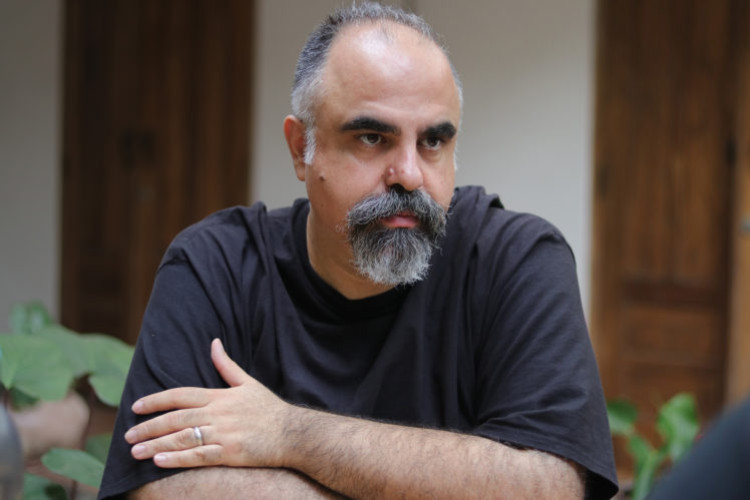


Shye: Sometimes, people still view women in the more technical side of music to be like “No, they’re not actually doing it,” or “They don’t actually know what they’re doing.”
We sat down with Shye to discuss the lengths taken in being a DIY musician in Singapore, navigating the male-dominated music industry, to opening up on the journey of finding one’s self through her latest album.

Words by Whiteboardjournal
Words: Garrin Faturrahman
Photo: Agung Hartamurti/Whiteboard Journal
It’s a universal experience to long for somewhere (or something) that we can all return to. While we’re over and out there, the other shared experience would be to take a step back to reflect, or even to reinvent ourselves. All of which, in an ideal universe, would lead our steps back to that revered place (or, again, thing).
At least, that’s one of the ways that we can listen to Shye’s latest album, The Doves Came Home (2026), where, in her words, it stems from that place: “for all the people who feel like they don’t really belong anywhere, but then realizing that, as long as you feel comfortable in your own skin, that you have your back, then that’s okay.”
But that’s not everything she’s pulling out during our interview, in which we sat down days preceding her shows in Indonesia. Not only did we talk about the rain and sunshine that comes with being a DIY artist, because we also touched upon the thunderstorm that befalls the Singaporean music scene: from the perception of others that is beyond our control, navigating the male-dominated field, and how we can better equip ourselves in weathering said circumstances – which, now that you’ve read this far, could actually be a symptom that is generally felt in a range of creative spaces.
The current saying around the genre: “Shoegaze is not cool anymore…” Your thoughts?
I think it has a lot to do with the fact that the genre has evolved. So I think, if you’re comparing what shoegaze used to be like in the 90s with classic shoegaze, it definitely sounds different to what people assume or relate shoegaze to in the 2000s, and I think there’s a big difference between British shoegaze and American shoegaze.
So to say the genre as a whole is not cool anymore is a bit… You can’t generalize that, and it’s also a personal preference kind of thing. I mean, I don’t agree with it, like, I think it’s cool. But maybe it has to do with, like, social media or some people who don’t like the way that the genre has now become more saturated.
I don’t know, man. I personally think if you’re listening to music because you enjoy it and you are making music that resonates with you, it’s good and it doesn’t matter what the genre is like—it’s just a label.
I’ve a question which needs addressing – it seems you’ve taken a more atmospheric, longing and wistful take on songwriting since… Cecilia (2025)? The same song which later found its way to your second album! Though guitar is still a defining theme, what caused this deviation from a more electronic pop sounds to an alt-rock palette?
So this is, like, the Shye-lore: When I first started to develop my own music taste, like, before I even got into music making when I wanted to be cool and edgy as a 13 year-old who didn’t listen to top 40, I was listening to [something that] at that time, I didn’t know they were shoegaze—so I guess post-hardcore—I just like the music. So, stuff like Nothing, Title Fight, and Whirr were like the three first bands that I got into, and it wasn’t based on recommendation, it was just, like, I just went to scour the internet for stuff that I like and it resonated with me. I think the reason why people may be surprised is because, for the longest time, I had been making music that maybe didn’t necessarily sound like this genre, and it’s because I didn’t have any music background growing up. None of my family members played instruments, music wasn’t a big thing in my household—I was a ballerina. So that was my life, and then I had always liked to sing (but I think most kids like to sing and stuff like that), but I was never a music nerd or anything.
So, this album, as a whole, is very important to me because it has encapsulated my rediscovery process.
It was only in December of 2017, there was a keyboard lying around in our house. We still don’t know why it was there. It happened to be there and then I just was bored because I was kind of in a very awkward phase. I guess I was like 15–16, the kind of age you’re like I’m like “discovering yourself” and I was relatively more quiet by nature, so I didn’t have many friends, so it was like school holidays and I was alone, and music became like a safe space for me to express myself, and it started off with just, like, googling what chords to play on the keyboard, and then I had a laptop for school and it had Garageband on it and it’s free to use, so I went on YouTube tutorials, like, “What is a compressor?” or “What is side-chaining?” and it became just like a way to pass time and express myself because I was not extroverted like that. I didn’t have a big social life, and releasing music on Spotify—because prior to that was all on Soundcloud—really, music on Spotify was just a bucket list! It wasn’t meant to be like, “After this, I’m going to continue doing music and then I’m gonna be big and famous,” it was never like there was never the end goal. I was just… “Oh, yay, I have a song on Spotify!”
I think the music I made was what was most accessible to me, because I went into the industry, like, I didn’t have friends in the music scene. I didn’t have any kind of “in” to it, so I went into it thinking “Actually, yeah, this is how everyone made their music,” like, at home in the bedroom with their laptop. And I guess, that innocent outlook on music shaped the DIY mindset that I have and have carried. It’s been a conscious decision, like every day, because being DIY is difficult. It’s not all rain and sunshine—it’s a lot of things to manage, but it is what brings me the most joy, and having the the freedom to express myself, and then the challenges that come with it, I’ve grown so much from as well, and learning about music production and audio engineering and sound and stuff like that, that’s where my heart lies. It’s not just about writing the song. It’s about creating the atmosphere in the world.
So that’s something that I’ve been quietly doing behind the scenes over the years, like, I have a lot of demos that never were released. I think also because I started so young, I think people had like a perception of me, and they kept me within that… not to say boxed, but like, it’s just the way that I was labeled, and I think, in there, I feel like I had to live up to that. So to make the switch was quite scary to finally give myself the freedom to just explore and do what I really want to try, and I think a lot of it came from technically alternative music, which is predominantly by bands, so I felt like… I can’t really make that music because I’m not a band, technically—which is not true, you can make whatever music on it—but I think that was just the way that I viewed it, and then over time, I realized… “This is not really where my heart lies,” and I want to just try something.
So in 2024, I did have an album that I wanted to put out, but I scrapped it because I didn’t feel it. And then I took a short break, I went on holiday with my family and actually right before the holiday, I made the demo for “Cecilia,” that was 2024 December. And while I was away, I was working on “Cecilia,” we went to Japan and it was like being surrounded by nature, and then working on the music but looking outside of the car window and seeing nature was like “Wow, this is this is the direction that I want to continue to pursue,” and then I came back and all the songs from the Doves Came Home started from “Cecilia” and then the album came out thankfully.
I think it’s also very difficult because I don’t want people to think that I’m using the fact that “Oh, shoegaze is cool now,” to profit off of that. I think that’s the biggest thing that, because of this sudden change, I think people need to realize also that there’s a lot of things that you don’t know behind the artist and what’s going on in their own personal life. So it’s just the timing, like, I didn’t know shoegaze would have a revival, so it’s indirectly good timing because there’s more people who are open to the genre now, and I just happen to be making a variation of it. I don’t think it is shoegaze shoegaze, so that’s why when people call me shoegaze, I’m like “Hmmm, I guess?” Like, it’s influenced, but I would never proclaim to be shoegaze, because it’s… scary. Like, I think people have a right to be, like, sensitive to music genres, because I feel like genres are not just the music, it’s like the mindset, the politics and stuff like that, it’s not just a way to make money. That’s why I just call it Shye-gaze. Because I think it is very inspired [by shoegaze], but it is my own take on it, and I think that’s the beauty of music—there’s so many different ways to express yourself and what you want to say.
So yeah, I just hope people like the music! At the end of the day, because I feel like this is the most comfortable, like, the most me that I’ve been in in a while, and I think that just comes with age, growing up, maturing, and having the opportunity to travel and be inspired by other artists, and meeting different people. I think it’s easy to be in your own bubble and doing music, and you forget that there’s a lot more to the rest of the world.
It’s also uplifting to hear how you’ve struck inspiration even from looking out the car window, and to take pauses. May we get an insight from you as to how to spot inspiration from even the most unassuming places?
I think that’s something that I’ve always gravitated towards, so even when I wasn’t making more atmospheric music, I always liked more mundane things, so like the beauty of the mundane, I think you can romanticize a lot of things, and I love the feeling of nostalgia, feeling like you’re floating, and I think it took a while for me to figure out how to do that with the music, because obviously everything is self-taught—it’s a whole process, because I am a human, so I am developing both as a woman and as a musician, so I just draw inspiration from everywhere—I know that’s, like, so cliche to say things like “Ah, I am inspired by everything, but! In the way that I shoot my music videos, it’s more about a feeling rather than a specific object or place, it’s about even the smallest things can mean so much to different people, and music is fundamentally all about perspective and personal preference, so if you get it, you get it, and if you don’t, that’s okay.
I mean, I watch a lot of different films—I’m a big fan of Twin Peaks—and I think just different things that I’ve seen online that make me feel a certain way, and I try my best to translate it into music—it’s hard to explain because it’s feeling-based.
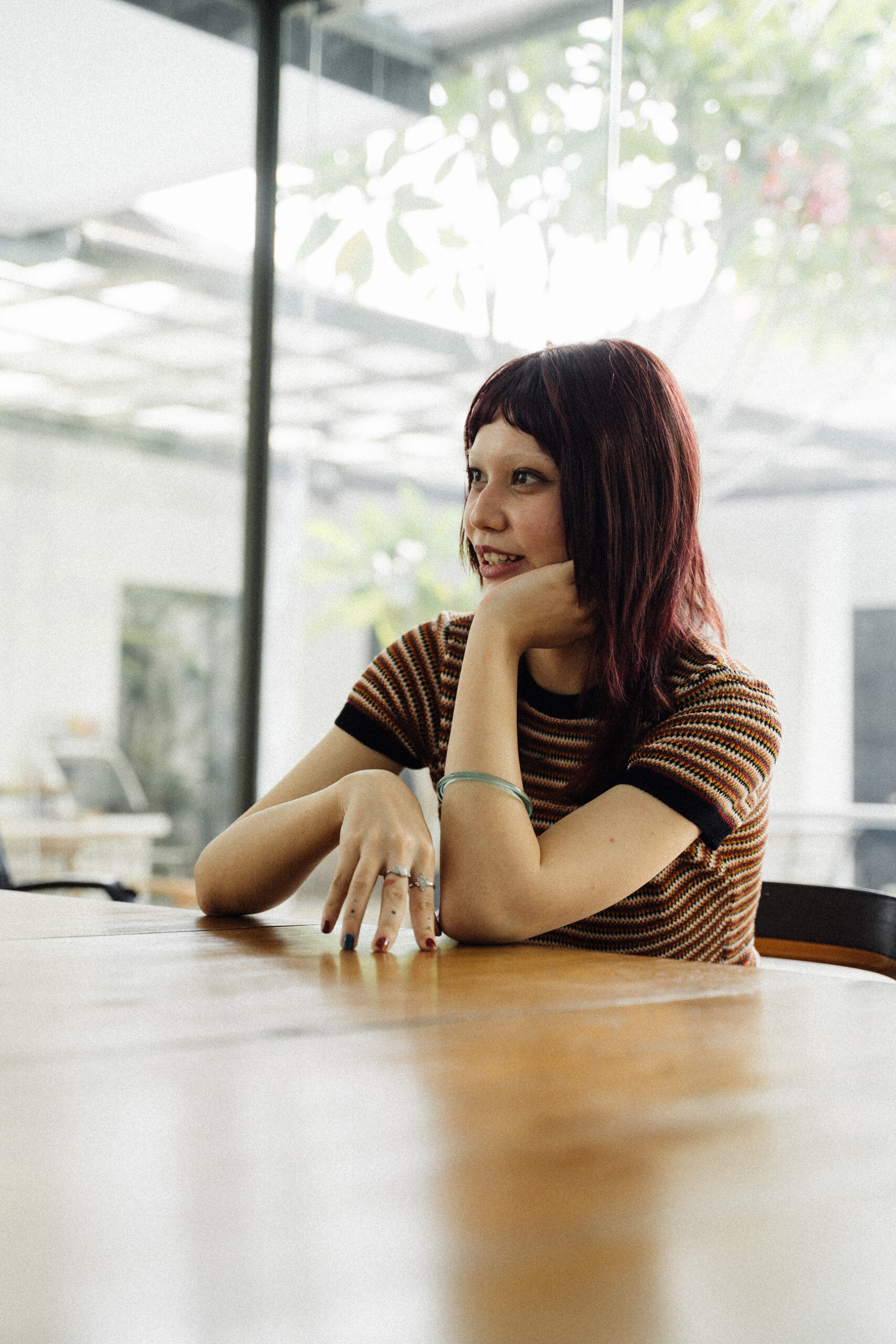
Image via Agung Hartamurti/Whiteboard Journal
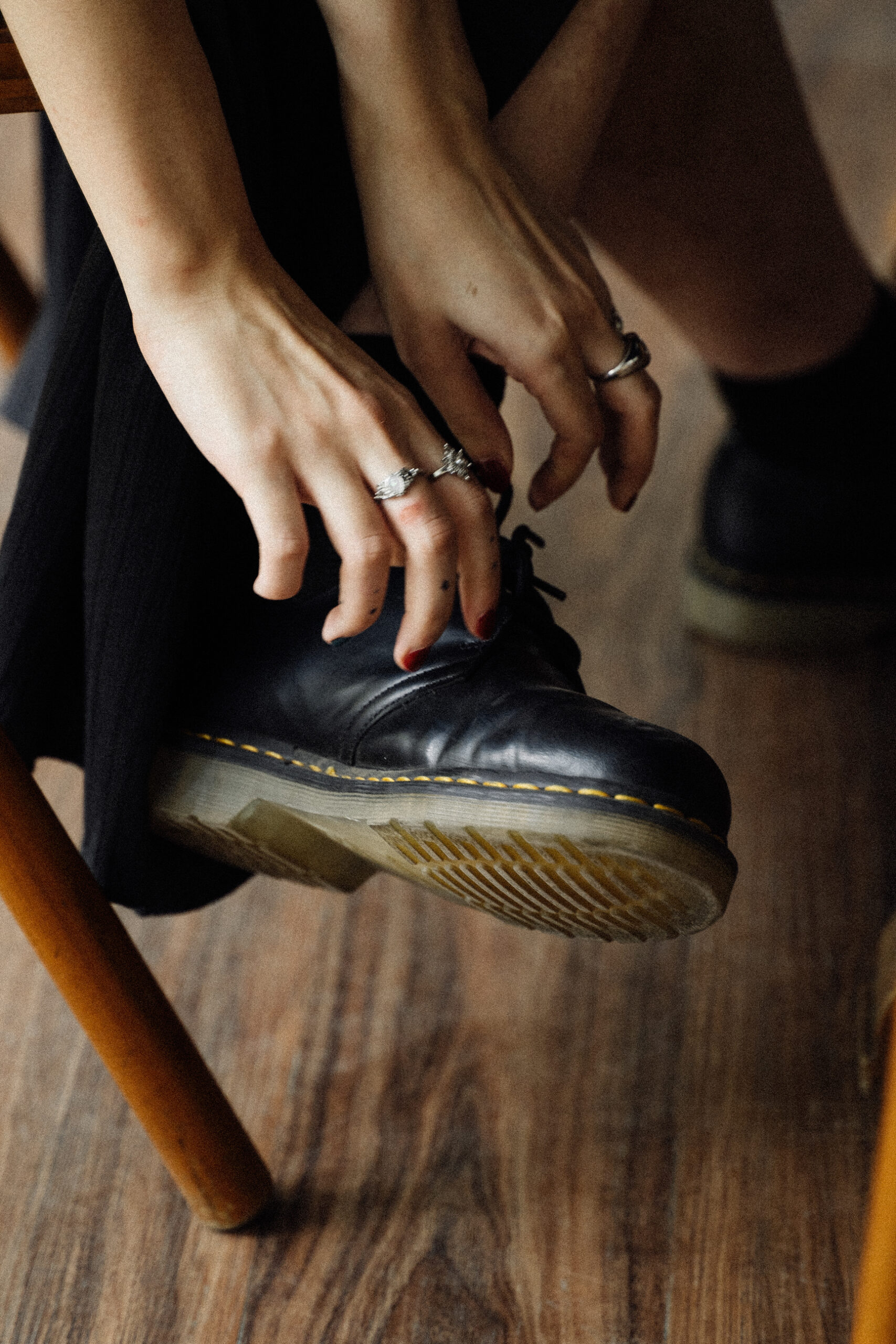
Image via Agung Hartamurti/Whiteboard Journal
Image via Agung Hartamurti/Whiteboard Journal
Speaking of, it’s also really motivating to see how you have a steady stream of songs being released since your earlier days! Speaking from a place of creative burnout – can we get a hint on how you managed to be this active?
Over the years, I’ve realized that taking breaks is very important, and it’s not about, like, completely not doing music, but I think it’s just letting myself just relax for a bit, because in order to be inspired you have to be in a good place emotionally, mentally, physically, so if you don’t give yourself the time to rest and take a break from certain things, your passions can end up being the one that will burn you out.
I think that was the scary thing for me when I realized I was experiencing, like, it’s almost like a fatigue, but I’m just very thankful that I could get out of there, and I didn’t completely stop making music, I think I just did more like a slower pace, like I didn’t force myself to sit down and write things, or I try to see it as like “If I make something today, I make something. If not, it’s okay, I can always try again the next day.”
But maybe that comes with, because I am independent and there isn’t anyone who’s like telling me like “Shye, you need to get this done; You need to do this,” there isn’t that pressure there, but it can also be a bad thing because then you have too much freedom so that you don’t do anything. So I think it’s just about finding the balance, and I still will have moments of feeling a bit burnt out, but that’s just healthy also because then it’s your body telling you to take a break, and you just hope that you can come back to it. It’s a learning process. It’s a learning curve and I think everyone’s experience is different.
I feel the world is pressuring us to be a lot more productive and quick, as of late. Even more so with the proliferation of GenAI. With all that, how do you maintain this craft of doing things and appreciating the process?
I think the world moves so fast and then trends change so fast, nothing is certain—which is also very scary. For me, I think I don’t necessarily feel pressure from that, I think the most pressure that I feel is from myself (I think I’m my biggest hater, my biggest critic). “The world moving fast,” that’s something we cannot really escape from, especially with AI and stuff like that, there’s a lot of things that are out of our control, but we can focus on what we can control, and I think that’s what I try to I remind myself, “Okay, there are certain things right now that are out of my control, but what currently can I take charge of,” and then even if it’s the smallest thing, it’s still good to have that thing to ground you.
But it’s not just in the music scene, I think everywhere, everybody’s moving so fast and I think it’s just worse in the creative scene because it’s such an emotional ‘scene’ as well, like, I think I felt the pressure to keep up with all of that, like, I think taking the time to slow down is important because it allows me to take back the control instead of treating it like a job—even though I’m very blessed to have this as my main job.
And then there’s AI, and AI music, but I try not to dwell on that because it’s like, you can’t do anything, we can’t really change it, it’s gonna happen anyways, but I think a lot of people are also standing against it which is very good, so we just continue to put out good music—and you hope that those people don’t turn on you and suddenly go over to the AI, ha. But I think the one thing that AI will never have is the human touch, and I think being able to write my own stuff, produce, mix and master, while of course it’s not perfect, but I think that’s what gives it its charm and character—maybe I can hear it, but quite a few of my songs, I can hear me pressing “stop recording,” or parts where my vocals aren’t as tuned, stuff like that that technically is not perfect, but it’s the human touch, and it’s very important in alternative music—maybe with pop music, I don’t know, where perfection is key—but for me, I like when you can hear the human part of the music.
Image via Agung Hartamurti/Whiteboard Journal
Image via Agung Hartamurti/Whiteboard Journal
It has been said that you are a big fan of K-pop, J-pop, Tame Impala, to beabadoobee! With such range, how do you keep your music sounds like you, and not tainted by said references?
Because obviously I play on my instruments myself and I sing myself, I think the biggest thing that I’ve realized over the years is how you really need to know your strengths and your weaknesses. So, for me, as a musician—I still don’t call myself a guitarist, I just happen to play guitar, because a lot of the time, the way that I work is I will think of a melody, I will hum it, and then I try to match it on the guitar. And what I can say that has worked for me is knowing my voice, because at the end of the day, I am the one singing as well, and I think that can make or break a song, a lot of the time. It’s as important as the instrumentals, and I feel like vocals can change the genre completely, so that’s something that I’ve been paying more attention to knowing my voice over the years. Because I record and I hear myself every day, so I know my limitations, but I also know my strengths, and the sooner you realize what you can’t do and what you lack, you can improve and you can develop further.
So… I don’t know, man. I’m still learning, and everyday is a new day to learn and also to learn from other people and other different genres. I feel like, maybe, there’s a concept of like “Oh, since you’re making this kind of music, there’s no way that you listen to X, Y, Z,” you know? So, for me, maybe last time I was making more electronic music, “There’s no way she listens to more alternative bands,” but that’s not the case, and I think to view it that way is a bit narrow, because there’s so many things that you can learn from.
For me, the thing that I learned the most from Kpop was the way that they record their vocals and they are layering and they are doubling and the harmonies, so it’s not so much about copying and pasting the genre, but it’s seeing the mixing techniques of different genres, and then applying it to the way that I work—and it’s fun also!
It’s fun to be open to music, rather than to be, like, “Nah, I only listen to these songs,” or “I’m too cool for that,” yeah… I’m a music lover. I. Love. Music. Hahahaha. What I mean by “music” I don’t mean it like “Well, I only listen to this genre,” well, you can have preferences, but I think being open has helped me as a producer and as an engineer.
I like to think The Doves Came Home as something that is written circularly. “Are You Coming Home?” has that minor motion that reflects the uncertainty of returning, but “Return,” being the opener, has that optimistic and reassuring resolve right as the full instruments come kicking in – as if responding to the last song! How did you intend The Doves Came Home’s worldbuilding to be played out?
I’m trying to remember when was the moment that I realized that I wanted Doves Came Home to be a symbol… I think this was the first time that I did sit down to think about the world that I wanted to build around a project. Because prior to it, I think the world building was not as strong as it is now. Like, now, I have very specific themes, colors, or the fonts that I use, and that just comes with, like, I had a bit more time to get into the visual direction and it’s just developing that over the years.
I think the main concept came from when I’ve started feeling a bit confused in what direction I wanted to take, and then “Cecilia” came out of that confusion and the songs about finding your light again, and then I realized that I can use this difficult experience to create something from there and turn it into a slightly more hopeful outlook on everything. I think it’s something that everybody goes through, even if you’re not like music-focused. We all have points in our lives where we want to reinvent ourselves, or we feel like it’s time to reflect, and maybe it has to do with becoming more of an adult now.
And I feel like maybe, because I started so young, people still view me as that 16-year-old who still doesn’t really know what she’s doing, and it’s a bit difficult because when people have that perception of you already, it’s very difficult for them to see you in a different light. And I think that’s where my impostor syndrome comes from—it’s like you always feel the need to prove yourself, even though technically you really don’t need to—but yeah, the album came from that confused space, and I think “Return” was actually the last song that I made for the album—which is interesting because it’s the first song, but I think it’s because when I reach that point, I knew exactly what I wanted, so it was the perfect way to put it as the intro. So it’s like this is the end but then also the beginning, so yeah, like you said, it’s like the circle.
The concept of a dove being your messenger and then how the world will tell us to go out into the world—yes, it’s good you go out to the world you learn things from different people—but you also need to be able to come home to yourself, because at the end of the day, when you light out at night, it’s you, and it’s a very… it’s kind of like, a very existential crisis kind of message—but it’s true! It’s about the idea of being comfortable with your own company.
Sometimes, having too much noise can just be a distraction, and you don’t fix the things in yourself that you need to fix, and then in that sense you go out into the world and you cut people.
So, this album, as a whole, is very important to me because it has encapsulated my rediscovery process. I’m happy with it. I’m proud of it. I feel like I’ve said what I wanted to say with it.
Let’s talk Singapore – by taking into account the supportive communities and how everyone’s connected in the music scene, does Singapore pose as an ideal grounds for creative endeavors?
I feel like it’s always very tricky for me to answer this because I’m in a very interesting space in Singapore. I am not in the “band scene,” but I’m also not making mainstream pop music, which is the other side of the scene. So, I’m kind of in that middle limbo space, and it’s been a bit difficult to navigate because I feel like… Not everyone feels this way, of course I have friends who are in bands, et cetera, but I think there is almost, like, a very unaccepting way of viewing me because I am not in a band, just because of that, maybe—but this could all just be me!
But I have felt it in the way that you don’t feel super welcome in certain spaces or by certain people, but at the same time, I am welcomed by some people. So it’s very difficult to say this in a way that won’t offend people, but it’s how I feel and I think I’m allowed to express how I feel, and if they get offended means… they’re guilty, hahaha. It’s difficult because I exist in this space, so sometimes it’s hard because you don’t feel like you have a community that you can return to. Maybe that’s what I’m saying about in the album—coming from that place of, like, for all the people who feel like they don’t really belong anywhere, but then realizing that, as long as you feel comfortable in your own skin, that you have your back, then that’s okay.
From an outsider’s perspective, the scene is very vibrant. There’s a lot of bands, and there’s a lot of gigs, but I will never be included in those lineups because I’m not a band—which is fine! It’s completely fine with me, but it can be a bit sad sometimes because I think, with Singapore already, we don’t have many opportunities to play and maybe because I’m not a band that’s just starting out, so technically I can’t play those slightly smaller shows, but then I’m not doing mainstream pop so I can’t play those big lots and shows… so it’s difficult, but I’m just very thankful that I have opportunities to go out with Singapore and to play music and have people just accept me for who I am, and it’s nice, and I’m very blessed to be able to do that, and so I try not to dwell too much on all of this extra stuff. I am just thankful for what I can do. But it is difficult. It’s kind of like, you feel a bit left out, but then also you have to prove yourself, but then it’s like “No, we don’t!” So… yeah, it’s difficult to explain. But I don’t think I’m one to purposely just say stuff for the sake of things. I think it’s because I genuinely feel it—I’ve never spoken about this, actually! But it’s scary to speak about it, haha. I mean, everyone is entitled to their own opinion, so yeah. It’s difficult, but I’m okay.
It’s very weird because, whenever I go overseas, I feel very welcome. In terms of, like, questions that I get asked or the way that people view me outside of Singapore, they recognize that I am very DIY, or they give credit where that is due, but I’ve noticed sometimes, In Singapore, I think people downplay the work that I put in…
Image via Maha Fadilah, courtesy of Kolibri Rekords.
Image via Maha Fadilah, courtesy of Kolibri Rekords.
Image via Maha Fadilah, courtesy of Kolibri Rekords.
Image via Maha Fadilah, courtesy of Kolibri Rekords.
Very recently, hm, so one of my listeners sent me a screenshot of someone saying that I’m a “label product,” which is like… where are your sources, first of all! Like, they said something like I am the hardest push label product in recent years, and if you do a simple Google search, you would know that I have never been signed to a major label and I’m completely independent—I don’t even have a real distribution or a management, so it’s crazy what people will just say and share.
Usually I don’t speak out about things, but I took a screenshot of that and I wanted to clear the air because I don’t want that to be what people view me as, because if this credits all the work that I’ve put in for the past eight years of being fully self-funded.First of all—a major label. I don’t think they would invest that much in people, because… they’re a major label, hahaha, and especially with the genre that I’m doing. But because our market is small, we don’t have that much variation, but I could have very easily just fed the algorithm in terms of playlist, same like making music specifically so it does well in playlists, and that just didn’t align with me. I didn’t feel fulfilled and I just decided that “No, I want to stay true to myself,” and it’s the harder route, but it makes me more fulfilled, so I’m happier. But then obviously I still get called, like, basically saying I’m an industry plant—which is just not true, but I take it as a compliment! Because it’s like, “Oh, you think I’m that good?” You know? Like, “Wow, thank you!” But yeah, I wanted to clear the air to make sure that people are not confused.
Up to today, I still get asked “Who produced your album?” or like “Who makes your music for you?” and then I’m always like, “Oh, it falls from the sky!” The thing is you can do a very simple search to find out. It’s not like an unknown thing about me that you have to spend hours on the internet to find. So it’s a bit… I won’t say that it has to do with being a girl, but I think that, unconsciously, sometimes people still view women in the more technical side of music to be like “No, they’re not actually doing it,” or “They don’t actually know what they’re doing.”
Obviously nowadays, there’s so many more female engineers and producers which is always very encouraging to see, but no matter what, we still have that stigma and I think it’s very easy to downplay a woman’s success when it comes to that. It’s difficult, but I just don’t worry too much about what people think of me. I think the people who support me, that’s good enough.
Image via Agung Hartamurti/Whiteboard Journal
Image via Agung Hartamurti/Whiteboard Journal
Image via Agung Hartamurti/Whiteboard Journal
Image via Agung Hartamurti/Whiteboard Journal
There’s one point that we need to go back to, about navigating the industry: Singapore does feel a bit more male-dominated…
…Oh! Good that you feel that way, because I feel that way.
Oh! And I’ve also asked a friend there, where they were banding up together in support of women in the industry. So, for Shye personally—how do you navigate the industry, then?
When I first started, it was very intimidating because, for one thing I was young, I was doing something that was maybe not as conventional, so you’re already stepping into it with that feeling at the back of your head, like, “Maybe I don’t belong here,” or “Maybe there’s no space for me here.” I won’t say that I obsessed about it, because I couldn’t control it so it’s fine, I just was like… I’m just gonna do my own thing and if people like it, they like it—I try not to think too much about like what other people perceived me as, but just like, I’m just gonna do my own thing, if I get shows [then] I get shows, but I feel like, it’s very easy for certain people who have a bit of an ego to equate it to being “Oh she’s just a girl,” or like “Oh she’s just making use of her face,” or stuff like that, and that’s fine, like, thanks. Thanks for saying I’m pretty, haha.
So it’s difficult, but it’s good that there are more women in the industry, and I think It makes it a bit more of a safe space because there are so many young girls—not just like the girls who are playing the music, but who are going for gigs—and I think it’s not the safest environment, especially for a lot of younger girls.
I have had dealings with some people that I do not work with anymore because they are… bad, you know, they’ve used their, like, “Oh, I’m a producer,” or “I’m this and I’m that,” and they used it to their advantage when it comes to younger girls and stuff like that. So I’ve seen it all, and it’s that’s the reality of it, but I can only hope that in time to come, that changes—it’s gonna take a while, I think, especially for Singapore, we already have such a small scene, and there are too many men in bands. Too many! It’s like every time I see a new band, it’s just all boys. I’m like, “Bro, we don’t need any more of that,” hahaha. But okay, if you’re making good music, if you’re respectful…
I think also it shouldn’t just be the women who have to look out for ourselves. If you guys are men, do your job also—make sure that this is a safe environment, but I mean… “Boys will be boys!”
Alice (Shye’s Mother and Manager): I think it’s because, like, the girls, they have to step up as well. ‘Cause, if you only rely on the guys, you’ll always be at their mercy.
Shye: Yes. I won’t say that being DIY is like trying to go against that, I just I genuinely love what like what I’m doing and I love the process, but it is kind of like a way to push back against having a male to do things for me or I have to rely on them. So yes, I do play with two guys who are my friends, but I tell them what to do. I say “No, that sucks, don’t do that.” So it’s like, you kind of take back the control, but they are good people also! So yeah, it’s also up to us to step up and protect ourselves.
Alice: You can complain, you can say all you want, but if you don’t look out for yourself and try to do something so that you’re not at the mercy of others, then you will always risk being made use of, or you might even feel that pressure, like, in order for this song to be finished or completed, then you kind of have to to do it certain ways because you are relying on people to finish the song for you—unless you are lucky enough to work with decent people.
But the fact of the matter is, now everybody wants to do music. Young girls, right? And if you don’t have the know-hows, the connections, or whatever, then indirectly, you can fall into that situation, right?
So it’s also a blessing in disguise that she didn’t know anyone in the music scene. Yeah, it was hard, but it was a blessing in disguise because it forced her to do it herself, to learn. And then luckily she liked it.
Shye: Yeah… I thought that’s how everyone did their music. I thought everyone just goes in their room [on their laptop], going beep beep boop. Haha.
Alice: But it’s the same everywhere—girls have to look out for themselves.
Shye: And I think also holding people accountable—’cause I have seen people change up how they view a certain person just because they know that this person can help them, so it’s like, you need to know what you stand for and stick to it, and it’s a way to protect yourself also.
Yeah, so I had to let go of someone, it’s not so much because I don’t want him to have an opportunity to play for me, it’s I don’t want him to be in this environment because then he has free exposure to these girls.
Image via Agung Hartamurti/Whiteboard Journal
We’ve been noticing a surge of Singaporean bands coming down to Indonesia to play, and you’re playing here too at Krapela! Other than the growing market of your listeners, what do you see from the Indonesian music scene?
This is my first time here, but I’ve always heard very good things. I think you guys have a very active culture of going for shows for supporting artists and supporting independent artists and alternative artists, because actually those are the people who need the most support. I haven’t had enough time here, so I still don’t know how it works, but there are some points in Singapore where it feels transactional. It feels like “We will only support you if you support us,” that kind of thing. But maybe that happens here as well. I think it’s just a human kind of thing. But I’ve only heard good things, I think you guys have one of the most like vibrant music markets in general in Southeast Asia, and there’s a lot of diversity also in the music, and you can tell people are passionate about what they do—and that’s not to say we don’t have people like that in Singapore, but I think it’s just a different space to be in.
I mean, Singaporeans, we are known to have it very good, like, we don’t have a lot of things to worry about so maybe we’re more soft and stuff like that—and it is true! We have a lot of things to be grateful for, but I think we also think a lot of things for granted. So it’s very good, and I’m very blessed to be able to travel. Playing overseas humbles you, and it reminds you that you have so much more to grow. It’s so easy to be inspired by different people. I’m very blessed to be able to play, I know so many people who would love to have this opportunity, so when I do get the chance, I always try to make full use of it and I learn from the people who are in that scene. I hope to be able to play more here. This took a while to put together, but we hope that maybe we can do a few more cities the next time that we come.
There was this tweet that circulated around Twitter. What are your thoughts on the current landscape of the Southeast Asian music scene?
Southeast Asian countries and genres they’re known for in music spaces
Philippines: indie rock
Singapore: math rock/Midwest emo
Indonesia: Trip Hop
Cambodia: Psychedelic Pop/Rock— L.P. (@Mizuki_Shoegaze) September 7, 2026
…why do we need to generalize a specific genre for a specific country? Yeah, Singapore, we do have a lot of pop punk as well, I know the hardcore scene is very big in Singapore at the moment. Philippines, they have Original Pilipino Music (OPM), and it’s very alternative rock-indie rock.
I don’t like when people categorize things—especially when it comes to music, and also, like, what might be alt-rock to someone might not necessarily be alt-rock to another person. So it’s very difficult categorize. This is just like a general take on it, but… Wow, I would never do that. I would get so many people be like “No, you are wrong!” Because it’s such a sensitive topic to classify a specific country to a specific genre.
And for budding musicians – do you have anything to say that could help us navigate the current state of the music industry?
I would say that the current state of the music scene can change—maybe even next month. I feel like the music scene changes very frequently, and instead of trying to keep up with it, it’s about finding your voice. So it’s taken me 7–8 years to finally find myself, and with the way that everything is so immediate and overnight nowadays, I think people forget that everything takes time, and it takes time to build something that will last—unless of course you’re going to into this just one thing, like a viral overnight thing with no other plans after that, then sure—everybody has their own versions of what success means to them, but for me personally, it’s about longevity and it’s about the story that I tell.
My advice would just be to listen to a lot of different kinds of music, because I feel like you only make what you’ve heard, so the more you expose yourself to different genres, even if it’s not what you conventionally think you would be into, there’s certain things that you can learn from and then apply. Being open, just being a music lover in general is very beneficial, but of course this is more from a production point, lah. I don’t know, I don’t like when people ask me for advice, because I still don’t know, hehe—and I don’t want them to be like “Oh, but you said that this would work!”
But I think it’s patience; stay humble; and treat people well, because the music scene is very small, especially within Southeast Asia, like, everybody knows everyone, so just treat people well, be a nice person, be supportive of other people, and… just be a nice human. I think no matter how good your music is, if you’re not a decent person, it’s very hard to support you and give the credit where it’s due, so… I’m trying my best to be a nice person.

Jujur Prananto Berbicara Tentang Skenario dan Fenomena Film Dilan

Pameran Seni Ini Mengekspresikan Hidup Dengan Mental Disorder Melalui Karya Seni Rupa dan Puisi

Hiatus Kaiyote Berkolaborasi dengan Arranger Legendaris Brazil di Single Terbarunya