

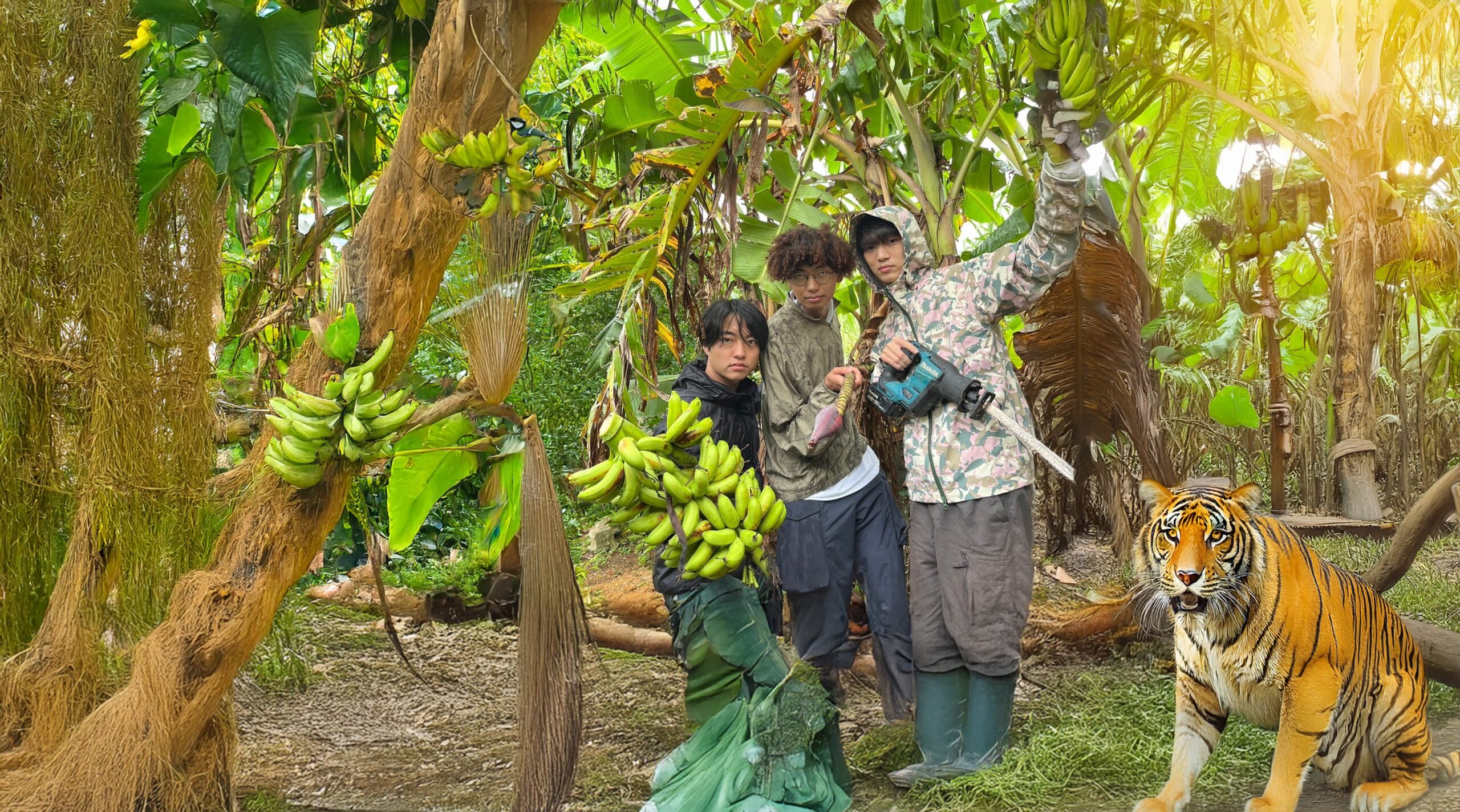


CHO CO PA CO CHO CO QUIN QUIN: I think Japan, Indonesia, and Cuba—being island nations—each have music that has developed in unusual, and it’s exciting to think that musical exchanges between places like these could lead to new kinds of music.
Ahead of Joyland Sessions 2026, the Tokyo-based polyrhythmic enigma talked with us about their rich sounds, their ties with Haruomi Hosono, to how they rose out of the pandemic as a solid band, CHO CO PA.

Words by Whiteboardjournal
Words: Garrin Faturrahman
Image: CHO CO PA CO CHO CO QUIN QUIN
To answer your question, the band name comes from a vocalization of the conga rhythm, which stemmed from Daido Shibasaki (Vo./Cng./Per.) that studied conga at the University of Havana in Cuba. Also, by listening to their quintessential song “tradition,” you can get a great idea (and inspiration) that shows just how natural it is for us to come across rhythm in the most unseeming of places.
If you’re looking for a trip that throws homage to Yellow Magic Orchestra and Happy End’s very own Haruomi Hosono (who also happens to be one of CHO CO PA’s grandpa), then you’d feel right at home in what they have to offer through their productive discography. You might also find comfort this weekend at Joyland Sessions 2026 as the good people over at Plainsong Live is bringing the band down to GBK Senayan for a lively set. Secure your tickets if you haven’t through their website.
“Tradition” is such a rich-sounding song that it can serve as a definitive introduction to you guys. It’s got, and I quote from your Bandcamp page, “Afro-Cuban percussion to lo-fi beats, Buddhist spirituality to trap,” which is really diverse! May we hear an inside look at what drove you to take on this eclectic mix into your works?
The music I genuinely enjoy listening to right now includes traditional Cuban popular music like Buena Vista Social Club, as well as Brazilian pop from the 1960s and ’70s—artists such as Milton Nascimento, Lô Borges, Jorge Ben, Caetano Veloso, Gilberto Gil, João Gilberto, and Luiz Bonfá. I also love contemporary artists who carry on that tradition or have been influenced by it, such as Sessa and SOYUZ. Hiatus Kaiyote, too, collaborated with Arthur Verocai on “Get Sun.”
At the same time, I’m just as fond of electronic and club music, including artists around Brainfeeder like Dorian Concept and Ross From Friends, as well as Crackazat, Floating Points, and Four Tet.
Our tastes actually range much more widely than that, and the three of us all like different things. You might wonder how we can make music together at all, but by working hard to bring our mixing, balance, overall feel, and atmosphere together, we somehow create something cohesive that feels like CHO CO PA CO CHO CO QUIN QUIN.
I’m not sure who wrote the description on Bandcamp, but Haruomi Hosono’s work from around the 1990s influenced us in the way we mix those scattered genres, how we balance them, and even in showing us that it’s okay to do that in the first place.
It seems being under lockdown during the pandemic had such a huge impact on you guys—which in turn gave way to the forming of CHO CO PA too! Could you kindly elaborate more on how the pandemic changed you, and how you found the artistic urge to create something afterwards?
The person who first suggested forming a band wasn’t one of the three of us, but another childhood friend who became a ballet dancer. He now dances with a ballet company overseas, but he was temporarily back in Japan during the pandemic. The four of us would go for drives, skateboard, drink, and dance to music, just trying to pass the time during that seemingly endless period.
He was the one who suggested making music. After he returned to his ballet company and left Japan, the three of us kept going, more or less naturally. I think we continued because driving around, making songs in the car, and listening to them on the way home was fun—especially with the strange atmosphere of the pandemic. As we kept doing it, the occasional moments when things came together made it more and more interesting.
The ideas in your songs, as said by vocalist Daido, is to “transport the listener to a mysterious place.” Can we hear more as to why you are taking us away from this world?
I’ve always loved traveling, and I think that comes through in the themes of our songs and albums, as well as in the way we structure our live sets. But just as I enjoy traveling in real life, I’ve also always liked imagining unfamiliar, mysterious landscapes when I’m bored, lonely, or looking for an escape from stress.
I love all kinds of music, but when I make music myself, I want to create sounds that help listeners find their own world—a place they can escape to and take refuge in. That idea is at the heart of the sounds and atmosphere we aim for in our original songs.
View this post on Instagram
Especially nowadays where the world seems to be nearing its end, how would you utilize this anxiety, then? Would you like to keep it hopeful, or self-deprecating, or perhaps as a voice of protest and resistance?
As I said in my previous answer, our sound might be described as a form of escapism. “Aloha Retreat,” from our second album, is about imagining Hawaii and retreating there; it has that escapist feeling.
From our first album through to the second, songs like “Sora Tobu Tokyo” and “Kayo Nenka” also have lyrics that may be somewhat negative. I’m not sure whether that’s a reflection of the times or simply my personality.
I feel this multidisciplinary take in creating something is really something that resonates with the younger generation alike. For you guys, what is it about having zero restraints that speaks to you?
This overlaps with what I said in my answer to the first question. As listeners, our tastes are all over the place, and the three of us like different things, so you might wonder how we can make music together at all. Then we encountered Haruomi Hosono’s work from around the 1990s. It showed us how different genres could be brought together, how to balance them, and, more fundamentally, that it was okay to do that. That discovery helped shape our current style.
Across Asia, young people are increasingly creating their own spaces through independent music, live houses, to publications. By shifting away from mainstream culture to be more “themselves,” what do you see from this shift of the younger generation?
With the evolution of the internet and its services, it’s become easier for individuals to publish and release their work. Even if your music is far from the mainstream, people can discover it, and a certain number of people with similar tastes will listen. I think we’re moving toward a world where you can make the music you love and make a living on the fringes of the music scene without aiming for major-label success.
As a listener, I’m happy that I can hear so many different kinds of music and that there are so many unusual people out there. But I’m not very familiar with the history of music publishing, so I can’t really say what the pros and cons of this shift are.
It was said that Yuta is the grandson of Haruomi Hosono, and the term “nepo baby” is a familiar discussion around the industry. Would you say there are privileges that came your way with that fate? Or are there any lengths taken to leave that “label” behind?
Of course, I think we’ve benefited from it. The fact that Yuta is Haruomi Hosono’s grandson has helped bring wider attention to the band. We also have access to a studio, which is practically helpful for rehearsals and other things.
We haven’t made any special effort to shake off the “nepo baby” label. In CHO CO PA CO CHO CO QUIN QUIN, we try not to bring up Haruomi Hosono ourselves—unless someone asks us about him, as you have here. I think if we mention it less, people will naturally bring it up less, too. Lately, it seems like we’re called “nepo babies” less often than we used to be.
Let’s look into Indonesia now—are there any musical elements or songs that you’d like to adapt from Indonesia to your music?
I’ve loved gamelan for a long time, both the Javanese and Balinese traditions. I listen to recordings by the Javanese group Gamelan Sekar Tunjung, as well as “War of Attraction” by Balinese guitarist Balawan and Bumi Gamelan Orchestra.
I feel like the Indonesia I imagine in my mind is made up of gamelan sounds. There are also Japanese groups like Geinoh Yamashirogumi and Taikuh Jikang that have a gamelan-like atmosphere, and I love them.
My mother likes Indonesian furniture, so our family home has Balinese cabinets and tables, along with wooden carvings of a sunfish, an elephant, and a giraffe made by Balinese artisans. There was always a little Indonesian atmosphere around me. That gave me a fondness for the feeling of Bali and places like it, and I think we often incorporate gamelan-like phrases when we’re making music.
We’re seeing so many Japanese bands coming to Indonesia of all caliber, and the other way around too! Can we hear your thoughts regarding this phenomenon?
I love Cuban music, and I think Japan, Indonesia, and Cuba—being island nations—each have music that has developed in unusual, almost Galápagos-like directions. It’s exciting to think that musical exchanges between places like these could lead to new kinds of music.

Diberi Kesempatan Mengisi Soundtrack Shang-Chi, NIKI, Rich Brian, dan Warren Hue Ceritakan Kesan

Salah Satu Band Hardcore Paling Berani, Turnstile Akan Bermain di Jakarta Juli Ini!

Cara Kunto Aji, Baskara Putra, Iga Massardi hingga Sal Priadi Menemukan Cara Baru untuk Berkarya di Collabonation Camp
