


Olafur Eliasson: Sustainability becomes a buzzword, not just in the art world, but everywhere.
Amidst his committed schedule for Museum MACAN, we met Olafur Eliasson to talk about his immediate view of Indonesian’s local and colonial history, art and sustainability, and artwashing.

Words by Whiteboard Journal
Words: Ibrahim Soetomo
Photos: Agung Hartamurti/Whiteboard Journal
Museum MACAN presents Olafur Eliasson: Your curious journey, an exhibition showcasing more than three decades of the Danish-Icelandic artist’s practice. This exhibition offers visitors a unique opportunity to engage with a selection of key works from Eliasson’s oeuvre.
Eliasson’s work highlights how natural phenomena and objects hold their own form of agency, moving beyond traditional roles as subjects of observation. Through the use of elements, such as light, water, fog, and even invisible forces like magnetism, Eliasson creates immersive environments where forms, shadows, sensations, and rhythms come to life.
Amidst his committed schedule between press tour and MACAN Gala later in the evening, we met Eliasson to talk about his immediate view of Indonesian’s local and colonial history, art and sustainability, and artwashing.
I read an excerpt of your interview with Firdaus Sani on Singapore’s Orang Laut and their indigenous knowledge during your show at the Singapore Art Museum (SAM). I wonder, since Your Curious Journey is a travelling exhibition, how does your show engage with local ecological knowledge?
The show doesn’t have a fixed format for how to do things right and how to do things wrong. I tried to be humble and respectful in terms of honouring the fact that I come here as a guest, and I’m actually not here to tell people who they are, what to do, or what to think, what is right and wrong. I am here to learn the incredible richness of the culture and history of the places.
Every stop is completely different. There is nothing compared to Singapore, to Auckland, to Taipei, to here. It is diverse. So there is really no system. I came to Jakarta a little early because I wanted to have time to chill and also to be inspired. I went to different kinds of workshops. Ceramic, bamboo, cotton, jewellery workshops. So, mostly I spent time just outside. I visited a bamboo workshop because I’m very interested in architecture, how they use natural materials. I’m not an architect, but I am interested in tensegrity. The kind of structure you see in boats. It is fascinating. I’m not so interested in concrete, but in the dynamic forces. Bamboo is the perfect thing. Unbelievable. I learnt about a minimalist approach to a maximalist impact. I went around because it’s so hard to get inspired nowadays.

Before coming here, I also studied a little bit about the colonial history of this country. I read about the nutmeg history of the Banda Islanders during the Dutch colonial era. How the Dutch had a profoundly negative impact on this country. I studied it because I am a white Northern European male. I am Icelandic-Danish. Iceland is a bit on the periphery of the planet, but Denmark always claims to be free from colonial heritage. It is wrong because the pillars of the Danish economy from the 16th to the 18th century were the sugar trade.
So, honesty is important. I come with a humble agenda, and with my own biases and lens views: I am a father. An artist. I speak Danish, Icelandic, German, and English. My view of the world is shaped by these. My education was paid for by the Danish state so I could finish school. This economic stability, this amount of justice, is based on the pillars of colonial economic history.
I don’t want to colonial-wash anything. I just want to come in a quiet and humble way.
Even though I am not Dutch, I am European enough to acknowledge the history of this country. So, I am not your spokesperson. I am here to learn. I acknowledge that there are over 17,000 islands in Indonesia, and the number of indigenous languages this country has. Everywhere I go, I try to be respectful to the indigeneity, the craft, and the respect for nature.


There’s always a risk of overpoeticizing or romanticising urgent issues, such as ecological crises, in artmaking, but we also often ignore scientific data that clearly screams environmental collapse. As an artist, how do you navigate this in your artistic practice?
I think there are some viewpoints. Sustainability becomes a buzzword, not just in the art world, but everywhere. Sometimes, a buzzword is a driver, but sometimes it is also a justification for poor judgment. When the Indonesian government wants to move the capital to Borneo, they used this buzzword, “sustainability.” In this case, I fear it’s a way to justify actions that do not really care about the livelihoods of those living in Jakarta or in Borneo. This is a bad buzzword.
In Helsinki, there’s this biennial which also talks about sustainability, and it is almost only indigenous craft and artists from around the world work with that. It is a fantastic biennial. Of course, there is a conflict of flying people there. For my tour, I sent my works on a ship. We did everything we could to reduce emissions.
On the other hand, can we trust scientific data? Generally, we can trust scientists. Scientists are scientists. But many of the interpretations of science are based on the interests of the people interpreting it. We have so much daily news and papers, how do they interpret science? The problem is how science is being manipulated and used.
I think it is important to understand that scientists have high integrity. But the politicians tend to have low integrity. They are so full of themselves. The private sector, the fossil fuel producers, tend to have a very low honesty. The objective is to make money, and they do everything they can to make more money. So who can we trust? Science is not the problem.
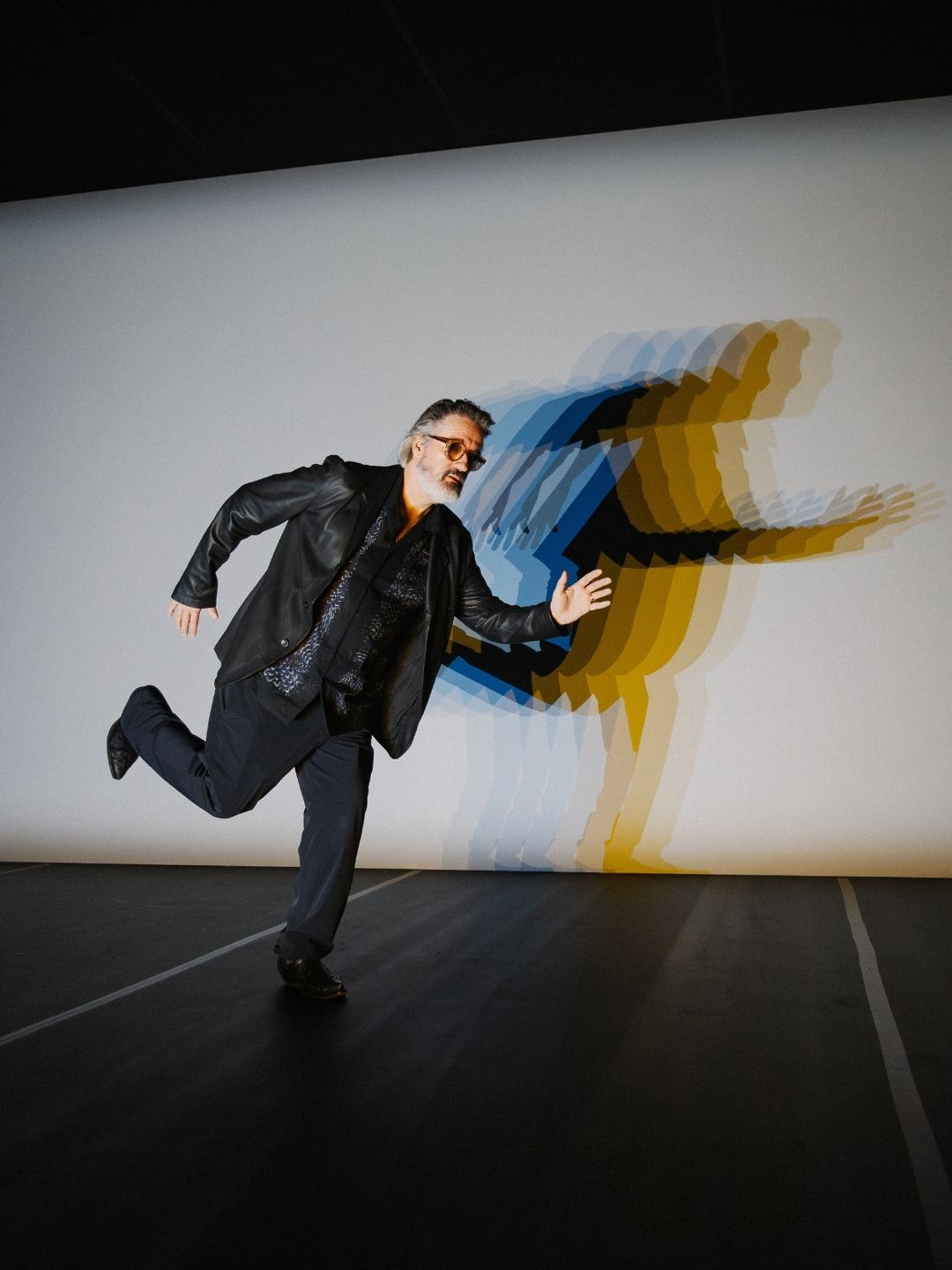
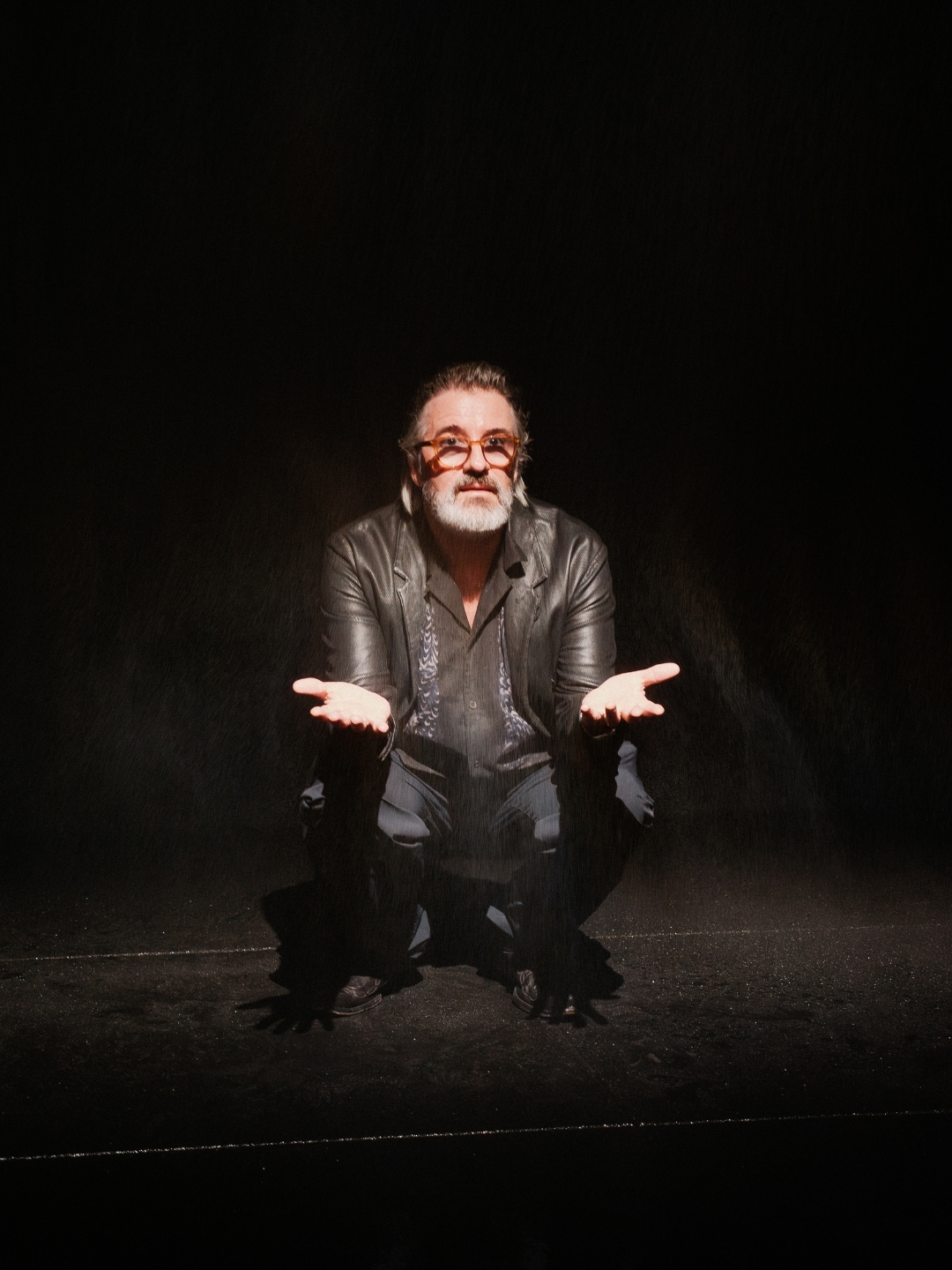
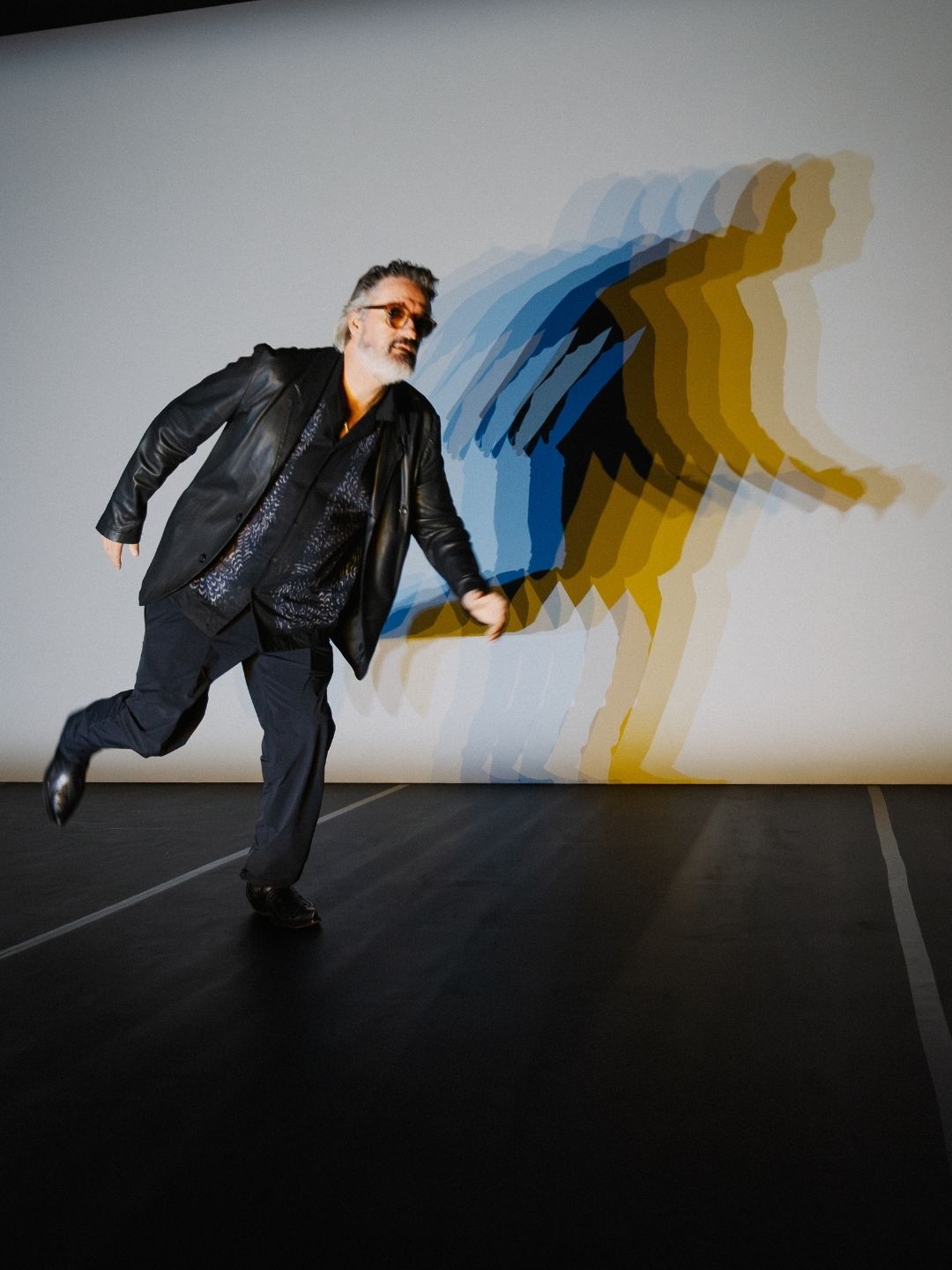
I know we are running out of time, but I want to know your take on artwashing. We are seeing corporations doing that.
I am very conscious and spoke about it openly.
If we divide the world into good and bad, there are really no only good and bad people. There is more complexity to it. In the past, I have worked with Louis Vuitton and BMW. I once worked with a satellite company. I have worked with Leica, the camera company. Every five years or so, I worked with a company. I am highly against what culture has to do with the private sector. I am also not invested in the public sector. So, where is freedom? There is no freedom. Where is the freest place I can express myself?
Today, I am talking to you, and I am grateful for that. I had a press preview, and I am grateful for that. I had a school tour earlier, before the press tour, and I am really grateful for that. I am in Jakarta, and I can see that there is a bigger dynamic of macroeconomics, macropolitics and powerplay here. As long as I am conscious and nobody is lying to me, and I am not lying to anybody, then there is vulnerability. If we can be vulnerable together, then I am happy to work with people I am against.


I had an exhibition in Qatar. I worked with their government and met their minister. At that time, I presented art and ideas that address the climate crisis, knowing that the countries economics is bound up with selling fossil fuels – liquified natural gas. Is this controversial? I personally think it is more important to work with the people you disagree with than only with people you agree with.
I know this doesn’t solve the question of artwashing, greenwashing or whitewashing. I get it. It won’t solely solve it. But I do think that we have to push forward these ideas where we can. And if we only work with the people we agree with, we will not solve the climate crises fast enough. If I can work with others without lying, and I can say what I said to you today, to the press, to the owners and friends of the museum, and they respect that, then I think that brings forward progress.

Berinteraksi dengan Seni AR Melalui Aplikasi “Wilder World”

Study: Osaka Kansai International Art Festival 2025: “Entering the 21st century, culture worldwide has shifted beyond mere ‘coolness or beauty.'”
Memahami Puisi Hari Ini dan Perkembangannya di Indonesia Bersama Adimas Immanuel
