10.08.19
Backstage Life Bareng Grrrl Gang di Episode Kelima Vindy Ngapain?
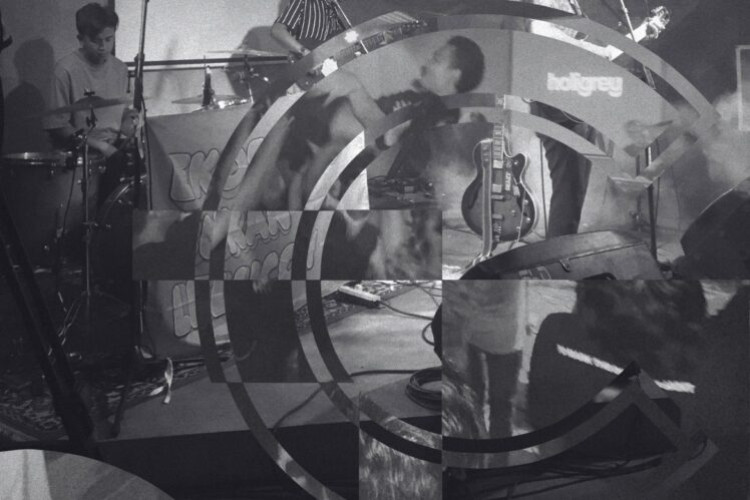
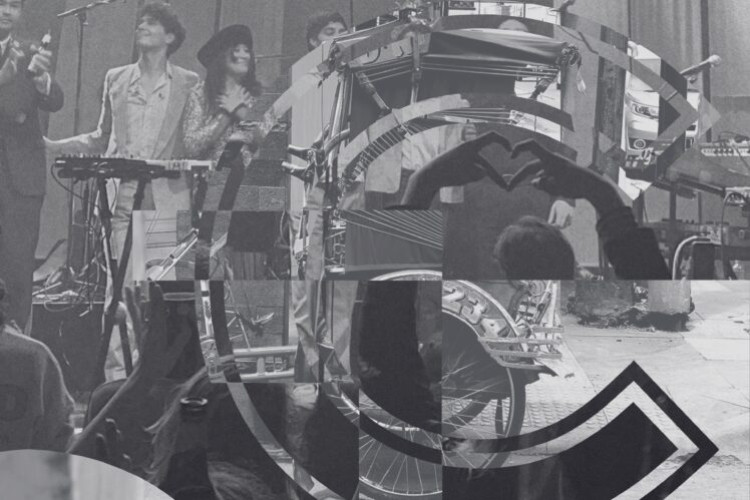
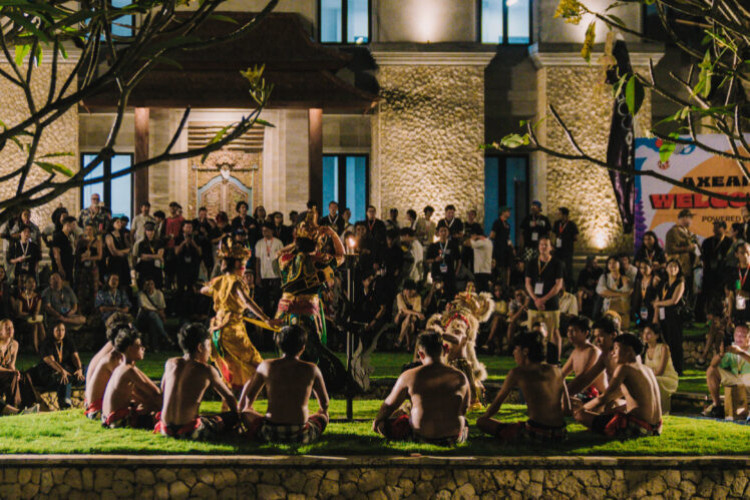
Tahun ini Grrrl Gang mendapatkan kesempatan untuk menjadi salah satu line up di We The Fest 2019, dan Vindy diperbolehkan untuk mengikuti aktivitas mereka.


Art appreciation courses are mostly formulated for students in the art and design department. However, the challenge arises for Mitha Budhyarto to take the context of appreciation into a setting where students have limited interest of the arts. How does one push for a knowledgable art engagement? Mitha Budhyarto shares her story.
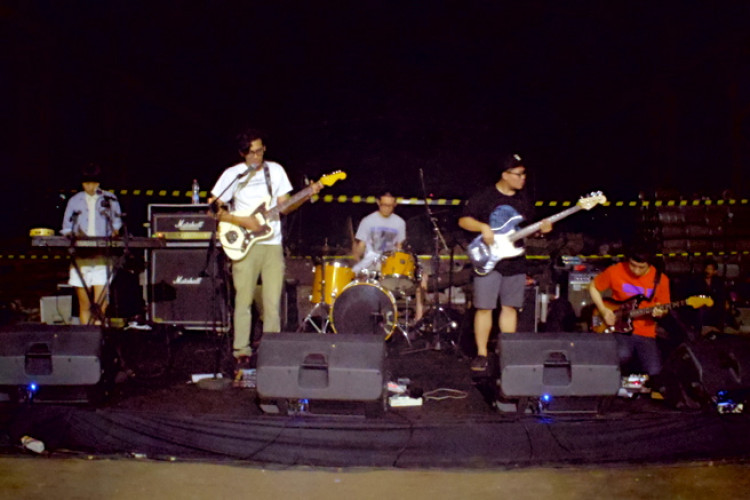
One of the things that make Jakarta (or any city, really) incomplete is its lack of outdoor events. Sure, we have festivals from time to time, but the day-to-day chaos of the city pushes most social activities indoors. Large, air-conditioned shopping malls often become Jakartans’ first choice because they are more convenient than the alternatives – especially with the unsupportive traffic. People can shop, eat, chat with friends, and if the mall is big enough, they can even get a bit of exercise by simply walking from one end of the building to the other. While this system seems to work to a certain extent, it’s probably not the most ideal. There are many factors – the heavy pollution, the traffic, etc. – that make outdoor events difficult to organize in Jakarta and it might take a while for us to find a solution. Bandung, on the other hand, has an advantage that Jakarta does not. It’s smaller, the air there is fresher, and most importantly, there are people who believe that there are things that can be done in open spaces. House The House, a Bandung-based design collective specializing in environmental regeneration, collaborated with EOC and PT Kereta Api Indonesia to present . But what is Keuken? The word itself means “kitchen” in Dutch, strongly implying the presence of food in the event. After all, if food can’t lure people out of the house – where they probably spend hours and hours watching television or browsing the Internet – what can? The event’s concept combines two of humanity’s most inherent desires: eating and being in the company of others. But that’s not all there is to it. The first Keuken festival was held on July 24, 2011 along East Cikapundung. The motto was: Trying to get the residents of a city – no matter how small the city may be – to participate in a huge social event definitely requires a lot of effort and dedication. After days, months, and years of taking the same route, or frequenting the same shops make us forget that we only do so because the city is ours – and it is these big events that can connect its owners. This year, however, the team behind Keuken decided to take the festival to the next level. Instead of turning a street into a venue – a part of the city that we frequently see and pass, and therefore constantly reminds of its existence – at an abandoned train station in Cikudapateuh. It’s easy to claim ownership of what you always see, but it’s not as easy to do so when you hardly ever lay eyes on it – even harder when you don’t know it exists. House The House transformed the event from an everyday, familiar vibe to a historical one. And it was indeed an interesting experience. Seeing so many food stalls selling different kinds of munchies (from assorted fritters to an Indonesian take on ramen) and music performances by bands such as and – all of which are products of more recent times – in a place so connected with the past made me realize that it is important to engage the inhabitants of a city with their current surroundings, as well as the city’s history. The fact that Keuken #4 was packed with visitors throughout the entire day shows that there is a demand for fun activities that aren’t consumer-oriented (which malls tend to promote) and more natural and social.
Respected New York dance/electronica label (Long Island Electrical Systems) have sent tons of upfront stuff stuff to , our favourite European label. This stellar mix compiled by the chaps at the Rush Hour store is the result... "So, here's how shit went down - L.I.E.S. sent a ton of new shit to the RH distribution wing. Distribution lost their shit. People needed to hear this shit. Store heds, Ocke & Robert, burnt that shit, mixed that shit...taped it. (Yes, we all talk like Method Man round here, for real, son..) Enjoy. We think it's the shit."
, or better know as , emcee and brain in chief of the legendary hip hop trio is one entertaining man to be interviewed. This 2 hour-long lecture hosted by had Tip reminisce about his days at Tribe and all the other musical adventures he's embarked on after the group split (including his 4 solo albums and his work with Mary J. Blige, Kanye West, and Jay-Z).
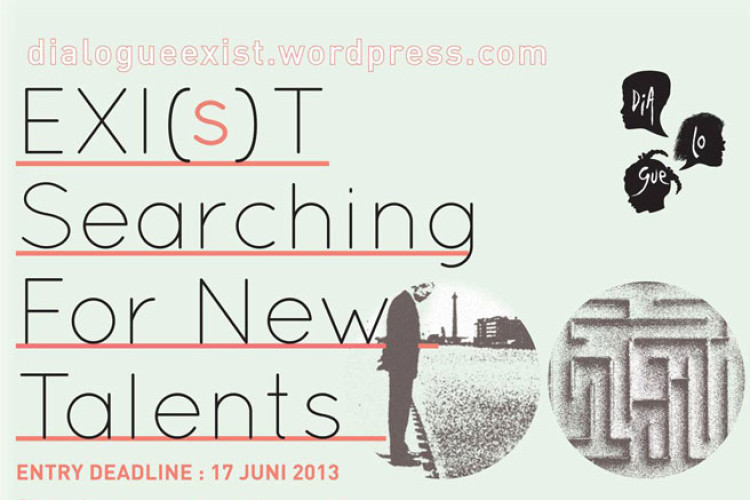
show returns to provide a platform for young artists to contribute to the art scene, locally and nationally. EXI(S)T is calling for artists from different backgrounds and disciplines. The exhibit will allow artists to present their own visualized journey. The diversity of the individuals proved favorable; deep and thoughtful messages were conveyed in beautiful works of art. EXI(S)T continues to promote the art culture of Jakarta and Indonesia in general in hopes to instill the idea that art is important. Currently the upcoming exhibit is calling for submissions by , 2013 for the scheduled show. Interested participants may present commercial or personal projects. Portfolios can be submitted via hardcopy, softcopy, and or a link to a website. Whether you are participating or now, EXI(S)T is one of the exhibitions to go. Other participation criteria includes: - Domiciled in Jakarta - Have any educational background, either art or non-art - CV / Resume - Artist Statement, around 200-300 words to briefly describe one’s work and practice - Not a student or already working, on December 31, 2013 30-year-old yet - , 2013 After the selection, Dia.Lo.Gue will invite selected participants to attend the workshop program network that will last for curatorial processes.
Growing up in the United States, I was exposed to the standard US History modules from grade school to high school. Stories of great men such as Christopher Colombus, Thomas Jefferson, and Abraham Lincoln filled my text and notebooks, and their achievements sanctified in the annals of US History. As a child, I rarely questioned the authority of my teachers and books, and when if I did my pubescent self was too focused on video games and music to pay the skepticism any mind. Later in high school my history teacher, Michael Esten, gave me a new perspective on history - one that delved into the psychology and idiosyncrasy behind major events. Like any good teacher, his approach to the subject stirred my curiosity, and during my college years I would often look into the subject for recreation. My interest in the subject lead me to a very famous book by Howard Zinn titled . The book details pivotal moments in US history, but unlike what we learned in class the book takes the perspective of the common people, not the elites. Accounts of the Native Americans that were displaced and massacred beginning with Christopher Colombus's landing, the slave rebellions and abolition movements, the rise of the labor unions in the 19th century and the women's right movements and more take center stage in Zinn's book. A People's History of the United States gave me a sense of empowerment - that a middle class person like myself have the ability to produce social change, and that our future doesn't rest in the hands of the few political elites. Curious about the author, I soon started reading more about Howard Zinn and soon grew tremendous admiration and respect towards the person. The Brooklyn-born Zinn joined the Air Force during World War II as bombardier. This experience partly influenced his later anti-war stance. He then graduated with a BA from New York University then his MA and Phd from Columbia University. Zinn, who has taught in Spelman College and Boston University, was actively involved in several social movements including the Civil Right Movement, the Anti-Vietnam War movement, and most recently the Anti-Iraq War - often times putting his career on the line in doing so. His list of activities and achievements goes on and on, and even when skimming his list accomplishments you can get a sense of conviction in his beliefs, and a genuine love for sharing knowledge. Howard Zinn passed away in 2010. The film gives an account of Zinn's life beginning with his childhood in Brooklyn, his support for student protests in Spelman College, until about the years the video was produced in the early 2000s. With testimonials by friends, colleagues, and Howard Zinn himself ,we get personal details that influenced his point of view and decisions. The film is presented in a very TV documentary fashion. This straight-forward production gives a generally fair overview of Zinn's life, though sometimes the music selection can make it a bit tacky (in that TV documentary sort of way). Over all, it is a good introduction to Howard Zinn and his major achievements. I hope you get to watch the film, and perhaps become more curious about his work. If you would like to know more about Howard Zinn, clicking the link at the bottom of this post is a good place to start. Enjoy! You can click the left or right button on the video to watch the second part of the film. "Empire or Humanity: What the Classroom Didn't Teach Me about the American Empire" and a C-SPAN In Depth Interview. The videos were replaced by "You Cant Be Neutral on a Moving Train" as the film seems more appropriate for this post. You can watch the two videos that were posted by clicking the titles in this edit.

Tahun ini Grrrl Gang mendapatkan kesempatan untuk menjadi salah satu line up di We The Fest 2019, dan Vindy diperbolehkan untuk mengikuti aktivitas mereka.
Temukan siapa dirimu dan bagaimana karaktermu menentukan arah masa depan.