10.08.19
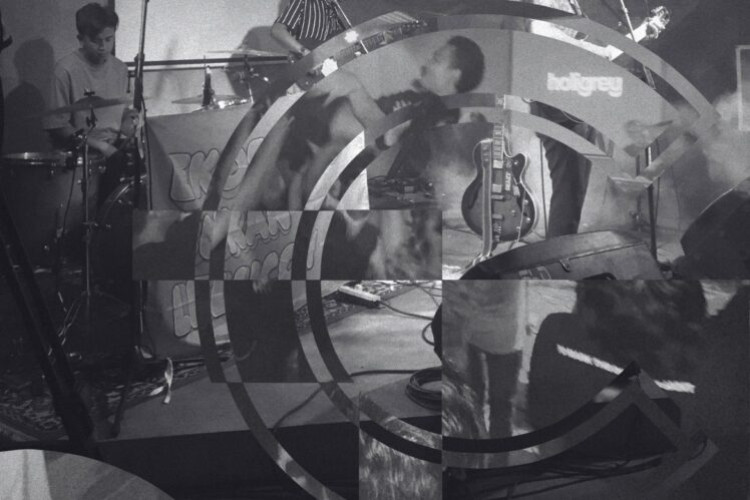
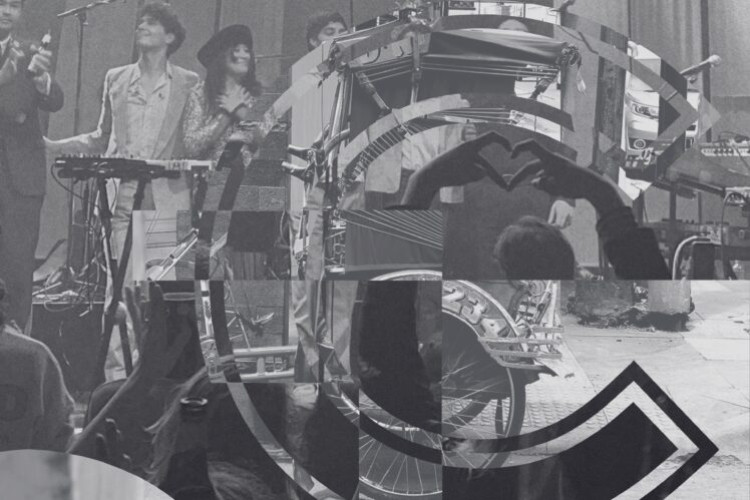
Backstage Life Bareng Grrrl Gang di Episode Kelima Vindy Ngapain?
Tahun ini Grrrl Gang mendapatkan kesempatan untuk menjadi salah satu line up di We The Fest 2019, dan Vindy diperbolehkan untuk mengikuti aktivitas mereka.


Innovation has always been a part of Nike's MO, and that is exactly what they have brought to the table with their latest product, Tech Fleece. Dubbed the "modern interpretation of the fleece", this reinvention of the fabric aims to bring lightweight apparel for the active consumer while having the same comfort and warmth of fleece. The first application of this Tech Fleece includes The , which adapts the Tech Fleece to established Nike products. The collection also includes a . For more information regarding the Nike Tech Fleece, check out the official link below.
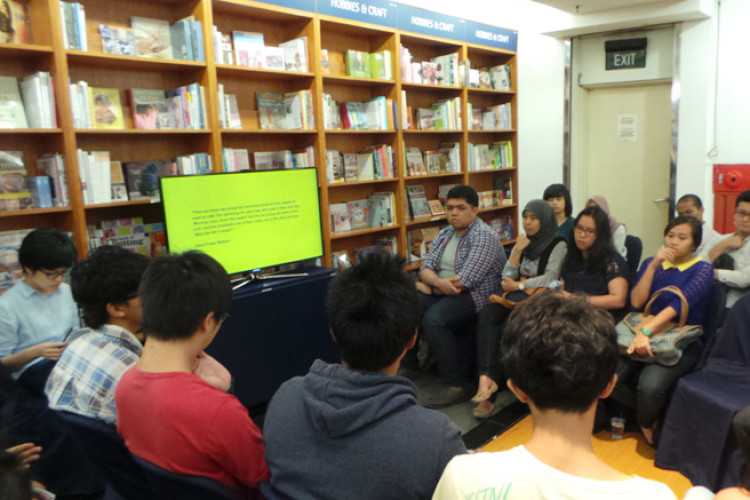
On August 27, 2013, we had our second event at Kinokuniya Plaza Senayan. This month’s theme is national identity, which is a big part of who we are and aren’t (or believe to be or not be), whether we realize it or not. A majority of the participants who voiced their opinions have experienced living outside their home countries, and can therefore compare and contrast different ways of life. Despite the nomadic tendencies of the current generation, and how migration – both in the physical sense and that achieved through the Internet – has made national identity more fluid, the values of one particular city, region or country still prove to be more dominant than others in a person’s life. While travelling and relocating can indeed expand one’s point of view, there is still one main reference point that is used as the basis of processing new information and experiences. - It is almost impossible to come to the conclusion that there is only one single sense of national identity. As one participant noted, everyone has multiple layers of identity – citizenship, ethnicity, and worldview. All aspects need to be analyzed if one seeks to have a deeper understanding of one’s own national identity. - Another participant highlighted the difference between the state and the nation, and how one typically has a strong relationship with only one of the two. - There were also repetitive comments on the flaws of Indonesia, as well as how they can or cannot be fixed. Here, the big question was whether we should look at more advanced nations as an example to simply emulate or use as references that we adapt to our own context. - Following the previous point, it also becomes apparent that comparing ourselves to our past selves as opposed to the current state of others will be more useful if we aspire to improve and develop. - In the international setting, Indonesia is still regarded as a “third world nation” despite signs of modernity across the country (particularly in the big cities). Participants argued on how to cope with that label. Have we come to accept that label by simply ignoring it, or does it serve as an incentive to show what we are capable of? Is it even necessary to prove others wrong? Would it benefit us? - History, and the relationship that we have with the history of our nation, was also one of the popular topics in last night’s discussion. Do we need to understand the past in order to strengthen our sense of belonging? Since the discussion’s participants were mostly Indonesian citizens, most of the topics were heavily focused on Indonesia. However, it is clear that with the Internet, those who had never lived abroad are also exposed to foreign culture, politics, ideas, public figures, etc. – even if the depth of their involvement may vary. The combination of physical and cyber migration has brought us to the idea of “world citizenship.” Perhaps this generation is more connected with the world compared to those of previous eras, but what if the connection remains at a philosophical level? Would a legitimate document enforcing that sense of connectedness with the world change the way we make sense of our existence? Would it make us want to become members of smaller groups, even if it is not based on nations (e.g. interests and ideologies)? When the Greek philosopher, Diogenes announced, “I am a citizen of the world,” was he just being philosophical or did he have something more practical in mind? If you would like to share your thoughts on any of the above points or respond to the questions, please feel free to tweet us @wjournal #WeDiscuss. Or send us an e-mail to with the subject title “We Discuss #2.” The Whiteboard Journal team would like to thank those who joined the second We Discuss meeting. We hope to see you again in future discussions. Next month’s theme is: . Stay tuned for the specific topics!
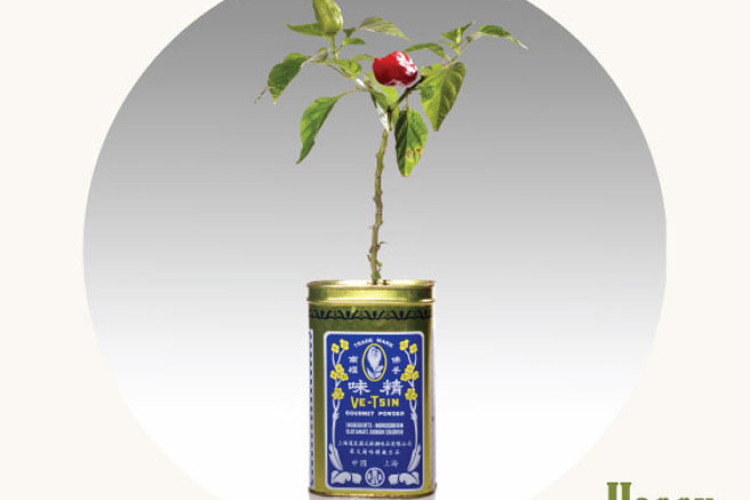
Happy Coda. Released digitally by the same netlabel as her first album, Yes No Wave Music, Happy Coda consists of eight tracks all created by Frau herself. . Moving on, a playful and teasing feel through the transition of piano melodies can be found in . Her pure vocal such as in are also the highlight of her songs. But one definitely cannot get over Tarian Sari easily. the album is available for free download here. Something More Water Empat Satu Tarian Sari Mr. Wolf Arah Suspens Whispers

We Discuss #2 is coming up! Last week, we posted this month’s theme and topics. Below is a short list of materials that will hopefully be useful in the discussion. Crossing Borders with Dave Lumenta “With a country as an identity, people tend to categorize what you can do and what you are like. Sometimes it is a stigma. A nation’s identity can facilitate many things as racism and segregation.” If the saying goes “Don’t miss the forest for the trees,” perhaps there is also something that needs to be said for the opposite. Focusing on the bigger picture – the forest, or in this case, the country – will make us forget about the individual dots and lines – the people. And yet the so-called passport country is still a big part of a person’s identity, making it difficult to get rid of stereotypes and discrimination. “There are these two young fish swimming along and they happen to meet an older fish swimming the other way, who nods at them and says ‘Morning, boys. How's the water?’ And the two young fish swim on for a bit, and then eventually one of them looks over at the other and goes ‘What the hell is water?’” To summarize his little story, Foster Wallace then said, “The point of the fish story is merely that the most obvious, important realities are often the ones that are hardest to see and talk about.” Are we, like the young fish, unaware of the environment – whether cultural, political or otherwise – that shapes us? The transcript of the original speech is available here. by Colum McCann "It struck me that distant cities are designed precisely so you can know where you came from." Do we need to leave “home” to understand it better? How does migration, or even travelling, affect our sense of self with regards to our country of origin? by Michael J. Sandel “With belonging comes responsibility. You can't really take pride in your country and its past if you're unwilling to acknowledge any responsibility for carrying its story into the present, and discharging the moral burdens that may come with it.” How relevant is national loyalty in a highly interconnected world such as the one we live in today? (For those who are interested on the topic of justice, check out Michael J. Sandel’s series of lectures here.) by Richard Bellamy “Just as citizenship seems to be becoming the universal panacea for every problem, it seems that the really distinctive aspect of citizenship – that’s participation in voting and elections, and in collectively solving problems through forming a government – seems to be in decline. Everywhere that you have elections, you’re now seeing fewer and fewer people involved.” He speaks about lower levels of political participation, and how citizenship is transforming into something that is more private than public. Are nations a thing of the past? Are we now turning to clustered communities that pursue their own interests? Can this model actually bring about positive changes? Richard Bellamy briefly explains the contents of his book in this video. Tuesday, August 27, 2013 7–9 pm Kinokuniya Plaza Senayan (near the language section) Jl. Asia Afrika 8 Sogo Plaza Senayan Lt. 5 Jakarta 10270 Please stay tuned to our Facebook page and Twitter account for more details! For those of you who would like to join our event, there is still time to sign up via e-mail with the subject title “We Discuss” at ! If you have questions, don’t hesitate to tweet us @wjournal.

As you may have read in our interview with music afficionado David Tarigan, is looking to be the premiere Indonesian music archive. I have been getting into Indonesian music lately as well and I am happy to know that since August 17th (Indonesia's independence day, if you didn't know) The website still sports a modest catalogue and a couple of blogposts, but you can definitely see the potential of the site. All records liner notes are listed and all information can be cross-referenced, making your information digging very easy. Definitely keep this website on your "Favorites" tab, and look for additions to their growing library!

Not all musicians are brave enough to release their own album. Especially when the band consists of only one person doing the entire vocal, guitar, bass, drum, composing and programming himself. But Ababil Ashari answers the challenge and under the moniker Shorthand Phonetics, he recorded his new EP titled with only webcam microphone and computer. Originally consisting of five members, Shorthand Phonetics has now released six albums, eleven EP and few film scores. Released under the label of (owned by Ababil himself), this short EP consists of three lo-fi but catchy songs. Shorthand Phonetics’ releases are a creative way of storytelling the life of a Japanese national, Hanabishi Hideaki. Presented in short, personal notes as if written by Hide himself, this EP depict his state of mind through the lyrics and tunes. The first song in the EP, ,features fun punk/rock feel with energetic drumbeats. The track list continues with a slow bass intro from , which then turns into frantic guitar strumming along with the synthesized vocal. The EP ends with a slower guitar-and-vocal only-song titled . Despite being a one-man band and armed with only webcam microphone and computer, Shorthand Phonetics’ lo-fi recording manages to transfer the story of the music. If you are looking for good music to treat your ear, the EP is available for sale here and the physical CD is available here. 01. The Standard Model (Of Love) 02. Jumpin' 03. The Reconnection, or, How Things Kinda Worked Out for Jet Girl in the End (At Least She Still Has All Her Hair)

Tahun ini Grrrl Gang mendapatkan kesempatan untuk menjadi salah satu line up di We The Fest 2019, dan Vindy diperbolehkan untuk mengikuti aktivitas mereka.
Temukan siapa dirimu dan bagaimana karaktermu menentukan arah masa depan.