10.08.19
Backstage Life Bareng Grrrl Gang di Episode Kelima Vindy Ngapain?
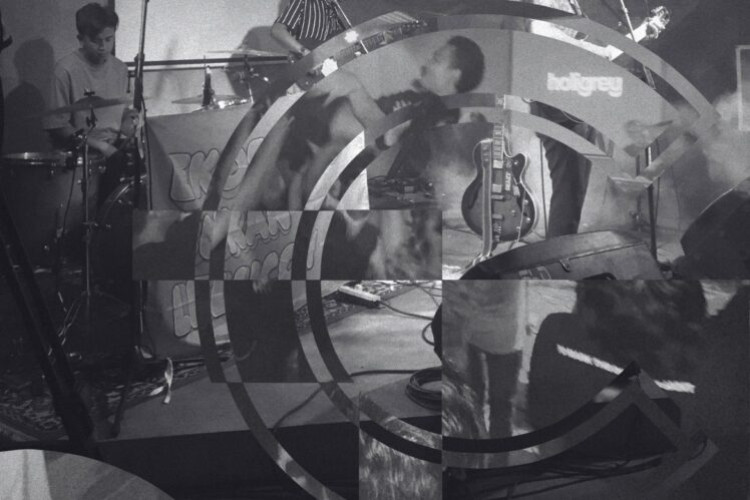
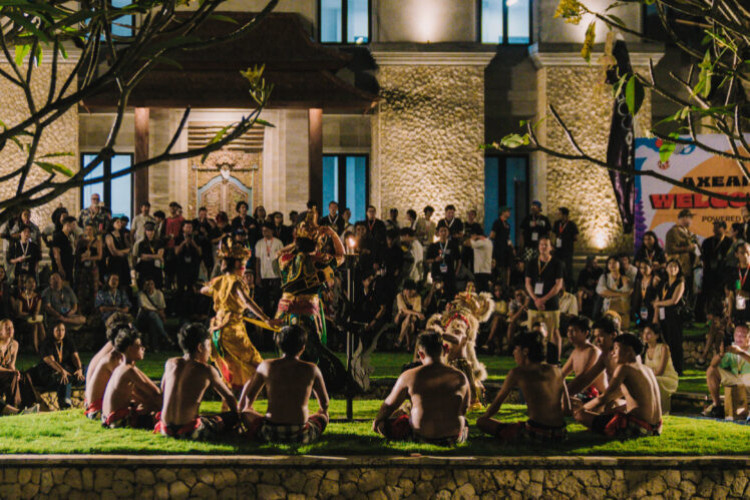
Tahun ini Grrrl Gang mendapatkan kesempatan untuk menjadi salah satu line up di We The Fest 2019, dan Vindy diperbolehkan untuk mengikuti aktivitas mereka.


On November 19, Whiteboard Journal hosted our fifth meeting at Kinokuniya Plaza Senayan. This month, we focus on the concepts of “place” and “space” in everyday life. How do we perceive our workspaces? To what extent do we feel attached to our “homes”? By sharing our personal experiences or reflections, we tried to answer such questions. - The word “home” means different things to different people. Some participants think of a physical building that will always be waiting for them, while others think of it – to borrow Avianti Armand’s analogy – as a “place of transit.” - While the home is often considered as a private space, it actually consists of the multiple privacies of its inhabitants. The sum of these privacies gives “life” to the building itself. - A place becomes a place once it can be associated with something – a memory or a feeling – otherwise it is just a space that can be easily replaced. - The typical living arrangement in Jakarta is still very family-oriented. Many working individuals still choose to live with their families even when there are no financial constraints. This might be explained by Indonesia’s collective culture. - However, those who do choose to live independently do so for two possible reasons: Due to practical reasons (to be closer to their workplace/university) or because they want to break away from the standard arrangement (to create an alternative way of living). - Some offices have cubicles/partitions while others do not. There are downsides and benefits found in each one, but the effectiveness highly depends on the nature of the job. - What is a major difference between public and private places? Rules. While the former typically has clear rules that allow or prohibit certain actions, the latter operates according to unwritten rules that are based on mutual expectations of the involved parties. - While the number of cafes in Jakarta has been increasing at an impressive rate, the “cafe culture” as we know it today is actually nothing new. It is merely one that reflects the current society’s buying power. The tendency for Indonesians to “nongkrong” (hang out) has always been around. - Social media has changed the way people perceive boundaries. We are rarely aware of the distance that separates our online friends and us. - Laptops, smartphones and tablets are portals that take us away from the physical places we are in. Can our technological habits change our need for space? Will people of the future be content with smaller living places? -- We would like to thank those who came and contributed to the fifth We Discuss meeting. We hope to see you again in future discussions. Look out for announcements about next month’s discussion on our website’s blog and events section. Or check out our Facebook page, as well as our Twitter and Instagram accounts!

The Nike Air Max has always been about visibility. Air Max introduced bold colors on running shoes and making the unseen, seen by showing the air in 1987. 23 years later the desire to be seen has amplified and has been applied to the new Air Max Glow Collection. Inspired by the necessity to be seen during night runs, the features glow-in-the-dark accents that transform the Nike Air Max 1, Air Max 90, Air Max 95, and Air Max Thea. Contrasting the crisp, white tape construction, under-mesh glow-in-the-dark prints illuminate during low light situations. It’s now possible to stand out at any hour, in any light. The Nike Air Max Glow Collection will drop in Jakarta from December in the Men’s Air Max 90 and the Women’s Air Max Thea at IDR 1.999.000.
Walley Films presents multimedia artist Justin Boyd, a faculty member of the Sculpture and Integrated Media department at Southwest School of Art in San Antonio, Texas, shares his connection with sound and how he uses it to create original works of art. Inspired by his sensitivity to sound was developed at a very young age, Boyd has been recording and working with sound and music since the mid 90s. Boyd actively captures field recordings for integration of sound with found objects. In the video Boyd is shown very intrigued by sound, any kind of sound. From water streams to train works, he captures them all to use them in his work. The mix of urban and natural noises, together with music from vinyls produces a unique sound that he is known for or better yet, the sound he wants to make. This documentary was produced in association with Southwest School of Art. Learn more about their BFA program at and listen to Justin's recordings here.

Here is a list of recommended reads that might come in handy on the upcoming discussion on places and spaces! Architecture and Literature with Avianti Armand “The only way we can understand life is by order. All chaos is difficult to comprehend. Unconsciously we are always faced with a stimulating condition between chaos and order. Chaos is the cosmos. But we actually have the tendency to look for forms and order. If not, we wouldn’t be able to communicate.” Avianti Armand then goes on to say: “The easiest example is in architecture. There is the basic rule of thumb we follow. In houses there is the public area, the private area, and the semi-private area. Each has its own characteristics. So when we design a house we base it on those basic rules. But there are always rooms to break away from that structure.” How do you think architecture functions as a representation/reflection of our society? While social order is not immediately visible, the structures of buildings are. Will observing the buildings found in a particular city reveal the character of its inhabitants? Unconventional Spaces with Andra Matin “I can try to evaluate their taste. Some of their tastes can be explicit; some character traits tend to be implicit. So we base the designs on the interviews and our encounters.” Before drawing a plan for his clients, architect Andra Martin does his best to find out as much as he can about their preferences. Would you rather have a “sterile” living space that gives you the freedom to modify it as you will or have one that has been meticulously designed to suit your personality and tastes? by Robin Evans (featured in Building the Mind) “If anything is described by an architectural plan, it is the nature of human relationships, since the elements whose trace it records – walls, doors, windows and stairs – are employed first to divide and then selectively to re-unite inhabited space. But what is generally absent in even the most elaborately illustrated building is the way human figures will occupy it.” Why do you think there are differences in the way humans interact in public and private spaces? featured in Building the Mind) “It’s easy to achieve a natural calm…trees, shrubs, a few rocks. But that’s not enough. Calm should have a ‘momentness,’ where space has a state of impermanence. Disruption is the manmade intervention, and calm comes from the contrast.” How do you think that “momentness” can be achieved in a city – especially one that is as chaotic as Jakarta? How do you think it can be achieved at private and public levels? The Flight from Conversation on the New York Times by Sherry Turkle “At home, families sit together, texting and reading e-mail. At work executives text during board meetings. We text (and shop and go on Facebook) during classes and when we’re on dates.” “In today’s workplace, young people who have grown up fearing conversation show up on the job wearing earphones. Walking through a college library or the campus of a high-tech start-up, one sees the same thing: we are together, but each of us is in our own bubble, furiously connected to keyboards and tiny touch screens.” Many of us today are loyal dwellers of cyberspace, but this commitment is often fulfilled at the expense of our “real world” connections. Is it possible for us to strike a balance between our online and offline residences? Tuesday, November 19, 2013 7—9 pm Kinokuniya Plaza Senayan (near the language section) Jl. Asia Afrika 8 Sogo Plaza Senayan Lt. 5 Jakarta 10270 Look out for updates on our Facebook page and Twitter account! If you’d like to share your opinions, or if you have friends who’d like to share theirs, please sign up via e-mail with the subject title “We Discuss” at ! If you have comments or questions, tweet us .
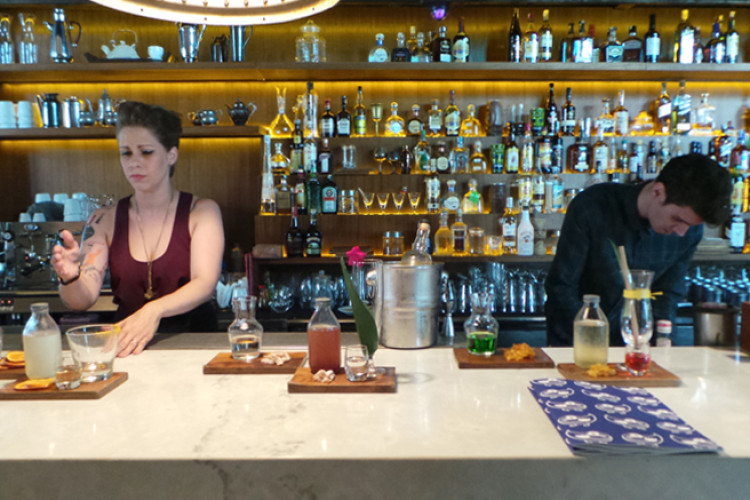
Potato Head is a name associated with lifestyle dining and lounge here in Jakarta. With three establishments in Jakarta and Bali, it has been five years since they started to deliver fine food and drinks. To commemorate their fifth anniversary, the Potato Head family renovated the first restaurant located in Pacific Place with new rattan interiors and colorful upholstery. And to make the celebration even more memorable, they also created a three-week Potato Head Culinary Journey for all of their supporters. To start the relaunching event, they will hold an Opening Party that will include a special apperance by their head mixologists; Megan DeMeulenaere and Rhys Wilson, as well as a line-up of Potato Head All Star DJs who will provide entertainment for the night. As for the beverages served, they are working together with three great bars from New York, Singapore, and London. Each of them comes with a strong identity and of course great drinks to be shared with the people of Jakarta. The three bars working together with Potato Head is: - Employees Only from New York; - 28 Hong Kong Street from Singapore; and - Trailer Hapiness from London. To add their Culinary Journey agenda, the Potato Head team also brings to you The Ultimate Fried Chicken Feast, Farm to Table Brunch, and a nostalgic 5 course, 5 years of Culinary Journey meal – all made by Potato Head chefs: Hikaru Take and Haruhisa Noguchi. The last point that was highlighted from the new refurnished Potato Head at Pacific Place was the Wine Bar. Brian Weitzman, their Wine Director, has prepared a wine fair to take you further a journey throughout the world as well as a wine pairing dinner to enjoy.
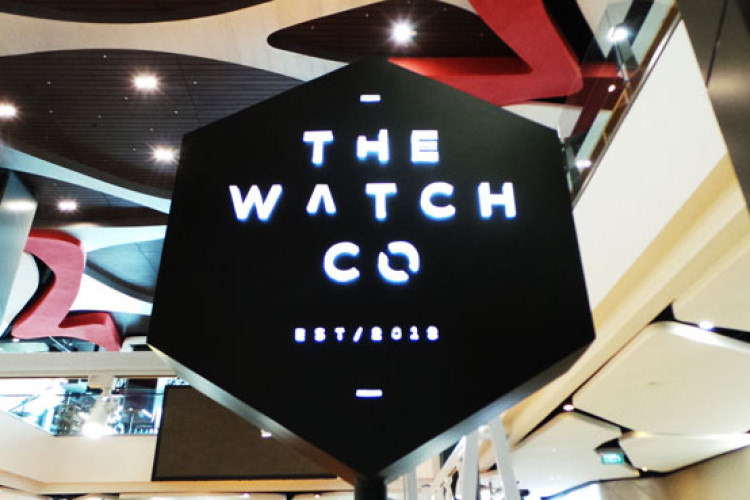
The second this year has just opened at the beginning of this week, and its presence in Plaza Indonesia's Atrium is felt. As you may have inferred from their name, the Watch Co specialises in timepieces, bringing to the shop brands such as . Interestingly enough, the company has announced its latest addition to the brand, . The Denmark company's array of earphones and headphones complements the watches well, its product design not unlike the time pieces The Watch Co. carries. To complete the shopping experience, a number of collaborators have been invited to share their products. You will find essentials by offering everything from jeans, socks, bags, tops, jewelry, to vinyl. The Watch Co.'s shop will be around until January for you and yours. Take a look at the pictures above to get a peek of the Pop-Up Store, and do not forget to visit when you are in the area. -- November 2013 - January 2014 Atrium Plaza Indonesia Extension Lv.4 Jl. Mh Thamrin Kav - 28 - 30 Menteng, Gondangdia, Jakarta Hyper Grand Triwa Void Watches AIAIAI Aark Collective Daniel Wellington Braun No 11 Store Standard Denim Supply Sunday Somewhere Monka Magic

Tahun ini Grrrl Gang mendapatkan kesempatan untuk menjadi salah satu line up di We The Fest 2019, dan Vindy diperbolehkan untuk mengikuti aktivitas mereka.
Temukan siapa dirimu dan bagaimana karaktermu menentukan arah masa depan.