10.08.19
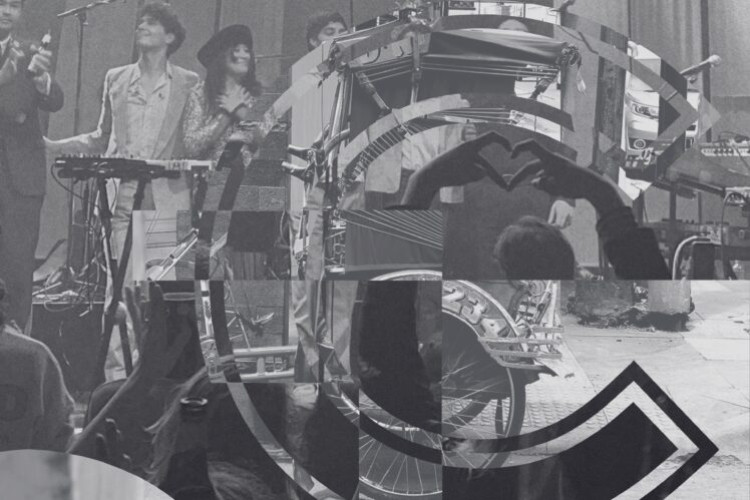
Backstage Life Bareng Grrrl Gang di Episode Kelima Vindy Ngapain?
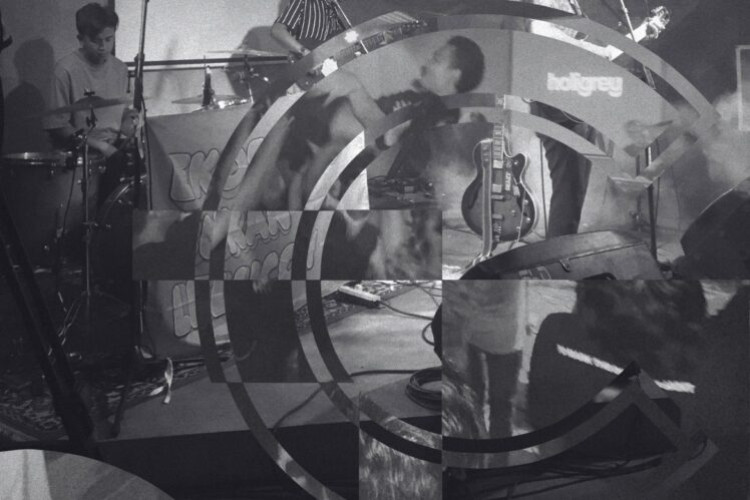
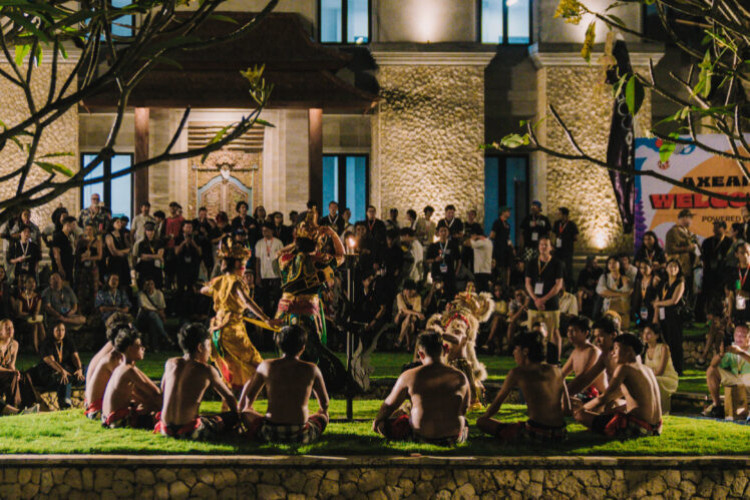
Tahun ini Grrrl Gang mendapatkan kesempatan untuk menjadi salah satu line up di We The Fest 2019, dan Vindy diperbolehkan untuk mengikuti aktivitas mereka.

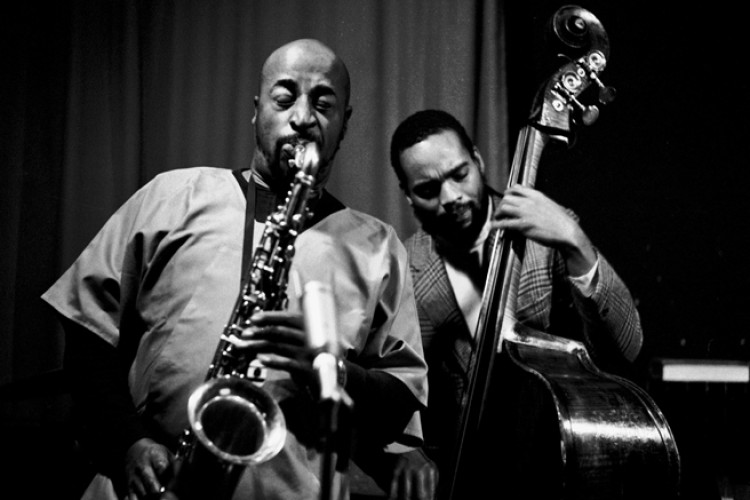


Here's an excellent mix British/Swiss DJ Gilles Peterson made on the incomparable Yusef Lateef as a tribute to the genial flute/saxophone player who passed away last month. Following the passing of jazz legend Yusef Lateef in December, Gilles went through the innovator's extensive back-catalogue going all the way back to the 1950s, pulling out some of his personal favourite tracks. Here is part one of Gilles' tribute mix, celebrating the life and music of the mighty Yusef Lateef. Tracklisting Morning (Jazz Mood, 1957, Savoy) Before Dawn (Before Dawn, 1957, Verve) Anastasia (Other Sounds, 1957, Prestige) Taboo (Other Sounds, 1957, Prestige) Hapology (Jazz For The Thinker, 1957, Savoy) Chang Chang Chang (Before Dawn, 1957, Verve) Titora (The Centaur And The Phoenix Bonus Track, 1960, Riverside) Moon Tree (The Fabric Of Jazz, 1959, Savoy) Night In Tunisia (Prayer To The East, 1958, Savoy) Abana (Jazz Around The World, 1963, Impulse) 1984 (1984, 1965, Impulse) Plum Blossom (Eastern Sounds, 1961, Prestige) You’re Somewhere Thinking Of Me (The Complete Yusef Lateef, 1968, Atlantic) Like It Is (The Blue Yusef Lateef, 1968, Atlantic) Woodward Avenue (Yusef Lateen’s Detroit, 1969, Atlantic) Eboness (The Diverse Yusef Lateef, 1970, Atlantic) Technological Homosapien (The Doctor Is In….And Out, 1976, Atlantic) Hellbound (The Doctor Is In…And Out, 1976, Atlantic) Love Theme From Sparticus (Eastern Sounds, 1961, Prestige) Hold Your Light (Yusef Lateef And Adam Rudolph Live In Seattle, 1999, Meta) Brother John (Live At Peps Vol 2, 1964, Impulse) Passacaglia (Suite 16, 1970, Atlantic)

Last night, Whiteboard Journal hosted our 7 We Discuss session. This month, we talked about many different aspects of what we have come to know as the “Do-It-Yourself” (DIY) culture. Lots of intriguing ideas were exchanged throughout the discussion, which have been summarized in the following points: - When you can’t find things that suit your preference and/or needs, you begin to consider making them on your own. - Economical motivations are also common (i.e. the need to save money). - “Yourself” is the heart of the widely used acronym, DIY, as it emphasizes the creator’s independence. - However, the most important part is a person’s involvement in the process, further adding a personal touch to the product. - But is it possible to purely “independent” in the sense of not relying on other like-minded individuals? There were participants who thought that establishing a network among DIY-ers could threaten the very idea of DIY. - However, there were also participants who were in favor of a community that would act as a support group to sustain the movement. In this case, independence is achievable on individual and collective levels. - A question was raised regarding the standards of DIY products. Are standards even necessary? Or does the appeal of the DIY culture lie in its absence of standards? - A sense of accomplishment is one of the plus points of engaging in DIY activities. - When speaking of the DIY culture, one must learn how to distinguish between a “DIY product” and an “invention.” DIY products have less to do with the originality of the idea behind them, and more to do with the creator’s initiative to be involved in the process. - Another point worth highlighting is the necessity of sustaining the availability of resources (i.e. the materials needed to make various products). Without the materials, it would not be possible to make more things. - With regards to technology, an interesting argument was made about the irrelevance of the “analog vs. digital” argument in discussions on the DIY movement because technology is always evolving. What’s important is how those changing technologies are utilized. It’s about using what is at your disposal at the present moment. - This is then linked to the time-based nature of DIY goods. There is something is immediate about them. - From a musician’s perspective, DIY is about being control (e. g. recording one’s own music in one’s own room.) However, although the process itself could be controlled, the consequences of releasing the end product – if it were to be released – cannot be controlled. - Increased effort = increased support for the cause. In other words, when a lot of effort into a certain product – be it a thing, event, or movement – it is highly possible that others would want to sustain it. - It is dangerous to stress the “handmade” element of a DIY product because it does not necessarily guarantee the quality of the product. - DIY products are very subjective. Their value cannot be measured according to monetary standards. They are often segmented, and not designed for the masses. - A point was raised regarding net labels – independent online distributors of music – that break the barriers of copyright. - The DIY movement is both a subculture and a counterculture – depending on the motivation of the creators. It depends on whether one simply make something for one’s own purposes, or is there a vision to influence others to do the same. - Ideally, the DIY movement shouldn’t be tied to commercial interests (especially in terms of profit), as it would defy the purpose of establishing something that is “for the people.” However, in cases where “the profit” is used to finance the needs of the people (be it for the continuity of the makers movement or charity), exceptions are made. Your feedback would be greatly appreciated, so please feel free to tweet us @wjournal or send us an e-mail to with the subject title “We Discuss #7.” We would like to thank those who came and contributed to the first We Discuss of 2014. We hope to see you again at future discussions! Look out for announcements and related updates on next discussion. Check our website, Facebook page, as well as our Twitter and Instagram accounts!
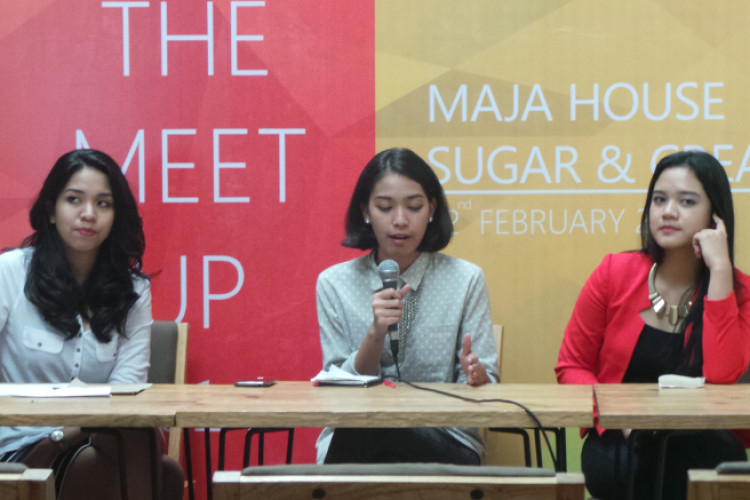
This afternoon, Whiteboard went to the press release for the RightBrain Group’s upcoming event, , that took place at Mojo Kitchen & Bar in Senopati. The RightBrain Group is a new up and coming social space group located in Bandung that aims to support and create a network for the Indonesian creative industry. The Meet Up 2014 itself is an introductory event that focuses on the developments of the creative industry by creating a space for networking amongst potential partners and buyers that will be held on February 22, 2014 at , Bandung. It consists of many attractions such as a photography exhibition and fashion show by various local fashion brands like PARD, Pot Meets Pop Denim, Bluesville, etc. Not to mention the musical styling’s of local DJs like Hogi Wirjono, Bergas, Egga, and many more. The RightBrain Group itself has a vision of creating a unique social space and community for Indonesia’s creative industry. The event allows people from the creative industry to meet and build a network together. The Meet Up 2014 is sponsored by Sampoerna with the target of a minimum of 1,500 people. RightBrain looks to distribute invitations from 2 quarters with 1,500 in the first and 500 in the second, opening a guest list also for the public to join. RightBrains goal is to approach the creative industry one step at a time seeing as how wide the creative industry is. They hope to be able to approach each field little by little.
This short opinionated documentary (Op-Doc) was premiered in 2014 byThe New York Times, directed by Peter Middleton and James Spinney. This Op-Doc talks about the story of writer and theologian John Hull, who went blind in 1983, keeping an audio diary of his experiences going blind. The Op-Doc was shot as a dramatization with real actors and Hull’s real audio diary as narration. This was an amazingly moving piece, revealing a whole new view on life. Nobody had really thought about what it is like being blind. Hull managed to describe it with such beauty and serenity, revealing his worries and fears to his enlightenment and clarity. He revealed a new perspective in the life of the blind, which had never been described this intensely before. Countless films have been produced about being in the shoes of a blind person, I was reminded of the movie “At First Sight”, though not a documentary, still a movie that depicts the life of a blind man and how he had to adapt to the situation of being able to see from an eye surgery. Hull’s experience may be the opposite to the movie, but both similar in a way that both men had to adapt to the different situations of their eyes. However, “Notes on Blindness” held a unique element of being a documentary of a first-hand account of a blind man, and not only was it a first-hand account, it opened up a poetic view in how it feels to live in darkness. Not only did it have a strong back story and narration, the cinematography was incredibly beautiful. They had great images that represented Hull’s dreams and memories, like the images of the surging waves, which came from his own account or the image of Hull cradling his baby, which came from his own photograph. I really enjoy the way the cinematography showed images depicted from Hull’s diary, which they placed in a subtle matter, rather than an obvious way of making the images look like they had a meaning. This to me really shows their creativity in getting the audience to think and understand the symbols. The whole atmosphere was well established with the help of good back sound as well, it all came together nicely as one beautifully pieced Op-Doc. This is one short anyone should definitely try out, something that might even put tears in the audience eyes.

D. I. Y. Culture by Michael Kimmelman “A generation or more ago, aside from what people did in their home or from what’s roughly called folk or outsider art, culture was generally thought of as something handed down from on high, which the public received. "Today it’s made and distributed in countless different ways, giving not just governments and institutions but nearly everyone with access to the Web the means to choose and shape his or her own culture, identity, tribal fidelities — and then spread this culture, via Youtube or whatever else, among allies (and enemies) everywhere, a democratizing process. The downside of this democratization is how every political niche and fringe group has found a culture via the Web to reinforce its already narrow views, polarizing parts of society despite the widened horizon.” Kimmelman goes on to conclude that the “myth of an avant-garde serves the same market forces avant-gardism pretends to overthrow.” Do you agree with Kimmelman’s arguments? Do you think that downsides of the democratization enabled by the D. I. Y. culture can outnumber its advantages? Do-It-Yourself Education Is the Ideal by Anya Kamenetz “It [education] must be radically affordable, near-universally accessible, diverse, and endlessly customizable to students' needs. Universities can simply get out of the way of this movement, or they can guide an increasing number of students toward self-direction by certifying and assessing prior learning and multiple paths toward mastery of a subject, and by offering learning resources, mentorship, support, and even physical meeting spaces, all at low cost and on an as-needed basis.” What are the possible challenges of movements that support “customizable education”? How achievable is it in a society that still holds on to conventional institutional standards? The Revenge of Print by Eric Obenauf “I believe that book publishing will re-generate in the near-future into two separate models: the corporate model, which strives to attain the widest possible ‘readership’ in as short of a time-span as possible by use of electronic devices, interaction, and gimmicks; and the print model, sustained by independent, university, and re-branded imprints of large houses, that believe as Eggers, in reading as a ‘beautiful rich tactile experience,’ and who are satisfied with a book selling five thousand copies.” Apart from the old “corporate vs. indie” and “quality over quantity” argument, what are the other advantages of independent publishing (as well as other productions such as record labels, fashion labels, etc.)? Making It by Evgeny Morozov “[Mark] Hatch assumes that online platforms are ruled by equality of opportunity. But they aren’t. Inequality here is not just a matter of who owns and runs the means of physical production but also of who owns and runs the means of intellectual production—the so-called ‘attention economy’ (or what the German writer Hans Magnus Enzensberger, in the early sixties, called the ‘consciousness industry’).” Morozov suggests that the D. I. Y./Maker movement does not necessarily guarantee freedom and equality. What are your thoughts on that? Making Good / The Art of Repair by Philip Ball “Equally detrimental to a culture of mending is the ever more hermetic nature of technology. DIY fixes become impossible either physically (the unit, like your MacBook lead, is sealed) or technically (you wouldn’t know where to start). Either way, the warranty is void the moment you start tinkering. Add that to a climate in which you pay for the service or accessories rather than for the item – inks are pricier than printers, mobile phones are free when you subscribe to a network – and repair lacks feasibility, infrastructure or economic motivation.” “Some feel this is going to change — whether because of austerity or increasing ecological concerns about waste and consumption. Martin Conreen, a design lecturer at Goldsmiths College in London, believes that TV cookery programmes will soon be replaced by ‘how to’ DIY shows, in which repair would surely feature heavily. The hacker culture is nurturing an underground movement of making and modifying that is merging with the crowdsourcing of fixes and bodges – for example, on websites such as ifixit.com, which offers free service manuals and advice for technical devices such as computers, cameras, vehicles and domestic appliances.” Ball brings up an important point, in that he sheds light on the importance of re-creating (or fixing) rather than creating (or beginning from scratch). How do the two activities intersect, and how important are both in the D. I. Y. culture? Tuesday, January 28, 2014 7—9 pm Kinokuniya Plaza Senayan (near the language section) Jl. Asia Afrika 8 Sogo Plaza Senayan Lt. 5 Jakarta 10270 Look out for updates on our Facebook page and Twitter account! If you’d like to share your opinions, or if you have friends who’d like to share theirs, please sign up via e-mail with the subject title “We Discuss” at ! If you have comments or questions, tweet us .
The World Wide Web has given us access to a plethora of references. Users who are internet-savvy (at this point, the overwhelming majority of us) can comb through the millions and billions of information to find everything from major global trends to individual details, appropriating them according to the users personal needs and necessities - subsequently creating new and wonderful individual styles. A new entry into the Indonesian internet-sphere is Zocko, a site dedicated to the proliferation of individual styles. Zocko offers an interesting new approach to exploring the web. Neither an e-commerce site nor a social media site, but adapting elements from both, it is a site where you can browse and share cool curated products. Using a system of recommendations, users become influencers that hand-pick and share their choices of products via social media. When a person purchases from the selection, the user is rewarded with cash - making curating not only fun, but also productive and profitable. We won't get into the details of the process as the fun of using Zocko is exploring, selecting, and sharing your choices with others. Looking at the video embedded above, the site's image-oriented interface makes it easy and fun to explore. Do sign up for Zocko and have fun exploring (as well as finding) what the site has to offer. For more information, visit the links provided below or contact them at www.zocko.com

Tahun ini Grrrl Gang mendapatkan kesempatan untuk menjadi salah satu line up di We The Fest 2019, dan Vindy diperbolehkan untuk mengikuti aktivitas mereka.
Temukan siapa dirimu dan bagaimana karaktermu menentukan arah masa depan.