10.08.19
Backstage Life Bareng Grrrl Gang di Episode Kelima Vindy Ngapain?
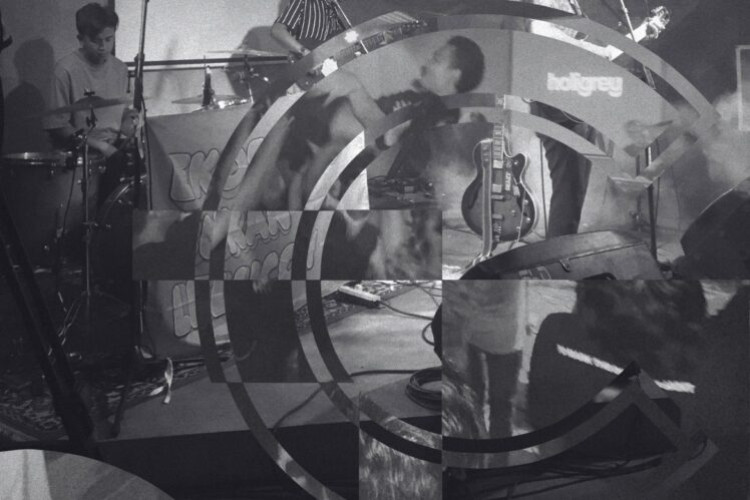
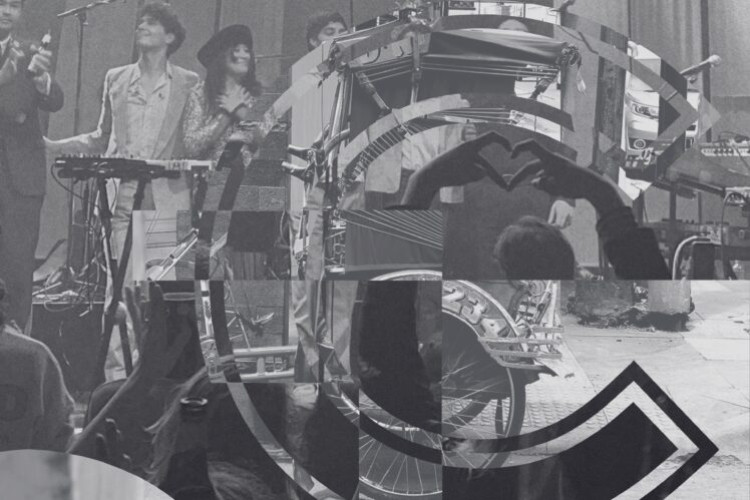
Tahun ini Grrrl Gang mendapatkan kesempatan untuk menjadi salah satu line up di We The Fest 2019, dan Vindy diperbolehkan untuk mengikuti aktivitas mereka.


Here's our list of recommended reading material for next week's "Speaking of Tunes" We Discuss session. Listening and Collecting with Fadli Aat “For me, vinyl records are very primitive – it’s very analog. It’s like those pianos in cowboy saloons or music boxes, the player read this physical groove on the record. Also, the sound vinyl records produce… compared to CDs they sounds much better and much more honest, in my opinion. They are both mixed and mastered, but I don’t know, it just is much more honest. The physicality of the groove has a lot to do with it. CDs are digital, so CD players read them without that physicality. The artwork on records has a lot to do with it as well. There are so many things you get when you buy that one record. The music and the musical quality, then you have the large and beautiful artwork as well.” Rhythm of the Archipelago with David Tarigan “It’s difficult to put into words. I grew up in an era before music can be ripped digitally. I started buying CD, cassettes and vinyl back when I was in primary school. The physical format of music has always played a big part for me. I love old music, and I wanted to experience it the way it was first released. It is an artifact, a piece of history. That’s why until this day I have never purchased a single re-issue. No matter how bad the quality of the record is, it is a part of the experience. You don’t just listen to a song. When you get you hands on the album, you open the sleeve, read it, touch and even smell it. It is sort of a ritual, a way of worshipping your favorite band. Sometimes people buy an album based on its cover, and if the music is as good as the cover, the experience will be even more rewarding. In the end it really depends on the individual. I always tend to leave some room for the imagination when it comes to my interaction with music. I like to interpret songs and create personal images of the music. The physicality of the record and the ritual of listening is the foundation that allows me to create my personal opinion of the music.” The Lint of Material by Sven Birkerts “The shift from vinyl recordings to CDs was significant, psychologically as well as technologically. While the shiny silver disc physically echoed its predecessor in a few obvious ways – was still a flat circular disc with a hole in the center – the differences were many. They were also symbolic. Where the album had two sides, needing to be ‘flipped’ for full hearing, thereby underscoring its temporality and the fact that its contents were arranged, the silver disc compressed its material on a single side. Tracks were no longer demarcated for the eye, so that all one saw was an elegant shimmering surface. And to make it operational – to play it – the listener had to slide it into the player. It disappeared, and the process whereby the information coded onto the disc became sound was (to me) conjectural: something to do with a laser scanning digits. To change cuts – assuming one was listening to standard fare – no longer required moving the tonearm to the wanted place. A quick touch of the button sufficed. If my explanation of how a needle extracted sound from vinyl was rudimentary and approximate, at least it took into account the basic elements and the everyday physics involved. I can’t tell you how a laser translates digital information; indeed, I cannot tell you how information is rendered into digital form, beyond invoking something about binary code – sequences of ones and zeros that are ‘read.’” Beethoven and the Quality of Courage by Daniel Barenboim “Music means different things to different people and sometimes even different things to the same person at different moments of his life. It might be poetic, philosophical, sensual, or mathematical, but in any case it must, in my view, have something to do with the soul of the human being. Hence it is metaphysical; but the means of expression is purely and exclusively physical: sound. I believe it is precisely this permanent coexistence of metaphysical message through physical means that is the strength of music. It is also the reason why when we try to describe music with words, all we can do is articulate our reactions to it, and not grasp music itself.” “The Grain of the Voice” in by Roland Barthes “The (if the transposition be allowed) covers all the phenomena, all the features which belong to the structure of the language being sung, the rules of the genre, the coded form of the melisma, the composer’s idiolect, the style of the interpretation: in short, everything in the performance which is in the service of communication, representation, expression, everything which it is customary to talk about, which forms the tissue of cultural values (the matter of acknowledged tastes, of fashions, of critical commentaries), which takes its bearing directly on the ideological alibis of a period (‘subjectivity,’ ‘expressivity,’ ‘dramaticism,’ ‘personality’ of the artist). The is the volume of the singing and speaking voice, the space where significations germinate ‘from within language and in its very materiality’; it forms a signifying play having nothing to do with communication, representation (of feelings), expression; it is that apex (or that depth) of production where the melody really works at the language – not at what it says, but the voluptuousness of its sound-signifiers, of its letters – where melody explores how the language works and identifies with that work. It is, in a very simple word but which must be taken seriously, the of the language.” Tuesday, February 25, 2014 7—9 pm Kinokuniya Plaza Senayan (near the language section) Jl. Asia Afrika 8 Sogo Plaza Senayan Lt. 5 Jakarta 10270 Look out for updates on our Facebook page and Twitter account! If you’d like to share your opinions, or if you have friends who’d like to share theirs, please sign up via e-mail with the subject title “We Discuss” at ! If you have comments or questions, tweet us .
It's always a pleasure for our online team to meet you, you, and you in the offline world, so we are very happy to announce our monthly W_Music Session event! Taking place in the Goods Diner, W_Music Session features our selectors (Bergas, Ffonz, Mar Galo and Ken Jenie) spinning an exotic variety of tunes. Enjoy a relaxing and friendly atmosphere while listening to sounds that will tickle your ear drums. Don't forget to say hello and hang out with our team (we don't bite!). The Goods Diner jl. Jend. Sudirman Kav. 52-53, Kawasan SCBD, Jakarta

How do we talk about music? Some might say that there’s no need to talk about it, as music has the power to speak for itself. While it is highly possible for the essence of music to be reduced by language, it is also possible for it to be enhanced through the use of language. By exploring music via other mediums (text, visuals, etc.), we are creating alternative forms in which it can exist. In this discussion, let’s consider the many options through which we can gain a better understanding of music. - In the essay entitled “Beethoven and the Quality of Courage,” Daniel Barenboim says that though music can mean a lot of different things to different people, its core lies in its connection with “the soul of the human being.” He then goes on to say that it is “metaphysical” despite its means of expression being “purely and exclusively physical” (i.e. that it is expressed in the form of sound). In his opinion, these qualities are what make music difficult to describe with words, which is why “all we can do is articulate our reactions to it, and not grasp the music itself.” - Roland Barthes highlights another problem with musical description in his essay, “The Grain of the Voice.” He says that in music criticism, “a work (or its performance) is only ever translated into the poorest of linguistic categories: the adjective.” - Barthes brings up another point that could further complicate the act of describing music in “Music Practica.” According to him, there are two types of music: 1.) the music one listens to, and 2.) the music one plays. Do you think that there are more categories? And do you think that each category needs its own “language” in order to be effectively described? - (communication via linguistic means) vs. (communication via the volume of one’s voice/instruments – i.e. diction – and gestures) - “Concurrently, passive, receptive music, sound music, is become music (that of the concert, festival, record, radio): playing has ceased to exist; musical activity is no longer manual, muscular, kneadingly physical, but merely liquid, effusive, ‘lubrificating,’ to take up a word of Balzac,” wrote Barthes in Musica Practica. His ideas regarding the consumptive approach towards music still rings true today, even though the same approach has also empowered many to make their own music. Here, Barthes compares and contrasts the two musics mentioned in the previous section. What are your thoughts on his opinion on “passive music”? - The digital age has made music very accessible for an incredibly wide audience. We forget that long before the invasion of the mp3, there were physical “vessels” – vinyls, cassettes, CDs – that allowed us to listen to our very musicians in private. Please look out for more #WeDiscuss updates on our Facebook page and Twitter account! If you’d like to share your opinions, or if you have friends who’d like to share theirs, sign up via e-mail with the subject title “We Discuss” at ! If you have comments or questions, tweet us @wjournal.

Go Kemang, Cafe Mondo, and W_Music proudly brings you two days of music, arts, and crafts this weekend at Kemang's Cafe Mondo. With the goal of bringing the Kemang creative community together, this intimate event will have everything from musical performances, djs, a market, art exhibition, to workshops in the span of two days. Organized by Go Kemang, this event will also be a drop off point for donations for victims of the recent Mount Sinabung eruptions, so if you have clothes, books, stationary you would like to donate then please bring them to the event. Profit from the event will also be donated. -- two days of bazaar and music Lion Rock David Tarigan Pasangan Baru Long Time Gone Harlan Boer Gabriel Mayo (bring the medium you would like to print on, such as T-Shirts, with you) Moustapha Spliff (Ffonz) Mar Galo Stereo Stranger (Ken) Aldiano Spydee Iman Kogi starting at 12:00 PM (all day) at Jl.Kemang raya.no 72 unit i Jakarta Selatan
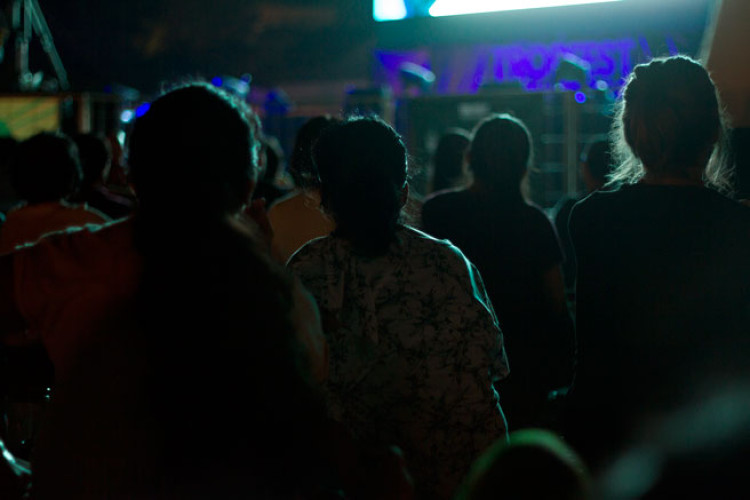
Nadirah Zakariya Founded in Australia about 20 years ago, Tropfest has evolved to be the world’s largest short film festival. With global screening locations in USA, New Zealand, UAE, and South East Asia for the very first time this year, Whiteboard Journal had the chance to be invited to Penang, Malaysia where this prestigious event was hosted. Penang's rich historical background and stunning Peranakan architecture provides a picturesque backdrop for the festival. The event opens up to a small, intimate networking night and a Roughcut symposium the next day. With guests like Oscar-winning director Adam Elliott (Harvie Krumpet), Robert Luketic (Legally Blonde, The Ugly Truth), Glen Goei (That's The Way I Like It, The Blue Mansion), Gurmit Singh (MediaCorp Artiste), this signature spin-off program saw to plenty of movie industry luminaries discussing and dissecting different aspects of entertainment field. Curators Panel was one particularly interesting program in which it discusses experiences of curating film festivals in different regions of Southeast Asia including Indonesia, represented by Lulu Ratna, a prolific film festival organizer. The main event happened on Saturday afternoon in the open air of Esplanade with music by local bands, Paperplane Pursuit and Paladin, and a special appearance by the retro Indonesian band, White Shoes & The Couples Company. There were plenty of local businesses setting up stalls in the vicinity, ranging from artisanal food and beverages, clothes, to vintage, antique items. There was also 'Black Carpet' to greet and interview the evening's distinguished participants. The screening of the 12 finalist films started right around dusk, not long after all the bands finished performing. With contenders from Malaysia, Philippines, Thailand, and Cambodia, the film's main theme 'Rice' is explored in various constructive ways. Among few standout shorts were Chicken, The Strange Detective, We Need to Break Up, all from Malaysia, and Moth in Twilight from Philippines. Screened to over 4000 audience and judged live by Adam Elliot, Robert Luketic, Glen Goei, Malaysian actress Sharifah Amani, and the director of the Hong Kong International Film Festival, Roger Garcia, the grand prize was awarded to Sothea Ines, a Cambodian filmmaker with her black and white, silent film on the 'Golden Harvest' period during Khmer Rouge occupation. Second prize went to her fellow Cambodian, Polen Ly, with his film 'Duetto' and Ezequial Paolinelli took home the third spot with his film entry for Malaysia, 'The Last Flight'. The festival ended with awards presentation for each winner and a pre-recorded announcement clip from John Polson, the founder and director of Tropfest, that the theme for Tropfest SEA 2015 is ‘Wheel’. View the 3 winning films by scrolling through the photography above. For more details on the event and to watch all the films, you can visit http://tropfest.com/sea/
Here's the latest edition of Resident Advisor's excellent series on local music scenes (previously featuring New York, Berlin, Detroit, Johannesburg and Bristol).

Tahun ini Grrrl Gang mendapatkan kesempatan untuk menjadi salah satu line up di We The Fest 2019, dan Vindy diperbolehkan untuk mengikuti aktivitas mereka.
Temukan siapa dirimu dan bagaimana karaktermu menentukan arah masa depan.