Melihat lebih jauh ke dalam salah satu elemen kunci yang masih sering terabaikan dari karir salah satu band paling sukses dari scene independen, White Shoes and The Couples Company. Obrolan bersama "Warga", tim produksi dari White Shoes and the Couples Company mengenai hubungan mereka dengan band, cerita-cerita personal, hingga apa yang membuat musik White Shoes spesial.
Tahun 2015 adalah tahun keempatbelas perjalanan Cholil Mahmud (vokal, gitar), Adrian Yunan Faisal (bass, vokal latar), dan Akbar Bagus Sudibyo (drum, vokal latar) sebagai unit musik bernama Efek Rumah Kaca. Banyak peristiwa terjadi pada dasawarsa pertama mereka ini, dua album penuh yang dirilis pada dua tahun berturutan, 2007 (Selftitled) dan 2008 (Kamar Gelap), sampai lagu-lagu yang menjadi nyanyi bersama pada panggung-panggung yang terjelajahi di penjuru Indonesia. Tapi diantara semua peristiwa, ada pula getir cerita pada kondisi Adrian yang memaksanya absen pada penampilan live Efek Rumah Kaca. Satu hal yang bisa merangkum perjalanan mereka adalah eksperimentasi yang menjadi inti dari setiap karya. Kekayaan Bahasa Indonesia, dan pemilihan tema adalah area yang telah mereka jelajahi.
Setelah vakum selama hampir satu setengah tahun sehubungan dengan kepergian Cholil ke luar negeri untuk fokus menyelesaikan sekolah, Efek Rumah Kaca menandai kembalinya eksistensinya dengan single “Pasar Bisa Diciptakan”. Dan seperti yang biasa mereka lakukan, eksperimentasi menjadi kunci di karya ini. Kali ini, musik menjadi fokus utama eksperimentasi. Aransemen dibuat lebih kaya dengan layer-layer gitar yang lebih membahana, dinamika sekaligus struktur lagu juga menjadi semakin berwarna.
Sejatinya, single ini bukanlah materi yang sepenuhnya baru. Dasar-dasar lagu ini telah terbentuk sejak tahun 2008. Ide dasar dari “Pasar Bisa Diciptakan” adalah semacam elaborasi lebih lanjut dari lagu “Cinta Melulu”, tentang kegelisahan Efek Rumah kaca terhadap proses berkarya sebuah karya seni dengan posisinya di pasar/industri. Jika “Cinta Melulu” menyampaikan pesannya dalam nada yang cenderung sinikal, pada “Pasar Bisa Diciptakan” Efek Rumah Kaca memilih perspektif yang lebih optimis. Bahwa selalu ada cara untuk berkarya dengan jujur.
“Seiring dengan waktu, kita sudah tidak sekeras dulu. Masih ada api itu tapi kami ingin lebih kalem. Kita ingin lebih tenang dalam meneriakkan sesuatu. Banyak lirik yang akhirnya diganti karena kami merasa sudah tidak sesuai lagi. Yang jelas, ‘Pasar..’ dibuat untuk kami sendiri, tidak ada rencana untuk membuat manifesto atau apapun itu. Ini hanya cermin kegelisahan kami,” ujar Cholil.
“Pasar Bisa Diciptakan” dirilis bersamaan dengan single “Biru” yang merupakan extended version dari single ini. Ada dua fragmen yang tergabung dalam lagu “Biru”. Fragmen pertama ada pada paruh awal lagu yang juga menjadi versi pendek lagu untuk versi radio edit dengan judul “Pasar Bisa Diciptakan”. Fragmen kedua dengan judul “Cipta Bisa Dipasarkan” berada pada sisa durasi lagu. Secara terpisah, fragmen-fragmen tersebut masing-masing mewakili dua angle dalam proses penciptaan karya dalam kesenian, yakni secara internal dan eksternal. Keduanya membentuk secara utuh, “Biru” sebagai rangkuman pemikiran Efek Rumah Kaca tentang pentingnya eksplorasi dalam proses berkarya.
A student of journalism and history, Mahardika Yudha co-initiated media-education organization, Forum Lenteng, and is the curator for the 2015 OK Video exhibition at Galeri Nasional, which had the theme of The New Order. In this interview, we talked to Mahardika Yudha about his interest in the media, his curatorial process, and the progress of media culture in Indonesia.
My name is Noma Bar and I am a graphic artist. I do book covers, magazine covers, editorial illustrations, advertising, and do my own art and exhibition in all around the world, and screen prints, CUTOUTS, Fun!
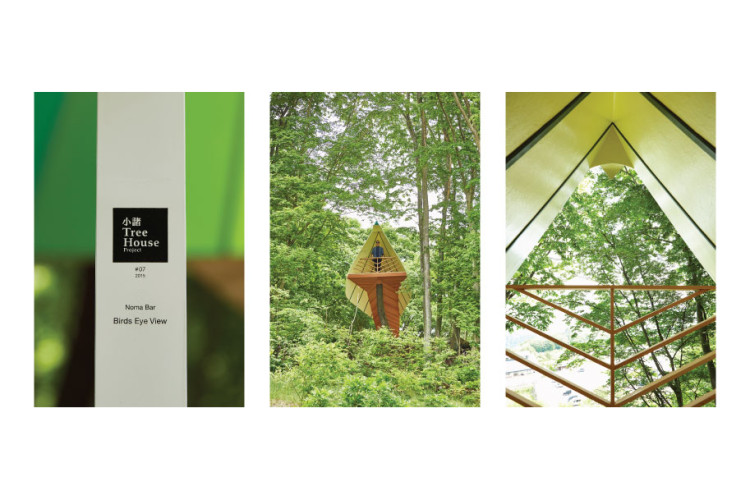
The project was started, when I went to Komoro, it's 3 hours drive from Tokyo. When I came to the wood, which is an amazing wood, there were already 6 or 7 tree houses already. I discovered that my treehouse needs to be in the high point and needs to be a view house.
The project was started, when I went to Momofuku Ando center in Komoro Nagano, where is about 3 hours drive from Tokyo. My treehouse needs to be in the high point in the wood and needs to be a view house to over look the Akagi mountain. Back to London, when I was working in the Highgate wood, I discovered the idea of Birds Eye View.
I found two leafs on the floor on the wood. It was the one above the other and looked like a bird.
Leafs are falling down, but they are forming a shape of bird that will look out to the mountain.
This is how the process started, from the simple idea of two leafs together, and it becomes an about 7m of structure that contain people with stairs, banister and terrace.
I want the viewer to discover. The treehouse is build with few angles, from one angle, if you come frontally, you will not gonna see a bird and you will see a leaf. It is gonna be in different tones of green and you will see it in distance and you will see the leaf. When you closer to the leaf, when you turns, you will discover that it is actually two leafs and the two leafs forming a bird and then you will discover there is stairs to go up and to view, and so it's constant discoveries. I think few discoveries, few layers that I want to take the viewers, from the starting point, from leaf, to being inside the structure and to the view to look out
Lengger Laut
Choreographer: Otniel Tasman
Sunday, June 07, 2015, 08:00 PM
Teater Salihara
Lengger Laut tells of Dariah, the last male Lengger dancer. In the current presentation, the dance—usually performed by female dancers—is performed by six male dancers. Lengger Laut is also an attempt to revive and develop Lengger Lanang.
Otniel Tasman is a choreographer graduated from ISI Surakarta. His works explore Banyumas traditions, through contemporary sensibility. Otniel has worked with other choreographers and directors, such as Wahyu S.P., Suprapto Suryodarmo, Sardono W. Kusumo, Daryono, Eko Supriyanto, Atilah Soeryadjaya, Boby Ari Setyawan, and Fitri Setyaningsih.
Menuai Senja
Komunitas Seni Sigma Dance Theatre
Choreographer: Benny Krisnawardi
Saturday, June 06, 2015, 08:00 PM
Teater Salihara
Menuai Senja is a tale of a person growing old. This point in time provides inspiration for people to contemplate many things in a deeper, more meaningful way: the anxieties of old age, longing for loved ones, resignation in the face of death.
Benny Krisnawardi is a choreographer and IKJ graduate. Benny has collaborated with a number of choreographers and dance groups, including Ong Keng Sen (Singapore), Gerard Mosterd (the Netherlands), Gumarang Sakti Dance Company, Institut Kesenian Jakarta Dance Company, Indonesia Dance Company, and Deddy Luthan Dance Company.