The concept of a "design hotel" is still new in Jakarta, and Kosenda Hotel, named after its owner, Ruben Kosenda, is leading the game. Located in the heart of Indonesia's capital, this unique hotel is bound to make visitors understand comfort in a whole new way. Being the successful result of a mix of local nuances and a wordly sense of contemporary design, Kosenda Hotel promises an experience unlike any other.
is back! Last month, we talked about education. The theme of the next meeting is . Our discussion will revolve around — though certainly not limited to — the following topics.
“I am a citizen of the world,” said Diogenes, the Greek philosopher, at a time when airplanes and the Internet had not yet been invented. Today, we find ourselves in a world where international migration occurs so frequently that summarizing our sense of self in one sentence just won’t cut it. Is it really possible to become who Diogenes claimed to be? Was he simply rejecting the influence of his roots?
- “Homeland” vs. “Passport country”
- How does the way we relate to our roots affect our perception of the world?
- Only other people call us by our names. We only say them when we are introducing ourselves to others. Is this also the case for one’s nationality, cultural background, religion, etc.?
- Can we understand ourselves better by living among people whose ways are different from our own?
- Does the ease with which we can travel from one place to another increase our connection to our roots or does continuous exposure to a mix of cultural influences diminish/erase that connection?
- One’s passport country is still a physical place regardless of the identity we have shaped for ourselves. But is national loyalty still relevant in this cosmopolitan era?
- Do advanced technologies such as gadgets and the Internet create an illusion of "world citizenship"?
Tuesday, August 27, 2013
7–9 pm
Kinokuniya Plaza Senayan
Jl. Asia Afrika 8
Sogo Plaza Senayan Lt. 5
Jakarta 10270
Please look out for updates on our Facebook page and Twitter account! If you are looking for a forum to express your opinions, register via e-mail with the subject title “We Discuss” at ! Or if you have questions, tweet us .
Picture yourself enjoying a meal or cup of tea under the comforting shade of a large trees. There are not many cafes in Jakarta that make people want to sit outside instead of in an air-conditioned room. Kedai Lentera, a cafe in Pasar Minggu that was originally established to finance LenteraTimur.com, offers a relaxing setting for those who want to eat and have discussions.
We can learn a lot about our roots by filling our heads with cold facts found in reference books, but we can also discover life's hidden truths from the products of a writer's observations that have been infused with his or her rich imagination. To celebrate the month of Indonesia's independence, Whiteboard Journal offers a selection of 10 books related to this country and its people with the courtesy of Kinokuniya Indonesia.
Last night (30/07/2013), we had our first event at Kinokuniya Plaza Senayan. Since was the theme of this month’s discussion, an issue that all of us can relate to on so many different levels, there was an interesting exchange of ideas, reflections, and criticisms. There were a lot of micro-debates that resulted from the fact that our participants approached education from a variety of perspectives. After all, what is a discussion without a handful of disagreements? Thankfully, there were points that were collectively approved, as well as some humourous moments here and there to ease the tension.
- Education ought to be understood in a wider cultural context
- Formal schooling helps to structure one's thoughts
- Teachers/educators have the role of guiding and encouraging students
- Self-taught learners need to find an effective way to process the information they consume
- Comparing systems of education, as well as the glorification of numbers (test scores, school ranks) seem to be a problem in many parts of the world (not only in Indonesia)
- One should avoid an “either/or” approach as formal and informal methods can coexist
- The failures of the schooling system are caused by a number of things; from the never-ending demands of society to the inconvenient structure of the system itself
- Grades can have the positive effect of encouraging discipline, as well as the negative effect of creating a competitive culture (winners vs. losers)
- The pursuit of education can be seen from a practical point of view (to earn a better living), an ideal point of view (self-enrichment)
- Education entails confidence and the process of absorbing values
In the end, it all came down to the following question:
If you would like to answer the question or share your thoughts on any of the above points, please feel free to tweet us @wjournal #WeDiscuss. Or send us an e-mail to with the subject title "We Discuss #1."
Last but not least, we would like to thank those who joined Whiteboard Journal’s first We Discuss meeting! We hope to see a great mix of familiar and new faces next month. Hint for next month’s theme: .
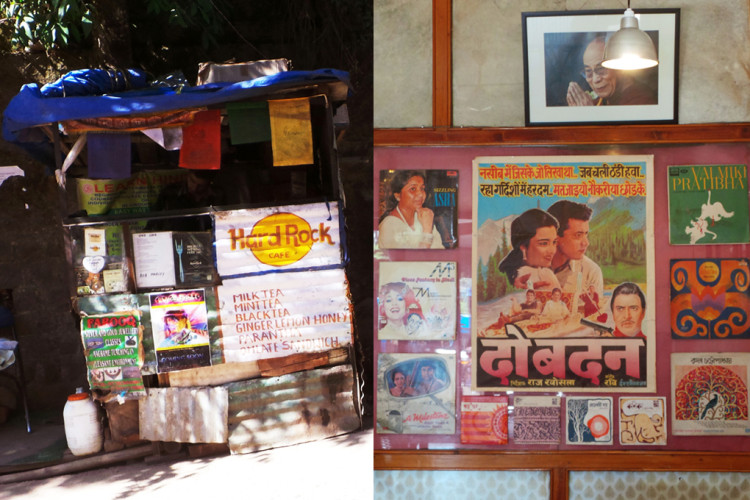
Dharamsala, the seat of the Tibetan Government in Exile, offers a unique experience of traveling to a country within a country and get a better understanding of Tibetan issues. In this piece, Nugroho Nurarifin shares his experiences in India — stories about the food he ate, the people he met, and of course, the teaching of Dalai Lama that he attended. Perhaps this extensive account will encourage you to pack your bags and go on a trip.