Here is a list of recommended reads that might come in handy on the upcoming discussion on places and spaces!
Architecture and Literature with Avianti Armand
“The only way we can understand life is by order. All chaos is difficult to comprehend. Unconsciously we are always faced with a stimulating condition between chaos and order. Chaos is the cosmos. But we actually have the tendency to look for forms and order. If not, we wouldn’t be able to communicate.”
Avianti Armand then goes on to say:
“The easiest example is in architecture. There is the basic rule of thumb we follow. In houses there is the public area, the private area, and the semi-private area. Each has its own characteristics. So when we design a house we base it on those basic rules. But there are always rooms to break away from that structure.”
How do you think architecture functions as a representation/reflection of our society? While social order is not immediately visible, the structures of buildings are. Will observing the buildings found in a particular city reveal the character of its inhabitants?
Unconventional Spaces with Andra Matin
“I can try to evaluate their taste. Some of their tastes can be explicit; some character traits tend to be implicit. So we base the designs on the interviews and our encounters.”
Before drawing a plan for his clients, architect Andra Martin does his best to find out as much as he can about their preferences. Would you rather have a “sterile” living space that gives you the freedom to modify it as you will or have one that has been meticulously designed to suit your personality and tastes?
by Robin Evans (featured in Building the Mind)
“If anything is described by an architectural plan, it is the nature of human relationships, since the elements whose trace it records – walls, doors, windows and stairs – are employed first to divide and then selectively to re-unite inhabited space. But what is generally absent in even the most elaborately illustrated building is the way human figures will occupy it.”
Why do you think there are differences in the way humans interact in public and private spaces?
featured in Building the Mind)
“It’s easy to achieve a natural calm…trees, shrubs, a few rocks. But that’s not enough. Calm should have a ‘momentness,’ where space has a state of impermanence. Disruption is the manmade intervention, and calm comes from the contrast.”
How do you think that “momentness” can be achieved in a city – especially one that is as chaotic as Jakarta? How do you think it can be achieved at private and public levels?
The Flight from Conversation on the New York Times by Sherry Turkle
“At home, families sit together, texting and reading e-mail. At work executives text during board meetings. We text (and shop and go on Facebook) during classes and when we’re on dates.”
“In today’s workplace, young people who have grown up fearing conversation show up on the job wearing earphones. Walking through a college library or the campus of a high-tech start-up, one sees the same thing: we are together, but each of us is in our own bubble, furiously connected to keyboards and tiny touch screens.”
Many of us today are loyal dwellers of cyberspace, but this commitment is often fulfilled at the expense of our “real world” connections. Is it possible for us to strike a balance between our online and offline residences?
Tuesday, November 19, 2013
7—9 pm
Kinokuniya Plaza Senayan
(near the language section)
Jl. Asia Afrika 8
Sogo Plaza Senayan Lt. 5
Jakarta 10270
Look out for updates on our Facebook page and Twitter account! If you’d like to share your opinions, or if you have friends who’d like to share theirs, please sign up via e-mail with the subject title “We Discuss” at ! If you have comments or questions, tweet us .
In the third chapter of Rain Chudori's "Monsoon Tiger," readers will learn about Michael's past and its connection with the couple's relationship. While the two appear to get along, it is revealed that the narrator is lonely and in pain. Fortunately for her, she finds solace in Monsoon's company. But will the narrator patch things up with Michael?
We are only a week away from this month’s meeting. For our fifth discussion, we are going to talk about the relationship between humans, places and spaces.
Anna von Low wrote in her essay, “Faces and Places” that the way we perceive space is strongly tied with how we make sense of our physical existence in society. This goes to show the various interactions we have with the places we live in or frequently visit reveal a lot about how we act in social situations. However, in order to be able to speak about the relationship we have with our surroundings, it is important to know the difference between “place” and “space.” is fixed and has tangible limits whereas is more liquid and sensitive to change. But perhaps it is also important to think about how culture might have an impact on how individuals value and react to certain places and spaces.
- “A house constitutes a body of images that give mankind proofs or illusions of stability.” —Gaston Bachelard,
- Is the concept of “home” more linked to the idea of space or place? Is it possible that both are true?
- In his essay entitle “Figures, Doors and Passages,” Robin Evans writes that “the search for privacy, comfort and independence through the agency of architecture” is recent. Nowadays, when we think of our homes, or a part of our homes, we immediately think of something that belongs to us.
- The standard of living arrangements vary from place to place. What is the most common situation in Jakarta? How is your own living arrangement? Do you live alone, with friends, or with your family?
- “If anything is described by an architectural plan, it is the nature of human relationships, since the elements whose trace it records – walls, doors, windows and stairs – are employed first to divide and then selectively to re-unite inhabited space.” —Robin Evans,
How do humans – whether they know each other or not – interact in public spaces? How is it different from the interaction that takes place in private spaces?
- Cafe culture and Co-working establishments. Why do you think these sorts of places are very relevant nowadays?
- The Internet is a shared global, yet intangible space.
- How do you think social media changed the way we perceive distance as well as our social interactions?
- Do you think that is possible for humans to abandon direct social interactions in the future?
Tuesday, November 19, 2013
7—9 pm
Kinokuniya Plaza Senayan
(near the language section)
Jl. Asia Afrika 8
Sogo Plaza Senayan Lt. 5
Jakarta 10270
Please look out for more #WeDiscuss updates on our Facebook page and Twitter account! If you’d like to share your opinions, or if you have friends who’d like to share theirs, sign up via e-mail with the subject title “We Discuss” at ! If you have comments or questions, tweet us .
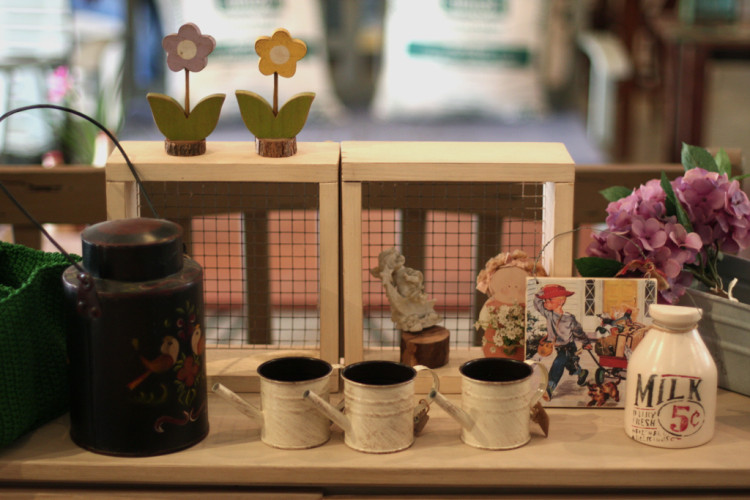
Specializing in vintage and industrial-style items, Moje Natural Furnishing offers coziness in the form of tables, shelves, cabinets, and many others. While Moje's products are crafted in Ciawi, its showroom is located in Jagakarsa, South Jakarta. This store is heaven for those who are interested in custom-made rustic furniture.
It is easy to think of a photograph as a mere image that contains a certain amount of information, but as Ridzki Noviansyah points out, the photograph is also a work of art and ought to be valued as such. While his previous essays focused on the camera and the photographer, this piece is about the tangible product itself.
Located behind the existing buildings of Salihara, Anjung Salihara will give a new experience to new audiences. This latest addition to Salihara aims to facilitate the development of creative subjects — be it dance, drama, music, or even writing. It will all be possible here.