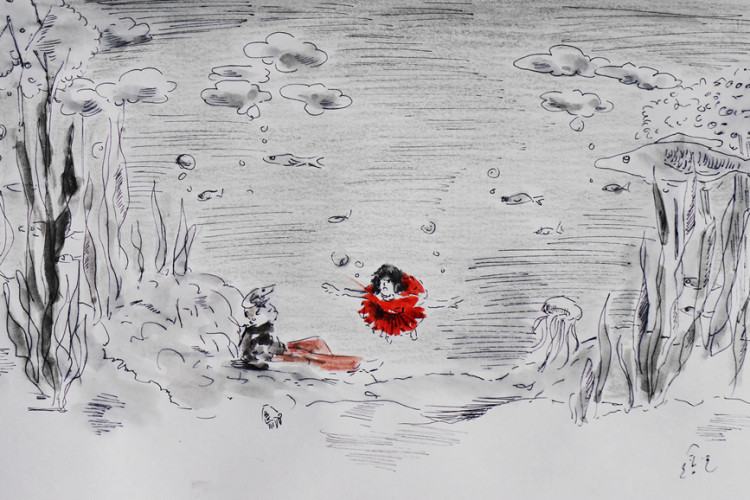
Set in Jakarta, Khairani Barokka (Okka) introduces us to a dystopian world where people live with no reminders of history or appreciation of the past. A bleak world that revolves among two central characters of a grandmother and her granddaughter seeking to find meaning of the world they live in.
Upon his return from US, Eric Widjaja’s disappointment towards the design industry prompted him to develop his own design studio in 2005. Now as both creative director & founder of Thinking Room -- known exceptionally for its crafted exploration in digital and tactile work – Eric Widjaja shares to us his design ideology that extends to a professional and academic level.
It is never too late to do good things, and it is certainly never too early to do so either. In fact, the earlier the better. Tina Maladi, founder of Kids Yoga Jakarta, along with Kyra Pradiono of Kutakatik Arts and Crafts, believe that teaching yoga to young children will make them naturally accustomed to maintaining a healthy body, and a healthy mind.
For the next 6 months, one of our W_Music editors, Chandra Drews, familiarly known as Ffonz, will share his obsession of record labels and explains why he finds the selected labels special to him. Here he continues withhis second selection: Atlantic Records.
Children’s books often contain profound moral lessons that children will keep until they become adults. The combination of adorable illustrations and catchy rhymes proves that the simplicity of language should not be mistaken for the simplicity of meaning. This month, Whiteboard Journals offers a selection of 10 children’s books, courtesy of The Open Book.
We have previewed a number of prominent Indonesian graphic designers in our interview section. We have asked them the core questions of their journey and choices that motivated them to pursue their passion.
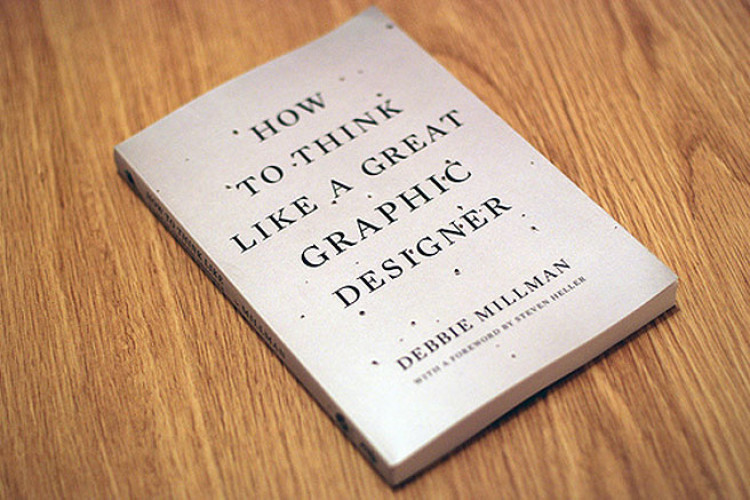
With a similar notion in mind, prolific brand consultant, design journalist, and host of podcast series “Design Matters”, have already been uncovering many aspects of the design industry for almost two decades now. In the book, she enlightens us to understand the thought-process of twenty-one of the world’s most celebrated graphic designers (With particular focus to the ones who reside in US). The book, which bears no visuals at all, contains segments of interviews with crafted individuals of the likes of and even .
Throughout each conversation, you will be mostly astonished by the varying aspirations and values these designer hold on to. For example, holds a belief that the most enjoyable job will not earn you money. He puts it in his own term , encouraging him to focus on work that give him personal fulfillment although less gratifying economically.
Whereas, designer and educator, , might contradict with the idea and go along with an advice that designer Paul Rand once suggested to him which is “make lots of money” with a belief that once you have no monetary constraints, you can start things with the utmost freedom.
The book also explores many revelation about the term graphic design and the contradictory idea of design being either a tool for communication for the public - or a simple form of self-expression only as remarkably discussed by Peter Saville.
This isn’t just a book for graphic designers. Keep in mind it's also not a how-to book on design. It’s a book for anyone curious to know how the great minds behind design work. You can even call it a philosophical book about graphic design.