

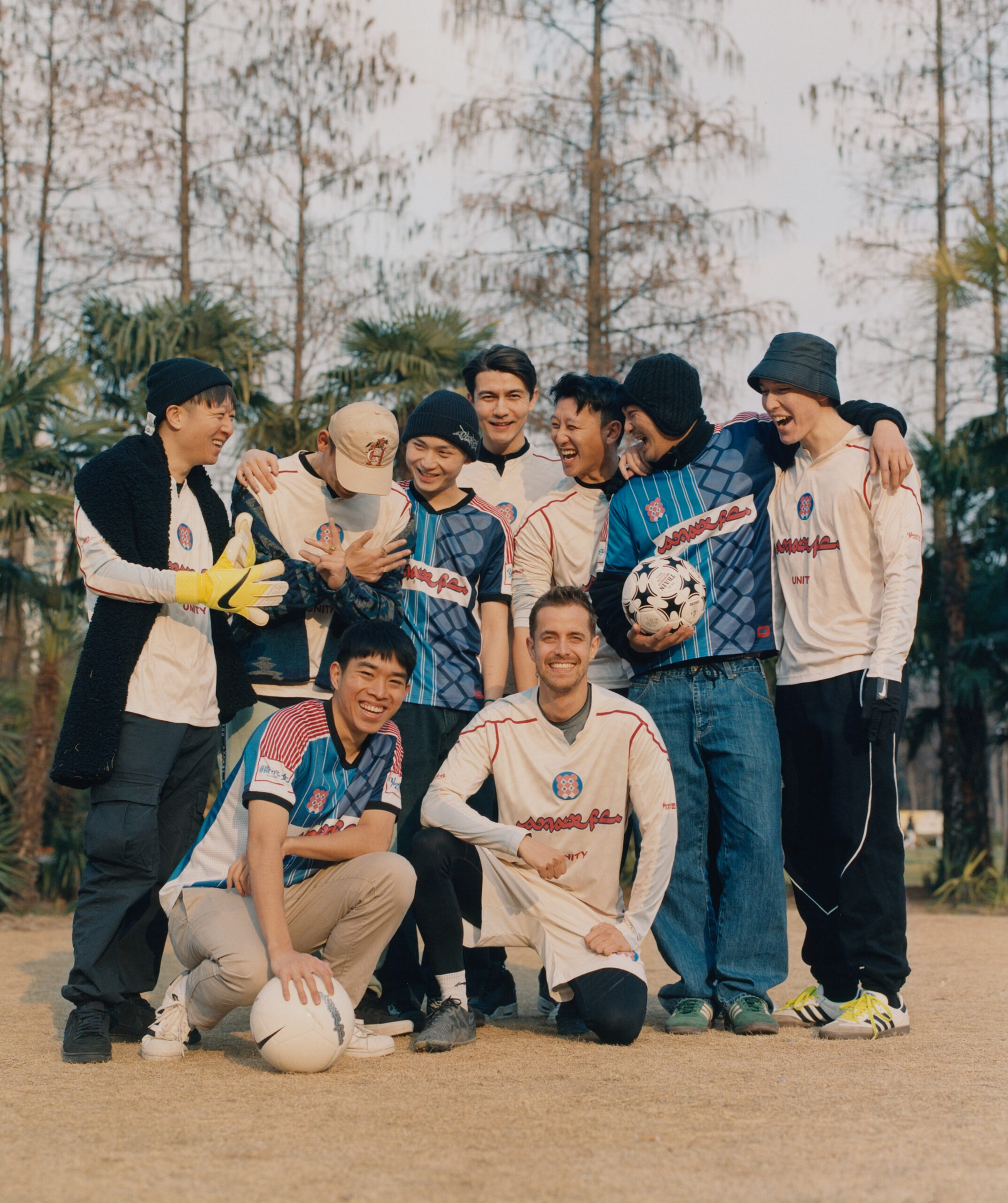


ANAR FC: We really wanted to show a different light of the game to the youth today—they gave us the confidence to do what we do here in China.
We talked with the people behind the Chinese football collective, ANAR FC, to talk about how youth-driven football scenes merge with art, to what it is that makes the Asian football culture – compared to its European counterpart – hits different.

Words by Whiteboard Journal
Words: Garrin Faturrahman & M. Hilmi
Photo: ANAR FC
Have you longed to belong in a football circle? To actually play among those with love of the game? Or to just share your endearment for the culture? In today’s age of interconnectivity, you don’t need to stretch too far to find your place: Meet the Chinese collective and ever-inclusive football team, ANAR FC.
There, ‘inclusive’ should not be taken lightly – it has players from all around the world, where players too come from all walks of life (filmmakers, musicians, to professional football players), where all are united by the love of the game. Such an angle resonates beyond the pitch too, as they’ve pitched themselves a deal with brands alike, bringing the spirit and soul alive through jerseys, creative workshops, to block parties.
Join us as we chat with the people behind ANAR FC to talk about how youth-driven football scenes merge with art, the social impacts of the collective, to what it is that makes the Asian football culture – compared to its European counterpart – hits different.
ANAR FC doesn’t feel like a conventional football club. How do you usually describe yourselves to people who are just discovering ANAR FC?
“Together through Football” is our slogan. For more context, traditionally if you were from a place, you played with those people—there wasn’t a lot of mixing. It was quite territorial and not open.
After COVID-19, we were starving for interaction and community, and funnily enough, when we arose out of that time, the first thing that we did was play football at the local park.
We didn’t care who you were, where you’re from, what your background is, we met up in this very public place and everyone was welcome, bringing together people from all walks of life. That continues now, we took that energy and made it our manifesto: We want people to feel welcome, we want you to reach into your soul and share that love of the game with everyone. That’s it, nothing more complicated than that.
How do you see football functioning today in urban culture, especially among young creatives?
It’s an outlet of expression, it’s another form of how to see the world and to enjoy it with others. Football functionally requires multiple to play. It was breeding ground for culture and community.
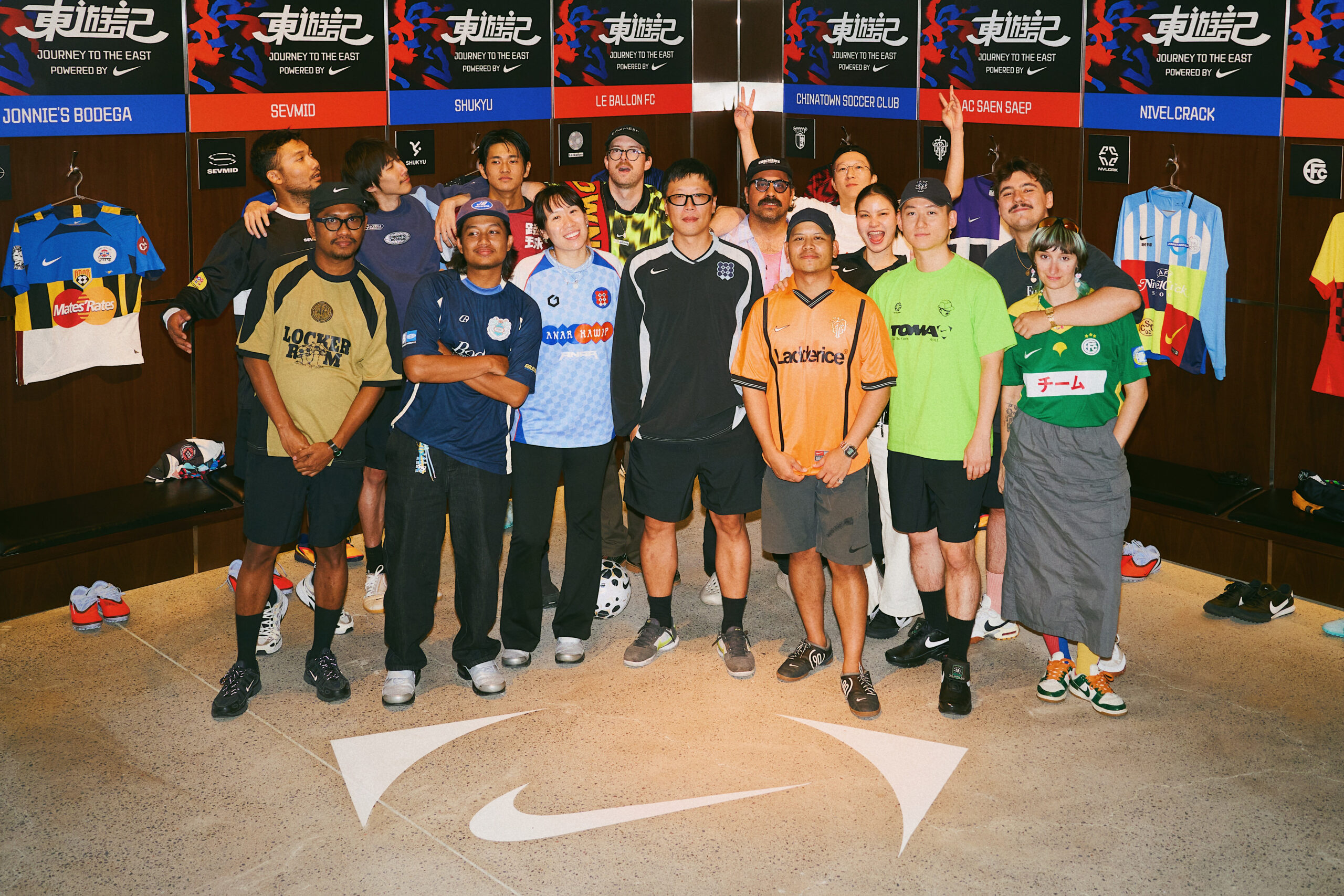
Image via ANAR FC.
Have you seen real-life impact from ANAR FC, friendships formed, confidence built, new creative paths opened?
For us, we were deeply inspired by the ones who came before us (i.e. creative football communities abroad). We saw them playing the game, and enjoying it in a very different way, a very grassroots way. They gave us the confidence to do what we do here in China, we really wanted to show a different light of the game to the youth today. It doesn’t have to be all about fandom, leagues, stars, the surface stuff. It should really be about getting closer to the ground and just kicking and enjoying with your friends.
What do you think Cun Chao tells us about football when it’s returned to the people — away from elite leagues, sponsors, and heavy commercial framing?
It’s a natural progression, when things don’t work, eventually something will evolve and come out of it. It is a big waving flag to show everyone that football isn’t about those “superficial” things, its really just a simple game to be played.
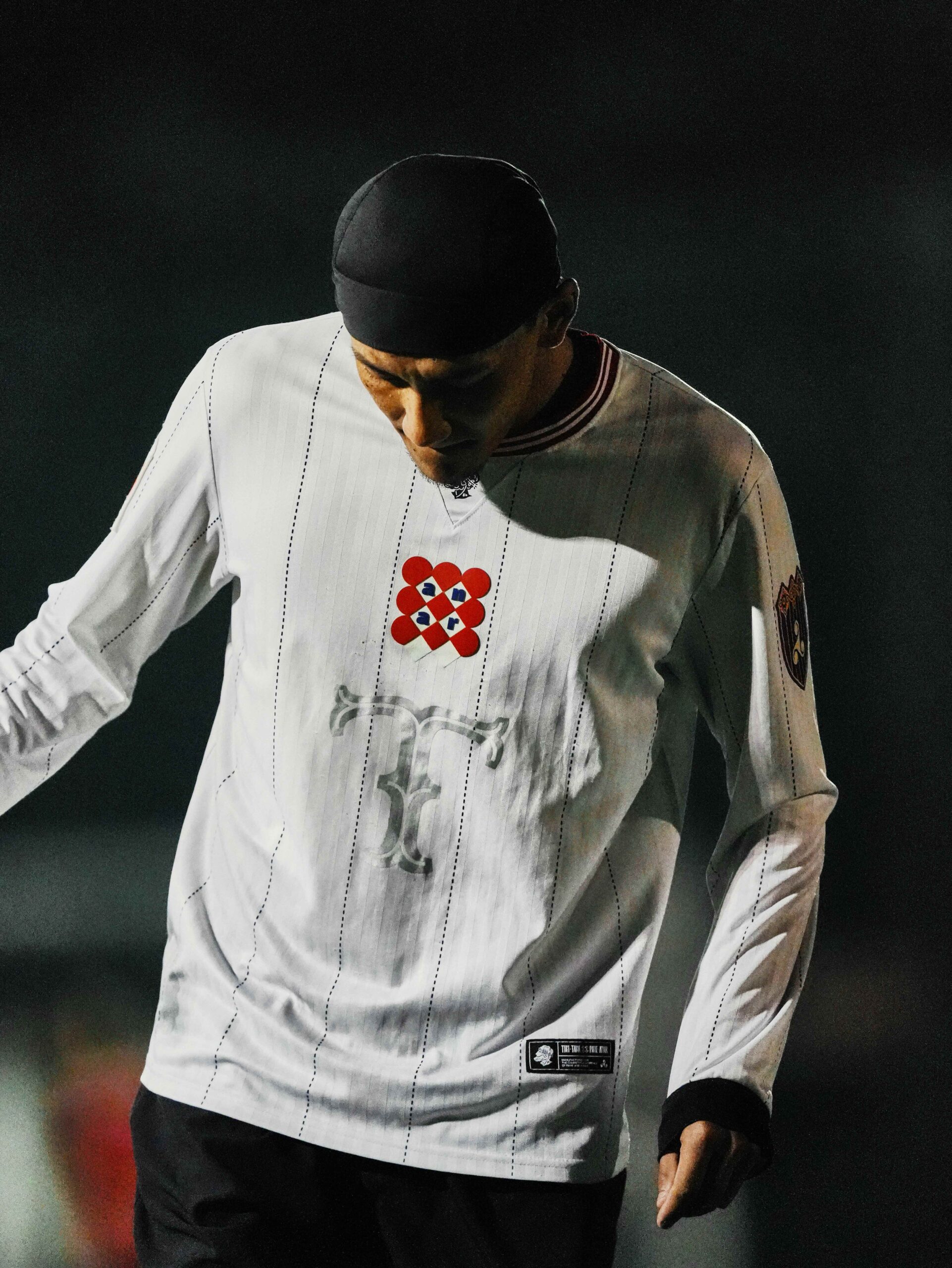
Image via ANAR FC.
Football culture is often told through a European lens. What do you think makes Asian football culture fundamentally different?
For us, we are who we are, so we take what we see and we do it our own little way. What makes us fundamentally different is our environment, our society, our flavors, not to get into anything specific, but those attributes shine through as an aesthetic that just looks different.
View this post on Instagram
Do you feel Asia is starting to develop its own football language, visually, socially, and culturally, rather than borrowing from Europe?
Growing up, we watched from afar. We saw how football was played and enjoyed abroad. As the popularity rose, we were oftentimes disappointed in our own native leagues, there was something missing, there was something different.
And as we grew older, we finally had a chance to do it our own way, to find a different lens to enjoy our sport our way.
It was just a matter of time, before our individuals societies could put our own flavor it, to integrate our own special culture into the language. Things take time, its like school, you learn something, you train, and eventually when you get it enough, you can put your own personal spin on it, that’s what we are seeing happening in Asia.
In China, Japan, Indonesia, we’re seeing youth-driven football scenes merging with art, fashion, music, and skate culture. Why do you think football keeps becoming a meeting point for all these worlds?
Our motto is “Together through Football,” so for us, it is a natural intersection for people to connect.
Football of the days of old has changed. It has evolved. But as a team sport, it brings different parts together to make a goal—we think, poetically, outside of this game, the people who still dabble or find interest it will always to dig more, to explore more, to find a meeting people of shared interest.
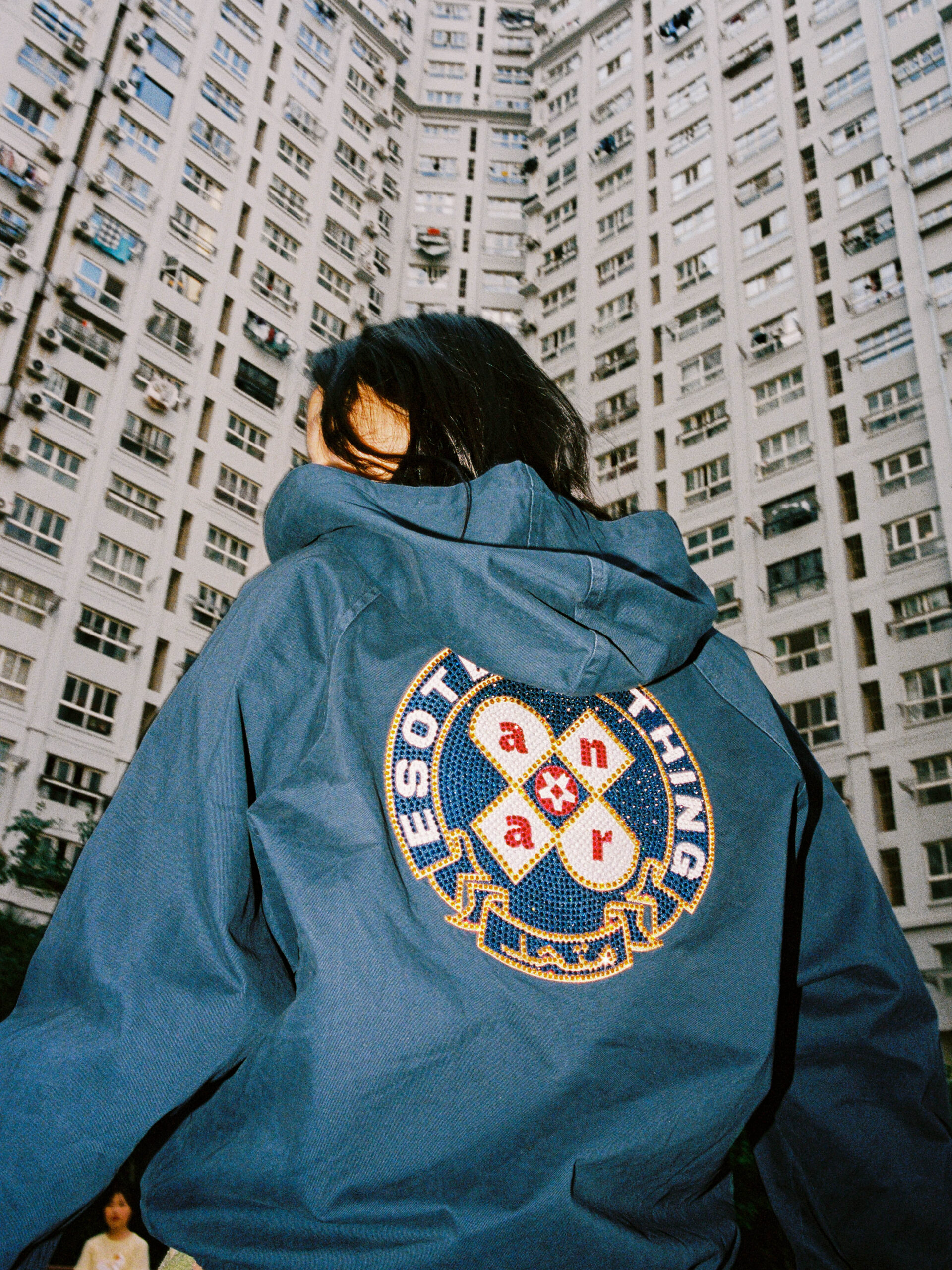
Image via ANAR FC.
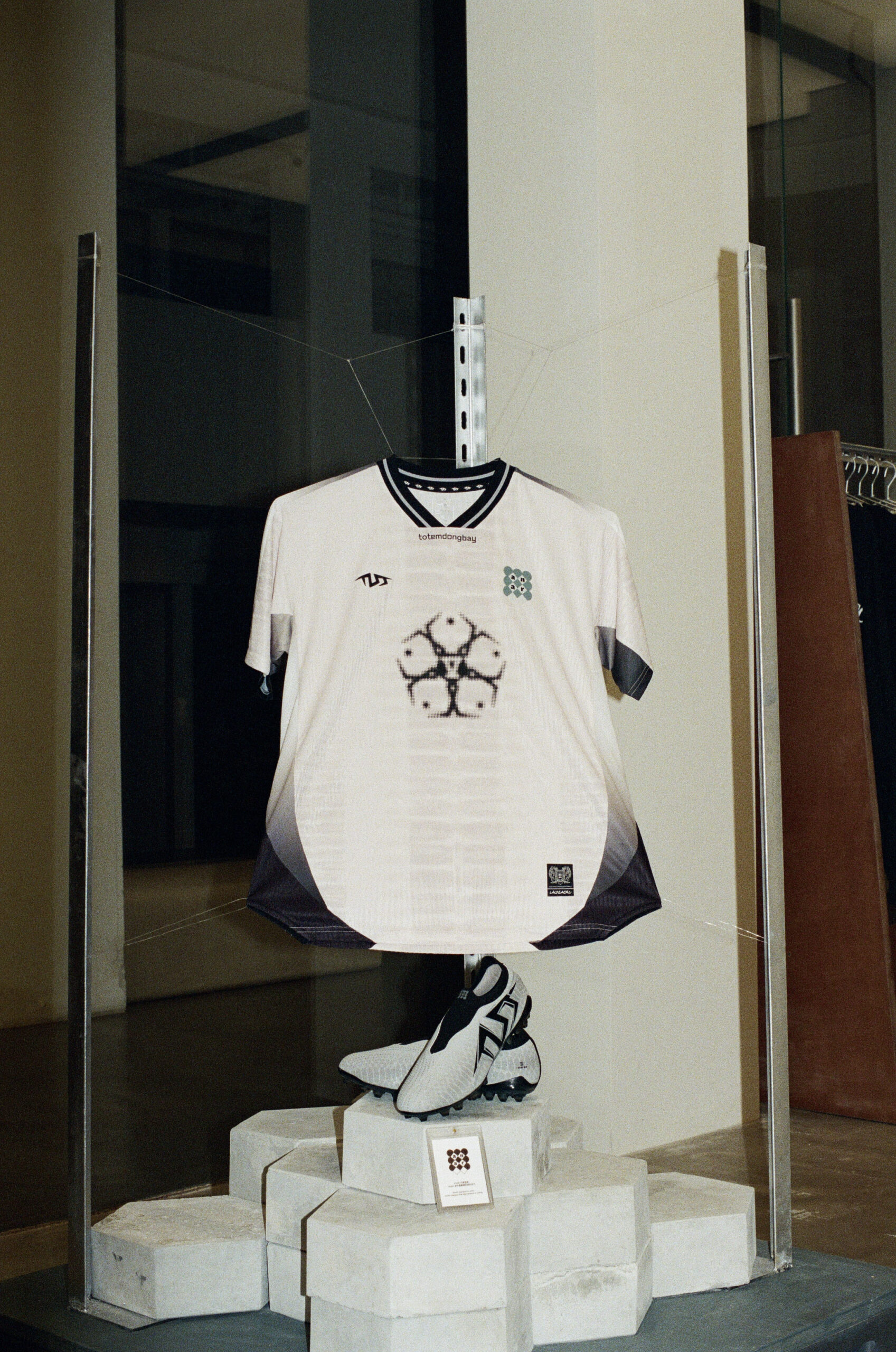
Image via ANAR FC.
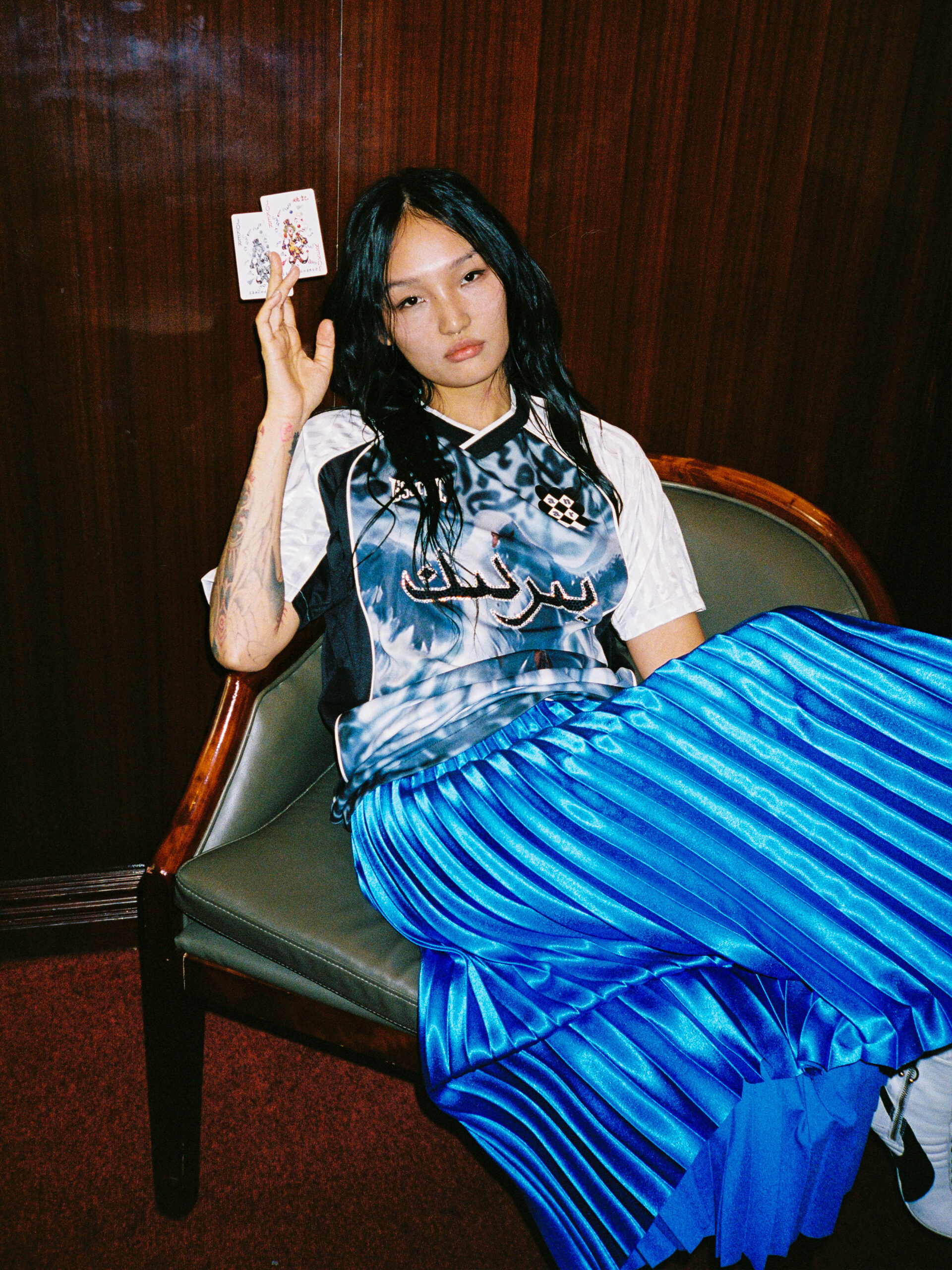
Image via ANAR FC.
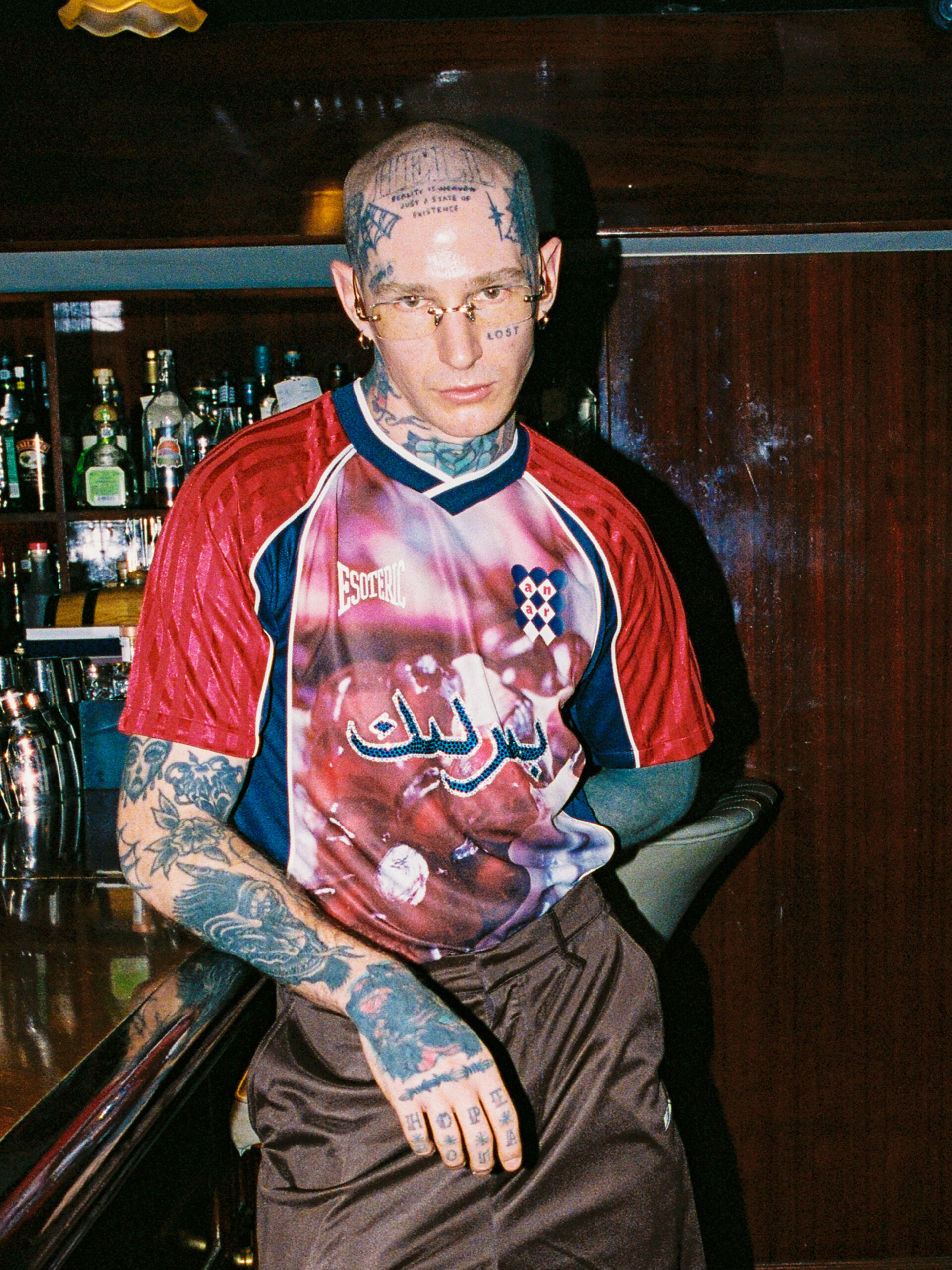
Image via ANAR FC.
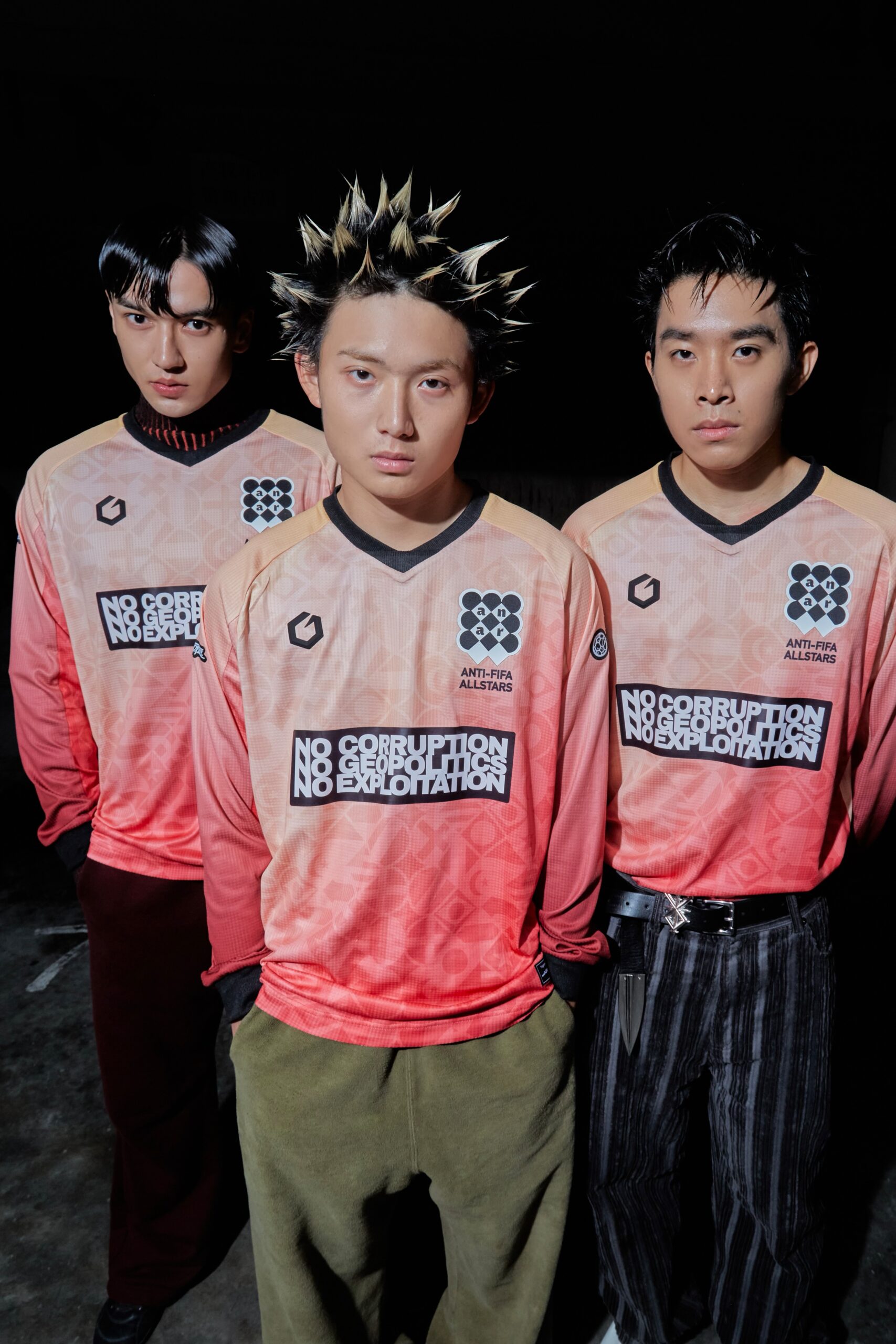
Image via ANAR FC.
Like the game, it takes many to make a team, and the beautiful part of it, is that we don’t have to all come from the same place to enjoy that, so it’s a natural bridge to other parts of youth culture.
What can Indonesia learn from China’s grassroots explosion, and what can China or other Asian countries learn from Indonesia’s creative football communities?
When we visited Indonesia, we saw so many new things. There was a vibrant joy around the game, and it was ubiquitous: The country was breathing football at every stage in society.
When we met the local creative community, we could really see the undying passion in their sport. It wasn’t about being the best, it was about finding new avenues, exploring things with a new lens, which all led to everyone getting closer together as a community, driving forward with the same passion. It was inspiring for us.
If Asian football culture is still being written, what chapter do you hope ANAR FC contributes?
We want to be the wave that changed the tide, to inspire, and to give hope to a new generation of football lovers a different perspective of how to enjoy this beautiful game.


Where’s the Role of Millenials in the Struggle of Our Democracy?

Elkan Baggott Mengalahkan Tim Premier League, Menjadikannya Pemain Indonesia Pertama yang Mencapai Hal Tersebut

Membingkai Seni bersama Otty Widasari
